Personalized Nasal & Facial Care • Dedicated International Patient Concierge


Stem Cell Cosmetic Treatment
Stem Cell Therapy Revision Rhinoplasty
Revision rhinoplasty — also referred to as secondary rhinoplasty — is a surgical procedure performed to correct, refine, or reconstruct a nose following a previous operation that produced unsatisfactory functional or aesthetic results.
Schedule a Consultation
What is revision rhinoplasty?
Revision rhinoplasty — also referred to as secondary rhinoplasty — is a surgical procedure performed to correct, refine, or reconstruct a nose following a previous operation that produced unsatisfactory functional or aesthetic results. It is widely regarded as one of the most technically demanding procedures in facial surgery, as the operating environment involves altered anatomy, scar tissue, and in many cases weakened or thinned structural support.
Unlike primary rhinoplasty, which works with untouched tissue, revision surgery must account for the changes introduced by prior procedures. Scar formation, implant-related firmness, contracture, and skin thinning all create a more complex surgical landscape that requires careful pre-surgical assessment and a highly individualized plan.
At JNB Clinic, revision rhinoplasty is integrated with stem cell therapy as part of a structured approach aimed at reducing tissue burden before and after surgery. This allows the treatment to address not only the visible structural concerns but also the underlying tissue condition — supporting a more stable recovery environment than conventional revision techniques alone.
Who needs revision rhinoplasty treatment?
Revision rhinoplasty is appropriate for individuals who have undergone a previous nasal procedure and are experiencing ongoing structural, aesthetic, or functional concerns. The following profiles are commonly seen at JNB Clinic:
-
Those who feel the operated nose has become excessively firm or unnatural to the touch after previous surgery
-
Patients with thin skin where implant edges or graft outlines have become visible through the skin surface
-
Individuals who have accumulated tissue damage across multiple prior surgeries
-
Those experiencing prolonged swelling, facial asymmetry, nostril distortion, or a shortened nose resulting from contracture
-
Patients seeking both a more natural nasal contour and improved softness
-
Individuals who require rhinoplasty after silicone implant removal and are looking for a structured path to reoperation
-
Those who prefer a natural regenerative approach rather than simply exchanging one implant for another
-
International patients seeking specialist revision care with a structured, communication-friendly consultation process
Revision rhinoplasty is not suitable for every patient at every stage. Tissue readiness, skin condition, and surgical history are all assessed thoroughly before any treatment plan is confirmed.
Meet the specialist in revision rhinoplasty
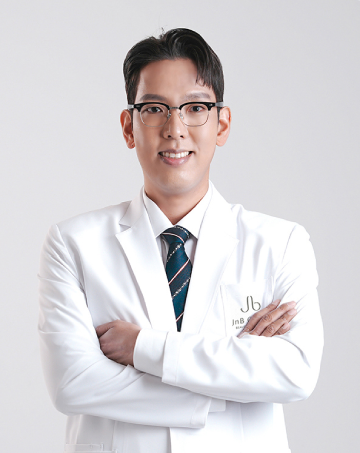
Dr. JuYong Kang
Representative Director & Chief Physician
JNB Clinic Plastic Surgery & Otolaryngology (ENT)
Dr. JuYong Kang Representative Director & Chief Physician, JNB Clinic Specialist in Otolaryngology (ENT) and Facial Plastic & Reconstructive Surgery
Dr. JuYong Kang completed his medical education at Kyung Hee University School of Medicine and pursued graduate-level training at Kyung Hee University Graduate School of Medicine. His clinical background spans rhinoplasty, nasal airway reconstruction, facial plastic and reconstructive surgery, sleep disorders, and stem cell therapy — reflecting a breadth of expertise that is relatively rare in nasal surgery practice.
Prior to establishing JNB Clinic, Dr. Kang served as director at both Byeol Plastic Surgery Clinic and Samsung Dream Otolaryngology Clinic, accumulating extensive surgical experience across both cosmetic and functional nasal cases. He holds full membership in the Korean Society of Otorhinolaryngology-Head and Neck Surgery, the Korean Rhinologic Society, the Korean Society of Facial Plastic and Reconstructive Surgery, the Korean Society for Stem Cell Therapy, the Korean Sleep Research Society, the Rhinoplasty Research Society, and the Anti-Aging Plastic Surgery Research Society.
His dual qualification in ENT and facial plastic surgery means that revision cases at JNB Clinic are evaluated through both a structural and a functional lens — addressing not only how the nose looks, but how it works and how the underlying tissue is responding.
Dr. Kang's guiding philosophy: "Beautiful, comfortable breathing is where it all begins. The harmony between natural breathing and the face is more important than anything else."
Treatment areas and expected improvements
Revision rhinoplasty at JNB Clinic addresses a range of structural and tissue-related concerns that commonly develop after previous nasal surgery.
-
Nasal contracture and firmness: Scar tissue formation following surgery can cause the nose to feel rigid or unnaturally firm. In more advanced cases, contracture can physically distort the nasal shape, pulling the tip upward or narrowing the nostril opening. Stem cell–assisted tissue preparation is used at JNB to help address accumulated damage before revision surgery proceeds, with the goal of creating a more receptive tissue environment. Individual outcomes vary depending on the extent of prior scarring and the number of previous procedures.
-
**Implant-related complications: **Silicone implants placed during prior rhinoplasty can shift, become visible through thinned skin, or contribute to ongoing inflammation. At JNB, implant removal is integrated into a structured revision plan, with stem cell therapy applied during the interim period to support tissue recovery before reoperation takes place. Results depend on individual skin thickness, healing capacity, and the duration of implant placement.
-
**Asymmetry and nostril distortion: **Uneven nasal contours and nostril asymmetry can result from uneven tissue healing, implant movement, or structural changes following primary surgery. Correction involves careful reassessment of the nasal framework and soft tissue balance. Realistic improvement is the goal; perfect symmetry cannot be guaranteed in all cases.
-
Shortened or collapsed nasal structure: Over-resection or contracture can cause the nose to appear shortened or the tip to be pulled upward. Structural rebuilding using autologous cartilage, guided by a precise closed surgical approach, is used to address these concerns where tissue conditions allow.
-
Overall skin quality and tissue health: Repeated procedures can leave the skin envelope thinner and more sensitive. The stem cell component of JNB's revision protocol is designed to support skin-layer recovery and tissue acceptance both before surgery and throughout the post-operative period.
Treatment process and timeline
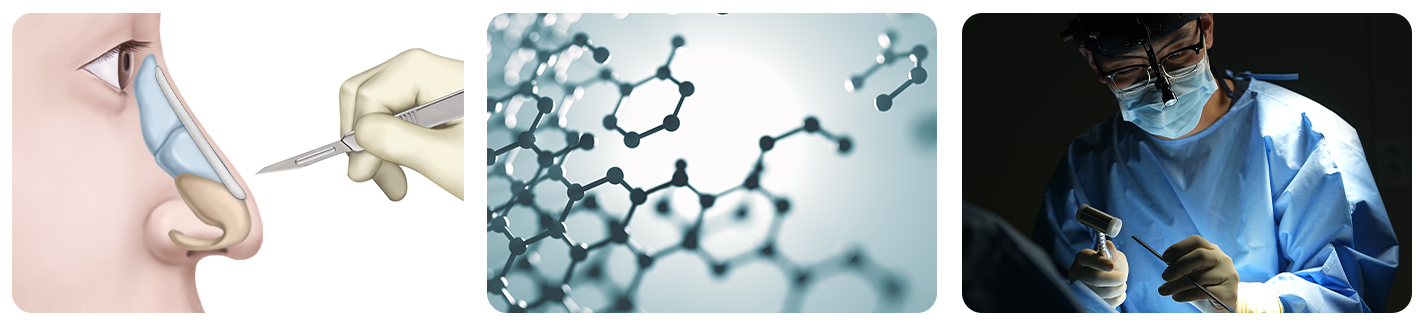
Revision rhinoplasty at JNB Clinic follows a structured multi-stage pathway designed to prioritize tissue readiness, surgical precision, and thorough post-operative support.
Step 1 — Consultation and surgical history review
Dr. Kang reviews the full history of previous procedures, evaluates the current nasal structure and skin condition, and discusses the patient's functional and aesthetic goals. Medical history, medications, and any known sensitivities are documented.
Step 2 — Condition assessment and treatment planning
Skin thickness, tissue integrity, contracture extent, and structural support are evaluated in detail. The treatment plan — including whether stem cell preparation is indicated before surgery — is developed based on this assessment.
Step 3 — Stem cell tissue preparation (where indicated)
For cases involving significant tissue damage or patients proceeding after implant removal, stem cell therapy is administered during a preparation phase of approximately 1 to 2 months. This is designed to support tissue stabilization before revision surgery begins. This contrasts with conventional revision protocols, which typically require a waiting period of 6 months to 1 year following implant removal before reoperation can safely proceed.
Step 4 — Revision rhinoplasty procedure
Surgery is performed under general anesthesia or sedation using a closed approach where appropriate. Procedure time is approximately 2 to 3 hours. Structural correction — including cartilage work, implant removal or replacement, and contour refinement — is carried out according to the individualized plan.
Step 5 — Immediate post-operative care
Same-day discharge is available. Hyperbaric oxygen therapy is provided as part of the post-procedure care protocol to support cellular recovery and help manage swelling, redness, and sensitivity in the early healing phase.
Step 6 — Suture removal and ongoing recovery management
Sutures are removed 7 days after surgery. Recovery continues for approximately 2 to 6 months depending on individual healing response and the complexity of the revision. Treatment plans are refined throughout this period based on recovery progress.
Results, safety, and longevity
Revision rhinoplasty outcomes vary considerably depending on surgical history, skin condition, tissue health, and individual healing capacity. At JNB Clinic, realistic and transparent outcome framing is central to the consultation process — patients are not presented with guaranteed results.
The stem cell component of the protocol is designed to support a more stable tissue environment, which may contribute to a more predictable recovery and a lower burden on already-compromised tissue. However, stem cell therapy is a supportive measure and does not alter the fundamental recovery variables inherent to revision surgery.
Common post-operative experiences include swelling, bruising, and sensitivity, which are expected and typically managed through the clinic's structured aftercare program including hyperbaric oxygen therapy. More significant risks — such as infection, asymmetry, or incomplete correction — are discussed openly during consultation. Revision rhinoplasty, by its nature, carries a more complex risk profile than primary surgery, and patients are encouraged to ask detailed questions before proceeding.
Long-term maintenance of results depends on tissue behavior over time. JNB Clinic provides ongoing management guidance and follow-up scheduling throughout the recovery period to support stable healing and monitor for any changes requiring attention.
Why choose JNB Clinic for revision rhinoplasty?

Revision rhinoplasty demands a level of surgical and medical expertise that goes well beyond standard cosmetic practice. At JNB Clinic, this procedure is led by a specialist with dual training in ENT and facial plastic and reconstructive surgery — a combination that enables a thorough functional assessment alongside the structural and aesthetic correction that revision patients require. Dr. Kang's background in nasal airway reconstruction means that breathing function is always considered as part of any revision plan, not treated as secondary to cosmetic concerns.
JNB Clinic's integration of stem cell therapy into the revision protocol represents a structured approach to tissue preparation that is applied before and after surgery, not simply on the day of the procedure. The in-house purification process follows strict hygiene protocols and step-by-step quality management throughout harvesting and preparation — designed to minimize treatment burden particularly for patients whose tissue has already been compromised by previous surgeries. Post-operative care including hyperbaric oxygen therapy is built into the recovery pathway, not offered as an optional extra.
For international patients seeking specialist revision rhinoplasty care, JNB Clinic offers a structured consultation process and a clearly defined treatment timeline — making it possible to plan the full treatment journey with clarity before arriving.
-
Dual ENT and facial plastic surgical expertise led by Dr. JuYong Kang
-
Stem cell–assisted protocol designed to support tissue recovery before and after surgery
-
In-house purification process with strict quality management
-
Structured post-operative care including hyperbaric oxygen therapy
-
Clear and realistic outcome communication throughout the treatment process
Patient Experiences
Case A — Implant outline visibility after primary rhinoplasty
A patient in their early 30s presented with visible implant edges through thinning skin, a concern that had developed gradually over several years following primary rhinoplasty. Following a thorough tissue and skin assessment, a stem cell preparation phase was recommended before proceeding to implant removal and revision. Post-operative recovery was supported through hyperbaric oxygen care and a structured follow-up schedule.
Case B — Contracture and nasal shortening after multiple procedures
A patient with a history of two prior rhinoplasties presented with a shortened nose and a feeling of excessive firmness. The tissue condition was evaluated in detail before surgery was planned. A personalized stem cell plan was developed to help address accumulated tissue damage during the preparation phase, with closed revision surgery performed once tissue readiness was assessed.
Case C — Asymmetry correction following failed primary surgery
A patient in their late 20s sought correction of persistent nostril asymmetry that had not resolved following primary rhinoplasty. After structural assessment and review of surgical history, a tailored revision plan was developed. The patient proceeded with surgery under general anesthesia, with sutures removed at day 7 and ongoing follow-up scheduled throughout the multi-month recovery period.
Ready to take the next step toward a natural, stable result?
Revision rhinoplasty is a significant decision — and it begins with an honest, detailed conversation about your surgical history, your current concerns, and what is realistically achievable for your individual anatomy.
At JNB Clinic, consultations with Dr. JuYong Kang are structured to give you a clear picture of your tissue condition, your candidacy for revision surgery, and the full treatment pathway — including whether stem cell preparation is recommended before proceeding. There are no generic plans. Every revision case is assessed and managed individually from the first consultation through to the end of recovery.
Book your revision rhinoplasty consultation at JNB Clinic →
For international patients: our team is available to support your inquiry, assist with scheduling, and answer your questions in advance of your visit.
Other Services
Explore additional treatments offered by our specialists.

Silhouette Lifting
Silhouette Soft is a minimally invasive, absorbable thread lift that repositions sagging facial tissue while simultaneously triggering the skin's natural collagen production.
Learn More

Botox
Botox — short for botulinum toxin — is a refined, medical-grade protein that temporarily reduces the activity of targeted facial muscles.
Learn More

Facial Liposuction
Facial liposuction is a minimally invasive contouring procedure that removes localized fat deposits from specific areas of the face and lower face.
Learn More