Personalized Nasal & Facial Care • Dedicated International Patient Concierge


Deviated Septum Surgery
Sleep Apnea Corrective Rhinoplasty
Sleep apnea corrective rhinoplasty is a functional nasal surgery designed to address the structural causes of obstructive sleep apnea.
Schedule a Consultation
What Is Sleep Apnea Corrective Rhinoplasty?
Sleep apnea corrective rhinoplasty is a functional nasal surgery designed to address the structural causes of obstructive sleep apnea. Unlike general rhinoplasty, which focuses primarily on appearance, this procedure targets the internal anatomy of the nose — the septum, turbinates, nasal valves, and nasal framework — to restore unobstructed airflow during sleep.
When nasal passages are narrowed or blocked due to a deviated septum, enlarged turbinates, or nasal valve collapse, the body struggles to maintain consistent airflow at night. This disruption can trigger the repeated breathing interruptions that define obstructive sleep apnea, leading to fragmented sleep, reduced oxygen intake, daytime fatigue, and long-term health consequences.
At JNB Clinic, sleep apnea corrective rhinoplasty goes further than traditional septoplasty. Using a closed surgical approach, Dr. Kang reconstructs the entire nasal framework — repositioning deviated cartilage, reducing turbinate tissue, and reinforcing the nasal valve — to create a structurally stable, open airway. For patients who also wish to improve the appearance of their nose, functional and cosmetic goals can be addressed simultaneously within the same procedure and recovery period.
Who Needs Sleep Apnea Corrective Rhinoplasty?
This procedure is designed for patients whose sleep apnea or breathing difficulties have a structural nasal origin. Candidates often include:
-
Adults diagnosed with obstructive sleep apnea who have confirmed nasal airway obstruction as a contributing factor
-
Patients with a deviated nasal septum causing chronic one-sided or bilateral nasal blockage
-
Individuals with turbinate hypertrophy leading to persistent nasal congestion and nighttime breathing difficulty
-
Patients with nasal valve collapse, where the inner nasal walls narrow or collapse during inhalation
-
Those with asymmetry or structural abnormalities of the nasal bridge affecting airflow
-
Individuals who experience difficulty breathing through the nose during sleep, resulting in mouth breathing and snoring
-
Patients who have tried CPAP therapy but are seeking surgical alternatives to address the underlying nasal cause
-
Those who experienced worsened breathing function following a previous nasal injury or prior rhinoplasty
-
Patients seeking both functional improvement and natural aesthetic refinement of the nose in a single surgical plan
This surgery is not appropriate for every sleep apnea patient. Cases involving primarily throat-level or soft tissue obstruction may require a different clinical approach. A thorough diagnostic evaluation at JNB Clinic will determine whether nasal surgery is indicated.
Meet the Specialist: Dr. JuYong Kang
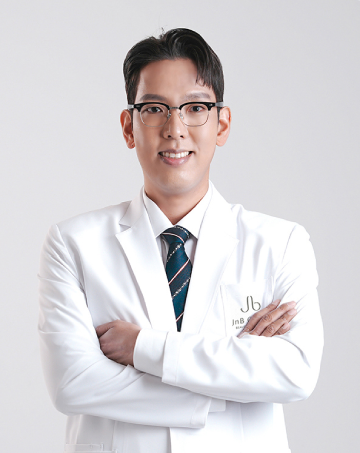
Dr. JuYong Kang
Representative Director & Chief Physician
JNB Clinic Plastic Surgery & Otolaryngology (ENT)
Dr. JuYong Kang is the Representative Director and Chief Physician at JNB Clinic, where he leads all rhinoplasty and functional nasal surgery cases. His dual specialty training in Otolaryngology (ENT) and Plastic & Reconstructive Surgery positions him uniquely to address both the functional and aesthetic dimensions of nasal surgery — an integration that is essential for sleep apnea corrective rhinoplasty.
Dr. Kang completed his medical education at Kyung Hee University School of Medicine and Kyung Hee University Graduate School of Medicine. He has served as Director of both Byeol Plastic Surgery Clinic and Samsung Dream Otolaryngology Clinic before establishing JNB Clinic, where he focuses on rhinoplasty, nasal airway reconstruction, facial plastic and reconstructive surgery, sleep disorders, and stem cell therapy.
He holds full membership in several leading professional societies, including the Korean Society of Otorhinolaryngology-Head and Neck Surgery, the Korean Rhinologic Society, the Korean Society of Facial Plastic and Reconstructive Surgery, the Korean Sleep Research Society, and the Rhinoplasty Research Society of the Korean Society of Plastic and Reconstructive Surgeons.
Dr. Kang's clinical philosophy anchors every procedure at JNB Clinic: "Beautiful, comfortable breathing is where it all begins. The harmony between natural breathing and the face is more important than anything else."
Treatment Areas and Expected Improvements
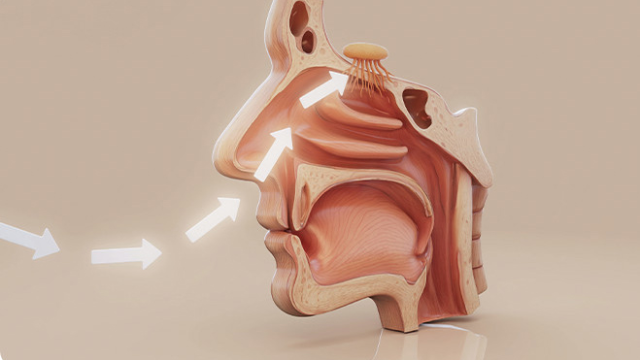
Sleep apnea corrective rhinoplasty at JNB Clinic targets specific anatomical structures that contribute to airway obstruction. Each area is assessed through 3D-CT imaging before surgery and addressed with precision during the procedure.
-
Nasal Septum (Deviated Septum Correction): The nasal septum is the cartilage and bone wall dividing the two nasal passages. When it is deviated — shifted significantly to one side — it can reduce airflow through one or both nostrils and force compensatory mouth breathing during sleep. During surgery, the deviated cartilage is carefully repositioned and stabilized to restore a midline septum and expand the internal airway. Patients with a corrected septum typically notice improved airflow immediately as swelling resolves, with more balanced breathing on both sides of the nose.
-
Turbinate Tissue (Turbinate Reduction): The inferior turbinates are scroll-shaped structures inside the nasal cavity that warm and humidify incoming air. When chronically enlarged — due to allergy, inflammation, or structural reasons — they significantly narrow the nasal airway. During surgery, excess turbinate tissue is reduced using precise surgical techniques to expand the functional airway without disrupting the turbinate's normal physiological role. Patients commonly report reduced nasal congestion and more consistent airflow during sleep following this correction.
-
Nasal Valve (Internal Nasal Valve Reconstruction): The internal nasal valve is the narrowest part of the nasal airway. When this area is weak or collapsible, it restricts incoming airflow and is a recognized structural contributor to obstructive sleep apnea. Nasal valve reconstruction — often performed using spreader grafts harvested from septal cartilage — reinforces the valve and prevents dynamic collapse during inhalation. Patients who previously felt their nostrils "sucking inward" during deep breathing often experience significant relief following this correction.
-
Nasal Bridge and Framework (Structural Rhinoplasty): Asymmetry or deformity of the nasal bridge and outer nasal framework can create irregular airflow resistance within the nasal passages. JNB Clinic addresses dorsal irregularities, bridge asymmetry, and structural instability as part of the functional surgical plan. In patients who also desire aesthetic refinement, dorsal reduction, nasal tip correction, and overall contour improvement may be incorporated into the same surgery without extending recovery time significantly.
Expected Improvements Patients undergoing sleep apnea corrective rhinoplasty at JNB Clinic may experience:
-
Improved nasal airflow and reduced airway resistance during sleep
-
Reduction in snoring frequency and intensity
-
Improved sleep continuity and reduction in nighttime breathing interruptions
-
Decreased daytime fatigue associated with sleep-disordered breathing
-
More comfortable nasal breathing during physical activity
-
Aesthetic refinement of the nasal contour (where cosmetic correction is incorporated)
Individual outcomes vary based on the degree of structural obstruction, the presence of additional non-nasal contributing factors to sleep apnea, and individual healing. No surgical outcome can be guaranteed.
Treatment Process and Timeline
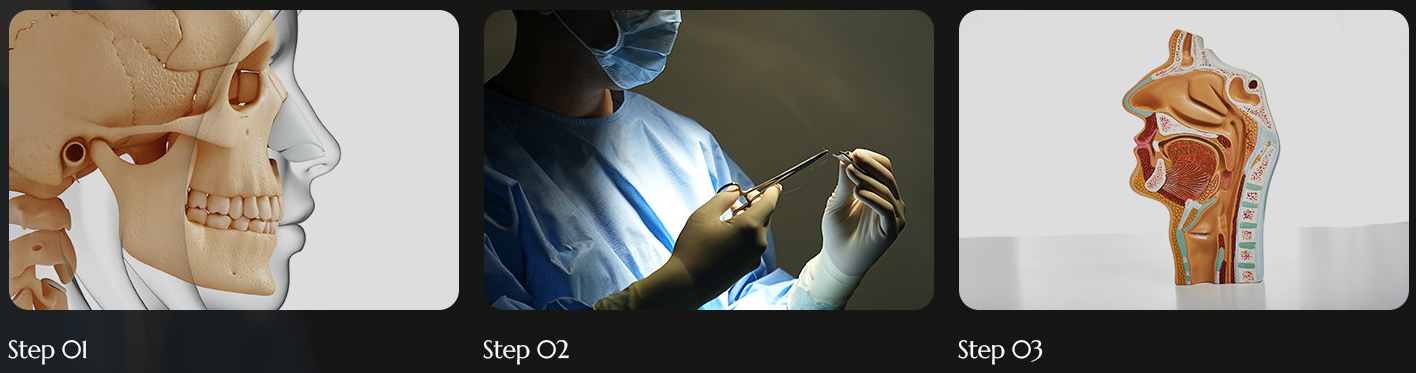
Step 1 — Consultation and Clinical Assessment
The treatment journey begins with a comprehensive consultation with Dr. Kang. The patient's nasal and sleep history is reviewed, including any prior diagnoses, previous surgeries, CPAP use, and symptom patterns. The clinical team discusses the patient's goals — functional, aesthetic, or both — and determines whether surgical correction is an appropriate pathway.
Step 2 — 3D-CT Imaging and Nasal Endoscopy
Before any surgical planning begins, 3D-CT imaging is performed to analyze the nasal cavity, septal cartilage shape, airway dimensions, and structural symmetry in three dimensions. Nasal endoscopy may also be used to directly visualize internal nasal structures. This diagnostic precision allows Dr. Kang to identify all contributing structural causes of obstruction — not just the most obvious — and build a surgical plan specific to each patient's anatomy.
Step 3 — Personalized Surgical Planning
Based on the diagnostic findings, Dr. Kang develops a surgical plan that targets each confirmed area of obstruction. The plan specifies whether septal correction, turbinate reduction, nasal valve reconstruction, or nasal framework surgery — or a combination — is required. If cosmetic improvement is also desired, this is incorporated into the plan at this stage.
Step 4 — Surgery (Closed Rhinoplasty Approach)
The procedure is performed under local anesthesia with sedation or general anesthesia, typically lasting approximately one to two hours. JNB Clinic uses a closed surgical approach, meaning all incisions are made entirely inside the nose. This eliminates visible external scarring and generally supports a faster recovery than open approaches. The deviated septum is repositioned, turbinate tissue is reduced, the nasal valve is reinforced, and any planned structural or cosmetic corrections are completed.
Step 5 — Immediate Postoperative Care
Following surgery, patients are monitored and typically discharged the same day. A nasal splint is placed to support the corrected nasal structures during initial healing and is typically removed around seven days after surgery. JNB Clinic incorporates hyperbaric oxygen therapy and LED regenerative treatments into the postoperative protocol to support healing and reduce recovery time.
Step 6 — Recovery and Follow-Up Monitoring
Major swelling resolves within approximately one to two weeks. Most patients are able to return to daily activities within two to three weeks following surgery. Regular nasal cleansing is recommended to promote mucosal healing. Follow-up appointments allow Dr. Kang to monitor breathing function, confirm structural stability, and ensure the airway is healing as intended. Full structural stabilization continues over several months.
Results, Safety, and Longevity
Sleep apnea corrective rhinoplasty addresses structural causes of airway obstruction — and because these corrections involve cartilage repositioning and framework reconstruction, results are intended to be long-lasting. However, individual outcomes depend on the extent of structural correction required, adherence to postoperative care, and whether non-nasal factors also contribute to the patient's sleep apnea.
JNB Clinic uses only the patient's own septal cartilage (autologous cartilage) for structural grafting, which reduces the risk of rejection, infection, and long-term graft-related complications. The closed approach further reduces surgical trauma to surrounding tissue, supporting cleaner healing and less postoperative swelling compared to open rhinoplasty.
As with any surgical procedure, potential side effects and risks include temporary swelling, bruising, nasal congestion during the healing period, altered sensation, and the possibility of revision if healing does not progress as expected. JNB Clinic provides transparent surgical risk communication during the consultation process, ensuring patients enter surgery with realistic expectations.
This procedure is not a guaranteed cure for sleep apnea. Patients with sleep apnea caused predominantly by factors beyond nasal obstruction — such as pharyngeal tissue laxity or obesity-related airway compression — may require additional or alternative treatment. Post-surgical sleep evaluation may be recommended to assess the degree of improvement in sleep apnea severity.
Why Choose JNB Clinic for Sleep Apnea Corrective Rhinoplasty?
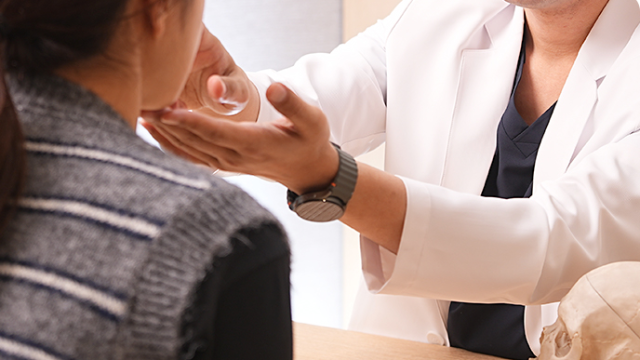
JNB Clinic occupies a unique position in functional nasal surgery: it is led by a physician with dual specialist training in both Otolaryngology and Plastic & Reconstructive Surgery. This means that sleep apnea corrective rhinoplasty at JNB is not approached as either a purely medical procedure or a purely cosmetic one — it is planned and executed as both, simultaneously, by a single surgeon with expertise across both disciplines. Most clinics must coordinate between separate ENT and plastic surgery teams. At JNB, this integration happens within a single surgical plan.
The clinic's use of 3D-CT imaging before every rhinoplasty case ensures that surgical decisions are grounded in precise anatomical data, not clinical assumption. Every correction — whether septal repositioning, turbinate reduction, nasal valve reconstruction, or dorsal refinement — is mapped in three dimensions before surgery begins. This level of diagnostic detail allows Dr. Kang to address all structural contributors to obstruction in a single procedure, reducing the likelihood that patients will require secondary intervention.
JNB Clinic's postoperative protocols reflect the same commitment to precision. Hyperbaric oxygen therapy and LED regenerative treatment support faster mucosal healing, while structured follow-up monitoring ensures that breathing function is continuously evaluated as the nose heals. For international patients travelling for surgery, the clinic's same-day discharge policy and approximately two-to-three-week major recovery timeline allow for surgical planning that is compatible with travel schedules.
Key differentiators:
-
Dual-specialist surgeon: ENT and Plastic & Reconstructive Surgery expertise in one physician
-
3D-CT diagnostic system for anatomically precise surgical planning
-
Closed rhinoplasty approach — no visible external scars
-
Autologous cartilage use for structural grafting — no synthetic implant risk
-
Integrated functional and cosmetic planning without extending recovery time
-
Postoperative hyperbaric oxygen and LED regenerative therapy protocols
Patient Experiences
Patient A — Chronic Nasal Obstruction and Disrupted Sleep
A patient in their mid-thirties presented with years of one-sided nasal blockage and progressively worsening snoring. 3D-CT imaging confirmed a significantly deviated septum with secondary turbinate enlargement on the opposite side. Following closed septoplasty with turbinate reduction, the patient reported substantially improved nasal airflow and a notable reduction in snoring intensity. Recovery was largely complete within two weeks, with no visible scarring.
Patient B — Nasal Valve Collapse Following Previous Rhinoplasty
A patient in their late forties had undergone rhinoplasty elsewhere and developed progressive breathing difficulty in the years following. Endoscopic evaluation identified bilateral nasal valve collapse. Dr. Kang performed closed rhinoplasty with spreader graft reconstruction using autologous septal cartilage. The patient experienced a marked improvement in nasal airflow and reported sleeping through the night without breathing interruptions for the first time in several years.
Patient C — Combined Functional and Cosmetic Goals
A patient in their early forties sought correction for both obstructive breathing and aesthetic concerns about nasal bridge asymmetry. JNB Clinic developed a combined surgical plan addressing the deviated septum, nasal valve, and dorsal contour within a single closed procedure. The patient achieved both improved breathing function and a more symmetrical nasal profile with a single recovery period.
Final Call to Action
Ready to Address the Root Cause of Your Sleep Apnea?
If nasal obstruction is affecting your sleep, your energy, and your quality of life, structural correction may offer a lasting path forward. JNB Clinic invites you to schedule a comprehensive consultation with Dr. JuYong Kang — dual-specialist in Otolaryngology and Plastic & Reconstructive Surgery — to determine whether sleep apnea corrective rhinoplasty is the right approach for your anatomy and goals. Using 3D-CT imaging, Dr. Kang will assess your nasal structure in full and build a personalized surgical plan that targets the specific causes of your obstruction. Take the first step toward natural, comfortable breathing.
Book Your Consultation with Dr. Kang
For international enquiries or to request a detailed surgical assessment, contact JNB Clinic directly through the enquiry form or clinic contact line.
Your breathing concerns deserve a precise, evidence-based answer — not a generalized solution.
Other Services
Explore additional treatments offered by our specialists.

Silhouette Lifting
Silhouette Soft is a minimally invasive, absorbable thread lift that repositions sagging facial tissue while simultaneously triggering the skin's natural collagen production.
Learn More

Botox
Botox — short for botulinum toxin — is a refined, medical-grade protein that temporarily reduces the activity of targeted facial muscles.
Learn More

Facial Liposuction
Facial liposuction is a minimally invasive contouring procedure that removes localized fat deposits from specific areas of the face and lower face.
Learn More