Personalized Nasal & Facial Care • Dedicated International Patient Concierge


Rhinoplasty (Nose Reshaping Surgery)
Revision Rhinoplasty
Revision rhinoplasty — also known as secondary rhinoplasty — is a corrective surgical procedure performed to address complications, aesthetic dissatisfaction, or functional problems arising from a previous nose surgery.
Schedule a Consultation
What Is Revision Rhinoplasty in Rhinoplasty Surgery?
Revision rhinoplasty — also known as secondary rhinoplasty — is a corrective surgical procedure performed to address complications, aesthetic dissatisfaction, or functional problems arising from a previous nose surgery. It is widely recognized as one of the most technically demanding procedures in facial plastic surgery.
Unlike primary rhinoplasty, revision surgery must contend with altered anatomy. Scar tissue may have thickened the skin envelope. Previously implanted materials may have shifted or created fibrosis. Cartilage may have been removed beyond a structurally safe threshold, leading to collapse or visible deformity. These conditions mean that revision rhinoplasty cannot be approached with a standardized template — each case demands precise pre-surgical analysis, a tailored reconstruction plan, and a surgeon who understands both the cosmetic and functional dimensions of the nose.
At JNB Clinic, revision rhinoplasty is approached as a medically complete reconstruction — not a cosmetic touch-up. The clinic's philosophy, anchored in the belief that "beautiful, comfortable breathing is where it all begins," reflects a commitment to restoring both the appearance and the physiological function of the nose simultaneously.
The difference between a good revision outcome and a poor one often lies not in the operating room alone, but in the depth of pre-operative assessment. JNB Clinic uses a 3D-CT precision diagnostic system to evaluate skin thickness, cartilage condition, the position and state of any existing implants, blood vessel distribution, and the condition of the nasal airway — providing a structural map that guides every surgical decision.
Who Needs Revision Rhinoplasty Treatment?
Revision rhinoplasty is not a routine procedure. It is appropriate for patients who have undergone a prior rhinoplasty and are experiencing one or more of the following:
-
Implant-related complications: The implant has visibly shifted, become palpable under the skin, or caused localized contracture, inflammation, or skin thinning over time.
-
Nasal bridge collapse or over-reduction: The dorsum has been reduced too aggressively in a previous procedure, resulting in a saddle nose appearance or loss of structural support.
-
Asymmetrical tip or dorsum: One side of the nose appears visibly different from the other — a common complication when prior surgery did not adequately account for the patient's individual facial geometry.
-
Scar tissue fibrosis and contracture: Severe contracture or fibrotic scarring from a prior surgery has distorted the nasal shape, stiffened the skin, or compromised tissue health.
-
Functional breathing impairment: The patient experiences persistent nasal obstruction, deviated airflow, or difficulty breathing through the nose following a previous rhinoplasty.
-
Unsatisfactory cosmetic outcome: The nose tip is disproportionately wide, upturned, or too long relative to the patient's facial proportions, and prior attempts at correction were inadequate.
-
Complications from injectable fillers: Prior nasal filler injections have resulted in vascular compromise, asymmetry, or tissue changes that require surgical intervention.
-
Patients who want a refined, natural-looking nose aligned with their overall facial balance — and who have previously been unable to achieve this outcome through other means.
Candidates for revision rhinoplasty are typically adults whose nasal structures have been compromised by prior intervention and who are in good general health. A thorough consultation is essential to determine suitability, timing (the nose should generally be allowed to heal fully from the prior procedure before revision), and the appropriate surgical approach.
Meet the Specialist in Revision Rhinoplasty
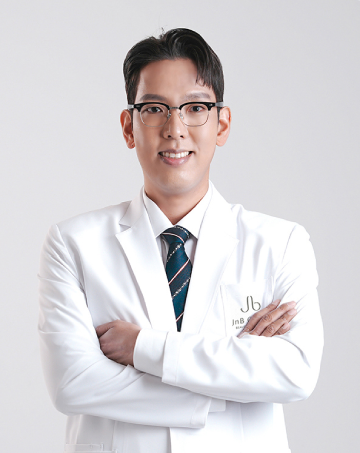
Dr. JuYong Kang
Representative Director & Chief Physician
JNB Clinic Plastic Surgery & Otolaryngology (ENT)
Dr. JuYong Kang Representative Director & Chief Physician, JNB Clinic Dual Specialist: Plastic Surgery and Otolaryngology (ENT)
Dr. JuYong Kang holds one of the most clinically rare combinations in nasal surgery: dual board-level expertise in both plastic surgery and otolaryngology. This means he approaches every revision rhinoplasty case from two simultaneous vantage points — the reconstructive surgeon's attention to structural integrity and the ENT specialist's deep understanding of nasal physiology, airway function, and internal anatomy.
His academic training was completed at Kyung Hee University School of Medicine and Kyung Hee University Graduate School of Medicine. He has served as Director of Byeol Plastic Surgery Clinic and Director of Samsung Dream Otolaryngology Clinic before establishing JNB Clinic, where he currently serves as Representative Director and Chief Physician.
Dr. Kang holds full membership in the Korean Society of Otorhinolaryngology-Head and Neck Surgery, the Korean Rhinologic Society, the Korean Society of Facial Plastic and Reconstructive Surgery, the Korean Society for Stem Cell Therapy, the Korean Sleep Research Society, the Rhinoplasty Research Society of the Korean Society of Plastic and Reconstructive Surgeons, and the Anti-Aging Plastic Surgery Research Society.
His specialist scope covers rhinoplasty, nasal airway reconstruction, facial plastic and reconstructive surgery, sleep disorders, and stem cell therapy — an unusually broad clinical foundation that is particularly relevant in complex revision cases where structural, functional, and tissue health concerns intersect.
Dr. Kang's guiding philosophy: "Beautiful, comfortable breathing is where it all begins. The harmony between natural breathing and the face is more important than anything else." This principle shapes every revision rhinoplasty case at JNB Clinic, ensuring that outcomes serve the patient both aesthetically and physiologically.
Treatment Areas and Expected Improvements
Revision rhinoplasty at JNB Clinic addresses the following anatomical and functional targets:
-
Nasal dorsum (bridge) reconstruction: In cases where the bridge has been over-reduced, collapsed, or distorted by prior surgery, autologous cartilage — sourced from the patient's own septum, ear (auricular), or rib cartilage — is used to rebuild structural height and continuity. The 3D-CT system pre-operatively calculates the ideal height and width ratio relative to the patient's facial proportions. Patients may expect a more balanced, naturally projecting bridge that integrates harmoniously with the midface. Individual healing and tissue quality affect the final contour.
-
Nasal tip refinement and repositioning: The tip is one of the most technically challenging areas in revision surgery due to accumulated scar tissue and previously altered cartilage architecture. JNB Clinic addresses over-rotated, under-projected, or asymmetric tips using autologous cartilage grafting and structural suturing techniques. Expected improvements include a more defined, natural-looking tip that complements the overall nasal line. Results vary based on skin thickness and tissue response.
-
Implant removal and capsule management: Silicone or artificial implants that have migrated, become visible, or caused contracture are carefully removed. The surrounding fibrous capsule is cleared using microsurgical dissection techniques that minimize healthy tissue disruption. Following removal, the space is reconstructed using the patient's own cartilage tissue, reducing the risk of future implant-related complications. Patients should be aware that healing timelines post-implant removal vary, and final shape stabilization may take several months.
-
Scar tissue and fibrotic capsule removal: Scar tissue left by previous surgeries is a primary driver of contracture, distortion, and re-infection risk. JNB Clinic employs microscopic-level micro-dissection techniques to precisely separate fibrotic scar layers from surrounding healthy tissue, removing only what is necessary. This approach allows the skin to recover flexibility while creating a clean structural base for new cartilage placement.
-
Nasal airway restoration: In patients where previous rhinoplasty has impaired breathing — due to deviated internal structures, collapsed lateral walls, or narrowed internal valve areas — JNB Clinic addresses functional deficits simultaneously with cosmetic correction. During surgery, deviated septal segments are straightened, internal obstructions causing airflow restriction are widened, and abnormally enlarged mucosal tissue is reduced. The goal is a nose that breathes comfortably, not just one that looks corrected.
Treatment Process and Timeline
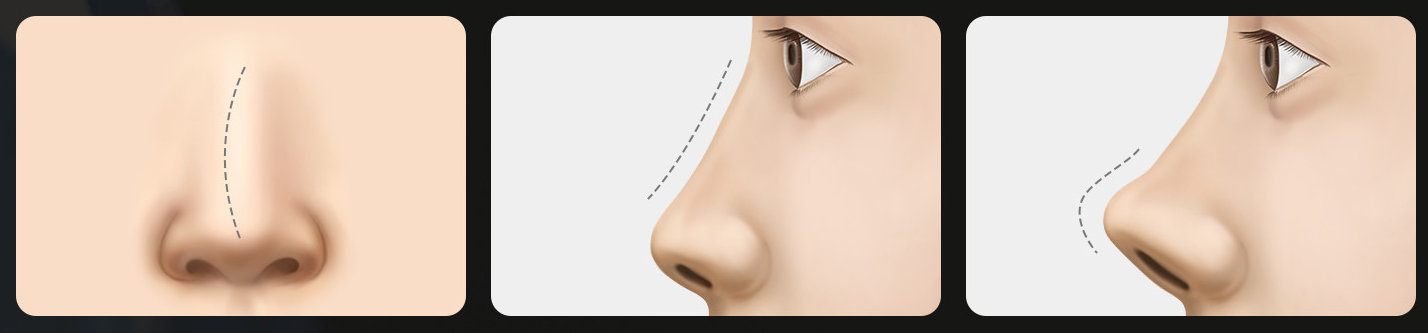
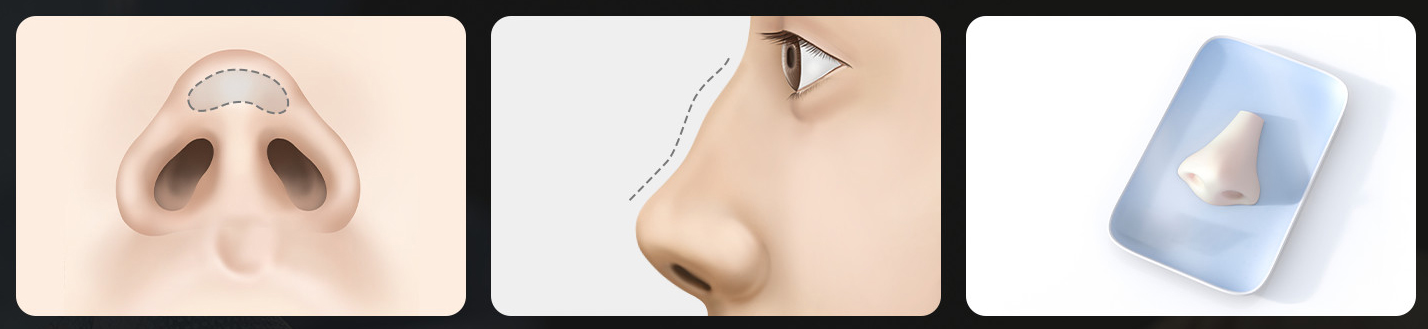
1. Initial consultation and case review
The process begins with a detailed consultation with Dr. JuYong Kang. The patient's prior surgical history, current concerns, and aesthetic goals are discussed. Photographs and any existing medical records from prior procedures are reviewed. The consultation establishes realistic expectations and determines whether the patient is a suitable candidate for revision surgery.
2. 3D-CT precision diagnostic assessment
JNB Clinic conducts a comprehensive 3D-CT analysis of the patient's nasal structures. This goes beyond surface-level visual assessment to evaluate skin thickness, internal bone and cartilage architecture, the precise position and condition of any existing implants, blood vessel mapping, and the state of the nasal airway. This imaging provides the surgical roadmap for the revision procedure.
3. Pre-operative planning — including stem cell therapy where indicated
For patients with severe contracture, previously failed surgeries, or significantly compromised tissue quality, pre-operative stem cell therapy may be planned to stabilize and regenerate tissue before the revision procedure is undertaken. When tissue health is inadequate for safe surgery, building a more stable biological foundation first supports better and safer outcomes. This is not universally required; it is planned on an individual case basis.
4. Surgical procedure
Revision rhinoplasty at JNB Clinic is performed under sedation anesthesia (general anesthesia if required). The procedure typically takes approximately 2 to 3 hours. Where possible, a closed technique is employed. Autologous cartilage from the septum, ear, or rib is harvested and used to reconstruct the structural framework of the nose. Existing implants are removed, scar tissue is cleared under microscopic guidance, and functional airway structures are repaired simultaneously. The skin is then re-draped over the new framework.
5. Immediate post-operative care
Following surgery, JNB Clinic's integrated post-care system is activated. This includes high-pressure lymphatic drainage therapy, aqua therapy, LED light therapy, scar therapy, stem cell therapy, and PRP (platelet-rich plasma) therapy — all coordinated to reduce swelling, support tissue healing, minimize scar formation, and optimize the recovery environment.
6. Suture removal and recovery timeline
External sutures are typically removed on day 7 post-surgery. Initial swelling reduces significantly within the first few weeks, though complete stabilization of the nasal shape — particularly in revision cases — can take between 2 and 6 months. Individual healing timelines vary. Patients are advised to follow all post-operative instructions and attend scheduled follow-up appointments throughout the recovery period.
Results, Safety, and Longevity
Revision rhinoplasty is among the most complex procedures in facial surgery, and realistic expectations are essential. At JNB Clinic, results are not measured only by aesthetic appearance on a recovery photograph — they are measured by structural stability, functional breathing quality, and long-term tissue integration.
Autologous cartilage, when used correctly, integrates naturally with the body's own tissue over time. Unlike synthetic implants, which carry ongoing risks of migration or encapsulation, the patient's own cartilage becomes part of the nasal structure — maintaining support and shape in a biologically stable manner. This is why JNB Clinic prioritizes autologous reconstruction over implant dependency.
The durability of revision rhinoplasty results depends on several factors: the degree of tissue compromise present at the time of surgery, the quality of healing during recovery, adherence to post-operative care protocols, and individual anatomical variables. Results described as semi-permanent reflect the long-term stability of autologous cartilage integration following full recovery.
From a safety standpoint, JNB Clinic's approach incorporates multiple risk-reduction layers: 3D-CT pre-surgical mapping to prevent intraoperative surprises, microscopic scar tissue dissection to protect healthy tissue, a preference for autologous over synthetic materials to reduce implant-related risk, and the comprehensive post-care system to manage inflammation and support healing. Common post-operative effects include swelling, bruising, and temporary nasal stiffness — all expected aspects of recovery that resolve progressively over weeks to months.
Patients are advised that revision rhinoplasty carries inherently higher complexity and variability than primary surgery, and that outcomes — while potentially significant — cannot be guaranteed. A detailed pre-surgical consultation is the most important step toward understanding what is realistically achievable in an individual case.
Why Choose JNB Clinic for Revision Rhinoplasty?
Revision rhinoplasty demands a level of surgical expertise and diagnostic infrastructure that goes well beyond what is required for primary nasal surgery. At JNB Clinic, the clinical environment has been built specifically to meet the demands of complex revision cases — not as a secondary offering, but as a core surgical specialty.
Dr. JuYong Kang's dual certification in plastic surgery and ENT is foundational to this capability. Most surgeons approach nasal correction from one disciplinary direction. Dr. Kang's training allows him to simultaneously evaluate and treat both the external aesthetic structure and the internal functional anatomy — making him particularly suited to cases where prior surgery has created both cosmetic and breathing problems. His membership across seven professional medical societies, including the Korean Rhinologic Society and the Rhinoplasty Research Society, reflects a level of professional engagement that keeps his practice aligned with current evidence and technique.
JNB Clinic's philosophy — "Beauty that Breathes" — is not a marketing slogan. It is a clinical framework that governs how every revision case is assessed and planned. The goal is never simply to correct what looks wrong. It is to restore a nose that functions naturally, sits harmoniously within the patient's overall facial proportions, and remains stable over time.
Key differentiators at JNB Clinic for revision rhinoplasty:
-
3D-CT precision diagnostic system: Pre-surgical imaging that maps bone structure, cartilage condition, implant position, blood vessel distribution, and airway status — providing surgical clarity that external observation alone cannot offer.
-
Autologous cartilage-first reconstruction: Minimizing dependence on synthetic implants and using the patient's own septal, auricular, or costal cartilage as the primary structural material for long-term biological stability.
-
Integrated pre- and post-operative care system: Including high-pressure lymphatic therapy, aqua therapy, LED therapy, scar therapy, stem cell therapy, and PRP — a comprehensive recovery program that treats the surgical outcome as the beginning, not the end, of care.
-
Dual-specialty surgical planning: Every revision case benefits from both plastic surgical precision and ENT functional expertise within a single physician — eliminating the coordination gap that can occur when cosmetic and functional concerns are treated separately.
JNB Clinic also serves international patients seeking revision rhinoplasty, offering consultation and treatment planning frameworks adapted for those traveling for care.
Real Patient Experiences
Patient A — Implant Migration and Contracture Correction
A patient in her late twenties presented with a silicone implant that had visibly shifted over two years following her initial rhinoplasty. The skin over the bridge had thinned, and the implant edge was becoming palpable. Following 3D-CT assessment, the implant was removed under microscopic dissection, the surrounding fibrotic capsule was cleared, and the dorsum was reconstructed using auricular cartilage. At six months post-procedure, swelling had resolved and the patient reported both an improved nasal profile and comfortable breathing.
Patient B — Collapsed Nose Reconstruction After Over-Resection
A male patient in his mid-thirties had undergone two prior rhinoplasty procedures elsewhere, resulting in significant over-reduction of the nasal bridge and a saddle-nose deformity. Pre-operative stem cell therapy was planned to stabilize tissue before surgery. Costal cartilage was harvested and used to rebuild the structural framework of the bridge and tip. The patient also reported improved nasal airflow following the procedure, as internal obstructions identified on 3D-CT were addressed during the same surgical session.
Patient C — Asymmetry and Tip Distortion After Prior Surgery
A patient in her early thirties sought revision following a previous rhinoplasty that had left her nasal tip visibly rotated to one side, with skin irregularity on the left nasal sidewall. JNB Clinic's 3D-CT analysis identified both the cartilage asymmetry and residual scar tissue contributing to the distortion. Micro-dissection removed the fibrotic tissue layer, and septal cartilage was used to rebuild the tip framework symmetrically. At four months, the patient described a marked improvement in both the symmetry and natural appearance of her nose.
Final Call to Action
Ready to Take the Next Step Toward a Nose That Looks Right and Breathes Well?
Revision rhinoplasty is a significant decision, and choosing the right specialist is the most important part of the process. At JNB Clinic, Dr. JuYong Kang brings dual-specialty expertise in plastic surgery and ENT, advanced 3D-CT diagnostic technology, and a philosophy built entirely around restoring both the appearance and the function of your nose. Whether you are dealing with implant complications, asymmetry, breathing impairment, or an outcome that simply never matched your expectations, a thorough consultation is the first step toward understanding what is possible. JNB Clinic welcomes both domestic and international patients and provides individualized consultation planning for complex revision cases.
Contact JNB Clinic to book your consultation →
For international patients or those seeking a first review before committing to travel, JNB Clinic also offers remote consultation options. Reach out through the clinic's official contact channels to begin the process.
Your concerns are valid. Your goals are worth addressing. JNB Clinic is here to help you move forward with clarity and confidence.
Other Services
Explore additional treatments offered by our specialists.

Silhouette Lifting
Silhouette Soft is a minimally invasive, absorbable thread lift that repositions sagging facial tissue while simultaneously triggering the skin's natural collagen production.
Learn More

Botox
Botox — short for botulinum toxin — is a refined, medical-grade protein that temporarily reduces the activity of targeted facial muscles.
Learn More

Facial Liposuction
Facial liposuction is a minimally invasive contouring procedure that removes localized fat deposits from specific areas of the face and lower face.
Learn More