Personalized Nasal & Facial Care • Dedicated International Patient Concierge


Deviated Septum Surgery
Nasal Bone Fracture
Nasal bone fracture surgery refers to a set of procedures designed to realign displaced bone, restore the nasal airway, correct septal deviation, and — where necessary — reinforce the structural framework of the nose using the patient's own cartilage.
Schedule a Consultation
What is nasal bone fracture surgery?
The nasal bone is one of the most commonly fractured bones in the face. Because the nose projects outward and lacks the protective muscular tissue covering other facial structures, even moderate force from a sports collision, fall, or traffic accident can displace the nasal bones and damage the septum beneath.
Nasal bone fracture surgery refers to a set of procedures designed to realign displaced bone, restore the nasal airway, correct septal deviation, and — where necessary — reinforce the structural framework of the nose using the patient's own cartilage. The goal is not simply to "set" the broken nose, but to ensure that the nasal structure heals in a position that supports comfortable breathing, a balanced facial appearance, and long-term stability.
At JNB Clinic, treatment begins with a thorough 3D-CT diagnostic evaluation rather than surface-level physical examination alone. This allows the surgical team to visualize the fracture in three dimensions, assess the full extent of bone displacement, and design a treatment plan that addresses both functional and aesthetic outcomes from the outset.
Who needs nasal bone fracture treatment?
Not every nasal injury requires surgery, but many fractures — particularly those involving displacement, septum involvement, or complex multi-fragment breaks — benefit significantly from prompt, expert intervention. The following patients are typically good candidates for nasal bone fracture repair at JNB Clinic:
-
Patients who sustained a nasal bone fracture from a sports injury, traffic accident, fall, or physical impact and notice visible deformity in the nose
-
Patients experiencing difficulty breathing through one or both nostrils following nose trauma, which may indicate septal deviation or airway narrowing
-
Patients who developed nasal asymmetry or a crooked nose appearance after a fracture that was left untreated or healed improperly
-
Patients with persistent nosebleeds, nasal congestion, or pressure in the nasal region following an injury
-
Patients seeking both functional correction and aesthetic improvement after post-traumatic nasal deformity
-
Patients who received initial emergency treatment for a fractured nose but continue to experience structural or breathing concerns
-
Patients planning elective post-traumatic rhinoplasty to address both nasal bone realignment and overall nasal contour
-
Patients who want a scar-free, minimally invasive approach wherever clinically appropriate
If you have experienced nose trauma — even in the past — and notice any asymmetry, airway obstruction, or aesthetic irregularity, a diagnostic evaluation is an important first step.
Meet the specialist: Dr. JuYong Kang
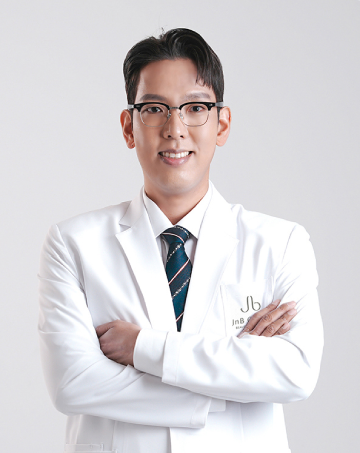
Dr. JuYong Kang
Representative Director & Chief Physician
JNB Clinic Plastic Surgery & Otolaryngology (ENT)
Dr. JuYong Kang is the Representative Director and Chief Physician of JNB Clinic, and brings a uniquely integrated clinical perspective to nasal bone fracture care. Trained in both Plastic Surgery and Otolaryngology (ENT), Dr. Kang holds qualifications from Kyung Hee University School of Medicine and Kyung Hee University Graduate School of Medicine. He has served as Director of both Byeol Plastic Surgery Clinic and Samsung Dream Otolaryngology Clinic before establishing JNB Clinic.
Dr. Kang specializes in rhinoplasty, nasal airway reconstruction, and facial plastic and reconstructive surgery — making him distinctively qualified to address nasal bone fractures from both a functional and aesthetic standpoint simultaneously. His dual expertise means that patients receive care that does not sacrifice airway function for appearance, or appearance for function.
He is a full member of the Korean Society of Otorhinolaryngology–Head and Neck Surgery, the Korean Rhinologic Society, the Korean Society of Facial Plastic and Reconstructive Surgery, the Rhinoplasty Research Society of the Korean Society of Plastic and Reconstructive Surgeons, and several additional professional bodies.
Dr. Kang's clinical philosophy guides every case at JNB Clinic: "Beautiful, comfortable breathing is where it all begins. The harmony between natural breathing and the face is more important than anything else."
Treatment areas and expected improvements
-
**Nasal bone realignment: **When the nasal bones are displaced from their correct anatomical position following a fracture, the nose may appear crooked, widened at the bridge, or shifted to one side. Closed or open reduction surgery at JNB Clinic repositions these bones to restore a straight, symmetrical nasal profile. Patients typically notice visible improvement in nasal symmetry following the procedure, though final results depend on the extent of displacement and individual healing patterns.
-
Nasal septal deviation correction: Trauma to the nose frequently involves the nasal septum — the cartilaginous and bony wall dividing the two nasal passages. Septal deviation following a fracture can narrow one or both airways, causing difficulty breathing, snoring, or a sense of nasal obstruction. During nasal axis reinforcement procedures, JNB Clinic addresses septal deviation to restore balanced airflow. Improvement in breathing function is a common outcome; the degree of improvement varies between individuals.
-
Structural nasal framework reinforcement: For complex or multiple nasal fractures, simple bone repositioning may not be sufficient to maintain long-term structural integrity. JNB Clinic performs nasal axis reinforcement using autologous cartilage — taken from the patient's own nasal septal cartilage — to rebuild and stabilize the nasal framework. This technique reduces the risk of future collapse, asymmetry, or secondary deformity. Because autologous cartilage is used, integration with the patient's own tissue is generally more predictable.
-
**Nasal contour and facial harmony: **Beyond the structural repair of a fractured nose, JNB Clinic's 3D-CT-guided treatment planning considers the angle, length, projection, and overall shape of the nose in relation to the patient's facial proportions. Where aesthetic refinement is needed alongside functional repair, customized rhinoplasty planning can be incorporated. Outcomes are tailored to each individual; results vary based on anatomy, fracture severity, and patient goals.
Treatment process and timeline
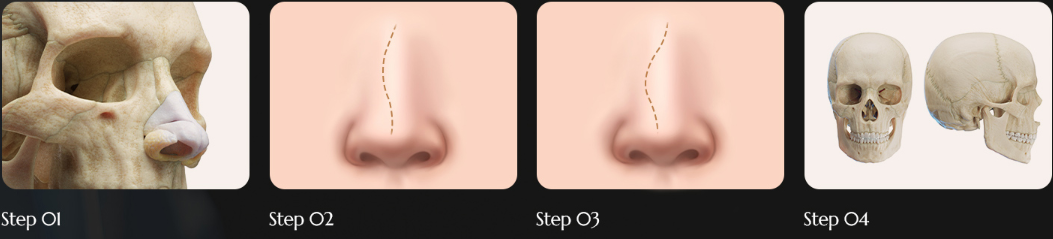
Step 1 — Consultation and clinical evaluation
Your care begins with a detailed consultation with Dr. JuYong Kang. The nature, timing, and severity of the nasal injury are assessed alongside your functional symptoms and aesthetic concerns. A full medical history is taken to ensure treatment suitability and to identify the most appropriate surgical approach.
Step 2 — 3D-CT and endoscopic diagnostic imaging
JNB Clinic uses 3D-CT imaging to precisely analyze the location, shape, and severity of the nasal bone fracture. This three-dimensional view reveals not only the fractured bone but also the condition of the nasal cavity structure, cartilage, and surrounding anatomy. This diagnostic depth allows a treatment plan to be developed that addresses both functional and aesthetic outcomes from the start.
Step 3 — Surgical planning
Based on the 3D-CT findings, Dr. Kang establishes an individualized surgical plan. For mild, straightforward fractures, closed reduction under local anesthesia is planned. For complex or multi-fragment fractures, open reduction combined with nasal axis reinforcement using autologous cartilage is recommended. Where indicated, customized rhinoplasty elements may be integrated into the plan.
Step 4 — Nasal bone fracture surgery
Closed reduction (approximately 15 minutes) is performed under local anesthesia or sedation. Specialized instruments are used to reposition the fractured nasal bone to its correct anatomical location without any external incisions, leaving no visible scars. For more complex cases, open reduction with nasal axis reinforcement (approximately 1 hour) may be performed, with any necessary structural cartilage work completed during the same session. All procedures are performed as same-day surgeries with no hospitalization required.
Step 5 — Post-operative recovery support
Following surgery, JNB Clinic provides hyperbaric oxygen therapy and regenerative LED light treatment to support faster healing and reduce post-operative swelling and bruising. These recovery modalities are a distinctive element of JNB's aftercare protocol and aim to shorten overall recovery time.
Step 6 — Follow-up and outcome monitoring
Follow-up 3D-CT imaging may be performed to evaluate treatment outcomes and monitor structural healing. For closed reduction procedures, recovery typically involves minimal swelling and bruising. For open reduction and reconstructive procedures, the main recovery period is approximately one month. Final scar maturation for procedures involving incisions may take two to three months; advanced scar management may be recommended when necessary.
Results, safety, and recovery expectations
Nasal bone fracture surgery at JNB Clinic is designed to achieve reliable functional and structural outcomes while minimizing risks and recovery burden wherever possible. Closed reduction — the most commonly performed approach for uncomplicated fractures — involves no external incisions, produces no visible external scarring, and carries a relatively short recovery period with minimal disruption to daily life.
For more complex reconstructive procedures, recovery is longer and requires careful follow-up, but the comprehensive 3D-CT-based planning at JNB Clinic is specifically intended to reduce the risk of postoperative deformity and the need for revision procedures. The use of autologous cartilage in nasal axis reinforcement avoids the risks associated with synthetic implants and promotes more natural tissue integration.
As with any surgical procedure, there are inherent risks, including swelling, bruising, temporary changes in sensation, and the possibility that additional treatment may be needed depending on how the individual heals. Dr. Kang discusses all relevant risks transparently during the consultation process, and no specific outcomes are guaranteed. Final results depend on the severity of the original fracture, the patient's anatomy, and individual healing response.
Patients seeking treatment for a nasal bone fracture are encouraged to seek evaluation promptly following an injury, as timely intervention generally offers more treatment options and more predictable outcomes.
Why choose JNB Clinic for nasal bone fracture surgery?
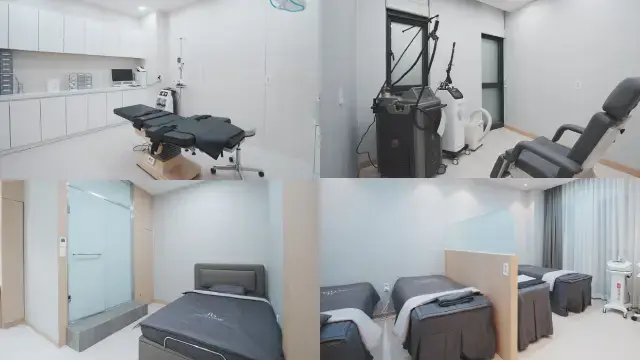
JNB Clinic occupies a distinctive position in nasal fracture care because Dr. JuYong Kang holds dual expertise in both Otolaryngology (ENT) and Plastic and Reconstructive Surgery. This means that a single specialist evaluates and treats the functional aspects of a nasal fracture — airway patency, septal position, nasal breathing — alongside the structural and aesthetic dimensions. Patients do not need to navigate between departments or reconcile conflicting treatment recommendations from multiple specialists.
The clinic's use of 3D-CT imaging as a standard diagnostic tool — rather than an optional add-on — reflects a commitment to precision that extends through every stage of care. Treatment plans are built on three-dimensional anatomical evidence, not surface-level assessment alone. This diagnostic investment is central to the clinic's ability to address both immediate fracture repair and long-term outcomes in a single coordinated plan.
Post-operative recovery at JNB Clinic is actively supported through hyperbaric oxygen therapy and regenerative LED treatment, modalities that are specifically incorporated to reduce healing time and optimize tissue recovery. This aftercare protocol reflects the clinic's recognition that surgical outcomes are shaped not only by the procedure itself but by the quality of recovery support that follows.
Key differentiators:
-
Dual ENT and plastic surgery expertise under a single specialist — Dr. JuYong Kang — for integrated functional and aesthetic nasal fracture care
-
Precision 3D-CT diagnostic imaging as a standard step, providing three-dimensional fracture analysis before any surgical planning begins
-
Full spectrum of nasal fracture procedures: from 15-minute closed reduction to advanced open reduction with autologous cartilage nasal axis reinforcement
-
Active post-operative recovery support using hyperbaric oxygen therapy and LED light treatment to accelerate healing
-
Same-day discharge for all nasal bone fracture procedures, minimizing hospitalization burden
-
Customized rhinoplasty planning available when aesthetic refinement is needed alongside structural repair
Patient Experiences
Patient A — Sports-related nasal fracture with airway concern
A male patient in his 30s presented to JNB Clinic following a nasal injury sustained during a contact sport. He reported visible asymmetry in the bridge of his nose and noticeable difficulty breathing through his left nostril. 3D-CT imaging confirmed displacement of the nasal bones and mild septal deviation. Following closed reduction with targeted nasal axis reinforcement, he returned to light daily activities within days and reported improved nasal airflow during follow-up.
Patient B — Post-traumatic nasal deformity following vehicle accident
A female patient in her 40s sought consultation at JNB Clinic after a nasal fracture sustained in a traffic accident several months prior had healed in an asymmetrical position. She was concerned about both the visible deviation of her nasal bridge and an ongoing sense of nasal obstruction. After thorough 3D-CT evaluation, Dr. Kang recommended open reduction with nasal axis reinforcement using autologous septal cartilage. Recovery progressed over approximately one month, with the patient reporting satisfaction with both functional and aesthetic improvement at her follow-up appointment.
Patient C — Untreated childhood nasal fracture revisited in adulthood
A male patient in his 20s presented having sustained a nasal fracture as a teenager that had never received formal treatment. He reported longstanding nasal asymmetry, a slightly crooked bridge, and occasional difficulty breathing at night. Following 3D-CT assessment, a customized surgical plan was developed incorporating both structural correction and aesthetic refinement elements. Results following recovery included improved nasal symmetry and a reduction in nighttime breathing difficulty.
Ready to restore your breathing and nasal structure?
Schedule your nasal bone fracture consultation at JNB Clinic
A nasal fracture — whether recent or long-standing — deserves careful, specialist evaluation before any treatment decisions are made. At JNB Clinic, Dr. JuYong Kang brings together dual expertise in ENT and facial plastic surgery, 3D-CT precision diagnostics, and a full range of nasal fracture procedures to create a treatment plan that addresses both your breathing function and the appearance of your nose. Whether your injury is fresh or you have been living with a post-traumatic deformity for years, our team is ready to evaluate your case with the depth and care it requires.
Book your consultation with Dr. JuYong Kang — Representative Director and Chief Physician, JNB Clinic.
For international patients and those with scheduling questions, our team is available to assist with consultation booking and pre-visit inquiries through our clinic contact channels.
Other Services
Explore additional treatments offered by our specialists.

Silhouette Lifting
Silhouette Soft is a minimally invasive, absorbable thread lift that repositions sagging facial tissue while simultaneously triggering the skin's natural collagen production.
Learn More

Botox
Botox — short for botulinum toxin — is a refined, medical-grade protein that temporarily reduces the activity of targeted facial muscles.
Learn More

Facial Liposuction
Facial liposuction is a minimally invasive contouring procedure that removes localized fat deposits from specific areas of the face and lower face.
Learn More