Personalized Nasal & Facial Care • Dedicated International Patient Concierge


Rhinoplasty (Nose Reshaping Surgery)
Implant-Free Rhinoplasty
Implant-free rhinoplasty — also referred to as non-implant rhinoplasty or autologous rhinoplasty — is a surgical procedure that reshapes and restructures the nose using only tissue harvested from the patient's own body.
Schedule a Consultation
What is implant-free rhinoplasty?
Implant-free rhinoplasty — also referred to as non-implant rhinoplasty or autologous rhinoplasty — is a surgical procedure that reshapes and restructures the nose using only tissue harvested from the patient's own body. No silicone implants, no Gore-Tex sheets, and no synthetic materials are introduced. Instead, the procedure relies entirely on the patient's own nasal septal cartilage, ear cartilage, and in some cases costal cartilage to build and refine the nasal framework.
This approach differs fundamentally from conventional implant-based rhinoplasty. In a standard augmentation rhinoplasty, a shaped silicone implant is inserted under the nasal skin to elevate the bridge, while tip refinement may be performed separately. With implant-free rhinoplasty, every structural change — from bridge height to tip projection and nasal axis alignment — is achieved through precise cartilage placement and redistribution. The result is a nose built from living tissue that integrates biologically with the surrounding anatomy.
Over time, autologous cartilage becomes fully vascularized and incorporated into the nasal structure. This means the nose retains a natural softness and flexibility — it moves naturally when you smile, laugh, or touch it — rather than exhibiting the stiffness or visible contour lines sometimes associated with synthetic implants. At JNB Clinic, this procedure goes beyond simply avoiding implants; it is designed around the principles of facial harmony, structural stability, and what Dr. Kang describes as "beauty that breathes."
Who is a candidate for implant-free rhinoplasty?
Implant-free rhinoplasty is not a one-size-fits-all procedure. Ideal candidates share specific anatomical characteristics and personal goals that align with what autologous structural rhinoplasty can reliably achieve. This procedure may be appropriate for you if:
-
You are concerned about the side effects of artificial implants, including infection risk, skin thinning, implant displacement, or visible implant edges over time
-
You have thin nasal skin where a silicone implant is likely to show through or create visible contour irregularities
-
You want results that look and feel completely natural — indistinguishable from your own nose — including when making facial expressions
-
You have a flat or low nasal bridge, an underprojected or undefined nasal tip, a short upturned nose, or a broad flat nose that requires structural correction rather than simple augmentation
-
You require structural correction such as nasal axis deviation, tip asymmetry, or alar flare reduction
-
You are considering explantation — the removal of an existing silicone or Gore-Tex implant — and wish to proceed with a revision rhinoplasty using autologous tissue
-
You have previously undergone nasal surgery and are seeking a more durable, biologically stable revision
Patients who are not suitable for this procedure include those with insufficient cartilage donor sites (for example, individuals who have had prior nasal septal surgery and have depleted their septal cartilage), as well as those with medical conditions that affect wound healing or tissue integration. A thorough consultation and diagnostic assessment are required before any surgical plan is made.
Meet the specialist — Dr. JuYong Kang
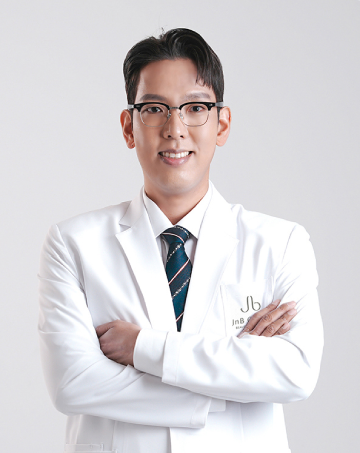
Dr. JuYong Kang
Representative Director & Chief Physician
JNB Clinic Plastic Surgery & Otolaryngology (ENT)
Dr. JuYong Kang Representative Director & Chief Physician, JNB Clinic Plastic Surgery & Otolaryngology (ENT) — Dual Specialist Rhinoplasty, Nasal Airway Reconstruction, Facial Plastic & Reconstructive Surgery, Sleep Disorders, Stem Cell Therapy
Dr. JuYong Kang trained at Kyung Hee University School of Medicine and completed advanced training at Kyung Hee University Graduate School of Medicine. His clinical career spans leadership roles at both Byeol Plastic Surgery Clinic and Samsung Dream Otolaryngology Clinic before establishing JNB Clinic, where he currently serves as Representative Director and Chief Physician.
What distinguishes Dr. Kang's approach is the rare combination of plastic surgery and ENT expertise in a single operating physician. Most rhinoplasty surgeons specialize in either cosmetic shaping or functional airway correction. Dr. Kang integrates both disciplines — meaning every structural decision he makes accounts not only for how the nose will look, but how it will function, breathe, and age over time.
Dr. Kang holds active memberships in the Korean Society of Otorhinolaryngology-Head and Neck Surgery, the Korean Rhinologic Society, the Korean Society of Facial Plastic and Reconstructive Surgery, the Korean Society for Stem Cell Therapy, the Korean Sleep Research Society, the Rhinoplasty Research Society of the Korean Society of Plastic and Reconstructive Surgeons, and the Anti-Aging Plastic Surgery Research Society.
His guiding philosophy: "Beautiful, comfortable breathing is where it all begins. The harmony between natural breathing and the face is more important than anything else."
Treatment areas and expected improvements
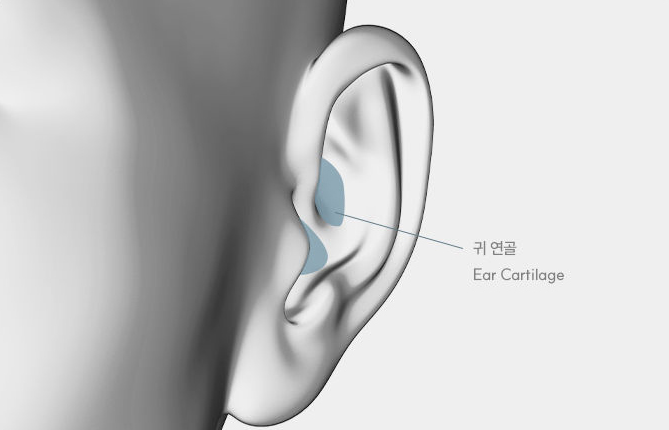
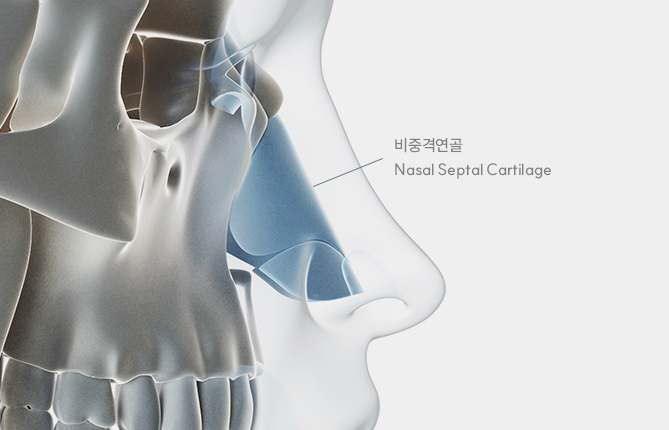
Implant-free rhinoplasty at JNB Clinic addresses multiple distinct anatomical zones of the nose, each approached with precision cartilage placement and an understanding of how structural changes in one area affect the overall nasal profile and facial balance.
-
**Nasal bridge (dorsum): **The nasal bridge can be elevated or refined using nasal septal cartilage, which provides firm, flat structural support. Septal cartilage is the preferred material for bridge augmentation because it is harvested from the same operative field, offers strong structural integrity, and can be precisely carved to match the desired dorsal height and line. Patients with a flat or low nasal bridge may see a more defined, elevated profile that complements the overall facial ratio. Results vary depending on the patient's baseline anatomy, skin thickness, and the amount of usable cartilage available.
-
Nasal tip: The tip is one of the most technically demanding areas of rhinoplasty. At JNB Clinic, ear cartilage is commonly used for tip refinement because its natural curved shape allows it to create subtle, soft nasal contours that avoid an operated or pinched appearance. In cases where a more defined columellar strut is required, septal cartilage provides the structural rigidity to project and support the tip. Patients may experience improvement in tip definition, projection, and symmetry. Because cartilage integrates naturally with surrounding tissue, the tip retains flexibility and moves naturally with facial expressions over time.
-
**Nasal axis and septal deviation: **For patients with a visibly deviated nasal axis or underlying septal deviation, Dr. Kang's ENT expertise is particularly valuable. Septal cartilage harvested during surgery also enables correction of the nasal midline, addressing both aesthetic asymmetry and any associated functional breathing concerns in a single surgical session. Improvement in nasal axis symmetry and airway patency may be observed, though functional outcomes vary by case and are not guaranteed.
-
Overall structural framework and facial harmony: JNB Clinic approaches each rhinoplasty as a total facial design exercise. Before any surgical planning begins, the patient's facial ratio, nose-to-face proportions, skin thickness, and the desired aesthetic image are all assessed together. 3D-CT imaging is used to support precision surgical planning, helping ensure that structural decisions translate accurately to the desired external outcome. The goal is not a standardized nose shape — it is a nose that belongs uniquely to the patient's face.
Expected improvements may include:
-
A more defined, elevated nasal bridge without implant-associated risks
-
Improved nasal tip projection, definition, and symmetry
-
Correction of nasal axis deviation
-
A softer, more natural surface texture and feel over time as cartilage integrates
-
Reduced risk of implant-related complications for patients converting from synthetic materials
Individual outcomes vary. Results depend on the patient's anatomy, available cartilage, skin condition, and healing response.
Treatment process and timeline
Step 1 — In-depth consultation
Your first appointment involves a detailed clinical assessment of your nasal anatomy, facial proportions, medical history, and aesthetic goals. Dr. Kang will discuss the appropriate cartilage donor sites (nasal septum, ear cartilage, or costal cartilage), explain what structural changes are anatomically realistic, and provide honest guidance on expected outcomes and limitations.
Step 2 — Diagnostic imaging and surgical planning
3D-CT imaging is used to evaluate internal nasal structures, including septal anatomy, airway dimensions, and cartilage availability. This imaging allows Dr. Kang to plan cartilage placement with precision prior to the operation, minimizing intraoperative decision-making and improving predictability of the final result.
Step 3 — Pre-operative preparation
Standard pre-surgical health assessments are completed. Patients are advised on medications to avoid, dietary guidelines in the days preceding surgery, and what to arrange for the recovery period. International patients requiring travel coordination are supported throughout this phase.
Step 4 — Surgical procedure
The procedure typically takes approximately 1 to 2 hours. Anesthesia is administered via intravenous sedation or general anesthesia. Cartilage is harvested from the designated donor site, carefully carved and shaped to specification, and precisely placed within the nasal framework through a minimally visible incision approach. JNB Clinic operates under a sterile no-touch surgical system to minimize contamination risk.
Step 5 — Immediate post-operative care
Same-day discharge is possible in most cases. A nasal splint is applied to support the newly shaped structure during the initial healing phase. Bruising and swelling around the nose and eyes are expected and typically most pronounced in the first 5 to 7 days. Patients are monitored by the JNB clinical team before leaving the facility.
Step 6 — Recovery timeline and follow-up
The nasal splint is removed approximately 7 days after surgery. Major swelling subsides within 1 to 2 weeks, allowing most patients to resume normal social activities. Minor residual swelling in the nasal tip area may persist for several months as cartilage integrates and the tissue settles. Follow-up appointments are scheduled systematically, and JNB Clinic operates a dedicated Post-Care (All-Care) program to support skin recovery, swelling management, and overall healing from surgery through to final result stabilization.
Results, safety, and longevity
Biological stability and longevity Because autologous cartilage is derived from the patient's own body, it does not trigger foreign body immune responses. Over the weeks and months following surgery, the transplanted cartilage becomes gradually vascularized — meaning the body's own blood supply grows into the graft — and it integrates structurally with the surrounding nasal anatomy. Once this integration is complete, the cartilage behaves as part of the nose itself: maintaining shape, retaining flexibility, and remaining stable over time. JNB Clinic describes this durability as semi-permanent, reflecting the biological nature of the graft rather than a fixed artificial material.
Natural texture and feel A clinically significant advantage of implant-free rhinoplasty is what patients experience when touching the nose. Artificial implants can sometimes feel rigid or create a perceptible hardness under thin nasal skin, particularly over time. With autologous cartilage, the nose retains a soft, flexible quality that is indistinguishable from natural nasal tissue — both to the patient and to others.
Safety profile Eliminating synthetic implants removes several categories of risk from the surgical equation. Concerns such as implant displacement, capsular contracture, skin thinning over the implant, or implant extrusion — which represent known long-term risks in implant-based rhinoplasty — are not applicable to implant-free procedures. Risks that remain relevant to all rhinoplasty, including infection, asymmetry, unexpected healing response, and the need for revision surgery, should be discussed in detail during consultation.
Side effects and recovery expectations Swelling, bruising, and temporary numbness around the nasal tip are expected in the post-operative period. These effects are a normal part of surgical healing. The nasal tip, in particular, may feel slightly firm for several months as cartilage settles and integrates. Most patients find that their nose feels and appears progressively more natural over the 6 to 12 months following surgery as final healing is completed.
Why choose JNB Clinic for implant-free rhinoplasty?
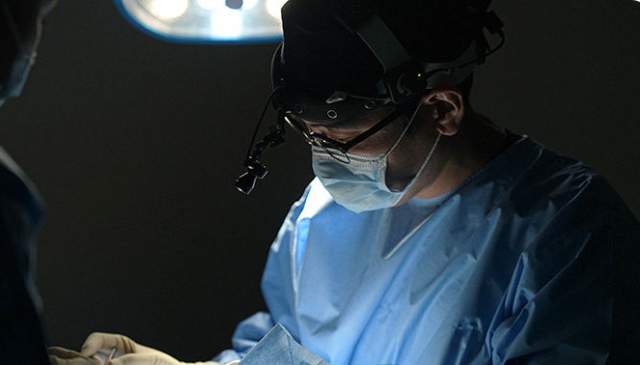
JNB Clinic was built on a clinical philosophy that treats the nose as both a functional and aesthetic organ — never one at the expense of the other. Dr. JuYong Kang's dual training in plastic surgery and otolaryngology means that every rhinoplasty performed at the clinic is evaluated through two lenses simultaneously: the structural integrity of the nasal airway and the aesthetic harmony of the nose within the patient's unique face. This integrated perspective is what JNB Clinic describes as "beauty that breathes."
The clinic's approach to surgical planning is built around the individual patient rather than a standardized outcome. Using 3D-CT precision analysis, each patient's facial ratio, nasal proportions, skin thickness, and desired image are assessed together before a surgical plan is finalized. This eliminates the one-template approach and allows Dr. Kang to design a nose that is appropriate for that patient's specific anatomy — not simply the most popular nasal shape at a given moment. The result is a nose that reads as belonging naturally to the face, not as an aesthetic addition to it.
JNB Clinic's Post-Care (All-Care) system reflects a commitment that extends well beyond the operating room. Following surgery, dedicated post-operative care — including skin recovery support and systematic follow-up — is provided to ensure that each patient's healing progresses safely and that any concerns are addressed promptly throughout the recovery period.
Key differentiators:
-
Dual specialty expertise — plastic surgery and ENT in a single operating physician, addressing both cosmetic and functional nasal concerns
-
100% implant-free surgical approach using only autologous cartilage — nasal septal, ear, and costal cartilage as clinically appropriate
-
3D-CT precision imaging for pre-surgical structural analysis and individualized surgical planning
-
Sterile no-touch surgical system to minimize infection and contamination risk
-
Comprehensive Post-Care (All-Care) program covering skin recovery and systematic follow-up from surgery through final result stabilization
-
International patient-ready facility with consultation and care coordination support
Real patient experiences
Case Example — Bridge elevation and tip refinement
A patient in her late twenties presented concerned about a flat nasal bridge and an undefined, slightly bulbous tip. She had previously considered implant-based rhinoplasty but was uncomfortable with the idea of a synthetic material inside her nose long-term. Following a 3D-CT assessment, Dr. Kang planned a procedure using septal cartilage for bridge elevation and ear cartilage for tip sculpting. By six months post-operatively, the patient described her nose as looking and feeling entirely natural, with a softness she had not expected. She noted that she no longer thinks about her nose when looking in the mirror — which, she said, was exactly the result she had hoped for.
Case Example — Implant removal and revision rhinoplasty
A patient in her mid-thirties sought consultation after experiencing skin thinning and discomfort from a silicone implant placed during a procedure several years prior. She was concerned about the long-term trajectory and wished to have the implant removed and her nose reconstructed without synthetic materials. Dr. Kang performed implant explantation combined with a full implant-free reconstruction using autologous cartilage. At her one-year follow-up, structural support was stable, the skin had recovered well, and the patient reported significantly greater comfort and confidence.
Case Example — Structural correction for a short upturned nose
A patient in her early thirties presented with a short nose and upturned tip that she had been self-conscious about since adolescence. She requested structural lengthening and tip deprojection. Using a combination of septal cartilage for structural support and ear cartilage for tip reshaping, Dr. Kang designed a nose that extended the columella-tip relationship while maintaining proportion with the patient's facial ratio. The patient returned at three months noting that colleagues had commented she looked "fresher" without being able to identify a specific change — a result she described as ideal.
Begin your consultation at JNB Clinic
Your nose should move with you — not against you.
If you are considering rhinoplasty without synthetic implants and want results built from your own biology, JNB Clinic offers the surgical expertise, diagnostic technology, and individualized care to support your decision from first consultation through full recovery. Dr. JuYong Kang — plastic surgeon and ENT specialist — conducts every procedure personally, ensuring that functional and aesthetic goals are considered together at every stage of your care.
To schedule a consultation, contact JNB Clinic directly through our online inquiry form or reach out via our international patient coordination line. Our team provides support for consultation scheduling, surgical planning, accommodation guidance for international patients, and post-operative follow-up coordination.
Consultations are available in Korean and English. We welcome patients traveling from abroad and provide coordination support to help make your experience as seamless as possible.
For direct inquiries: contact JNB Clinic via our official website or consultation request form.
Rhinoplasty involves surgical risks and individual outcomes vary. All procedures are performed only after thorough clinical assessment. This page is for informational purposes only and does not constitute medical advice. Please consult with a qualified specialist before making any decisions about surgical treatment.
Other Services
Explore additional treatments offered by our specialists.

Silhouette Lifting
Silhouette Soft is a minimally invasive, absorbable thread lift that repositions sagging facial tissue while simultaneously triggering the skin's natural collagen production.
Learn More

Botox
Botox — short for botulinum toxin — is a refined, medical-grade protein that temporarily reduces the activity of targeted facial muscles.
Learn More

Facial Liposuction
Facial liposuction is a minimally invasive contouring procedure that removes localized fat deposits from specific areas of the face and lower face.
Learn More