Personalized Nasal & Facial Care • Dedicated International Patient Concierge


Facial Fat Reduction via Liposuction
Facial Fat Grafting
Facial fat grafting — also called autologous fat transfer — is a procedure that harvests a small amount of the patient's own fat from a donor area of the body, purifies it, and carefully re-injects it into areas of the face that have lost volume or definition over time.
Schedule a Consultation
What is facial fat grafting?
Facial fat grafting — also called autologous fat transfer — is a procedure that harvests a small amount of the patient's own fat from a donor area of the body, purifies it, and carefully re-injects it into areas of the face that have lost volume or definition over time.
Unlike synthetic dermal fillers, autologous fat uses biological material that the body already recognizes. This reduces the risk of adverse reactions and, when the transplanted cells establish a healthy blood supply, the results can be significantly longer-lasting than filler alone.
At JNB Clinic, fat grafting is not approached as a simple volumizing procedure. The treatment philosophy centers on restoring structural balance and natural facial proportions. This means analyzing the underlying bone framework, skin thickness, and the way the face moves before a single injection is made. The goal is not a fuller face — it is a more harmonious, naturally rested face.
Micro-layer injection technique is used throughout the procedure. Fine cannulas distribute purified fat in thin, even layers at the precise depth required for each treatment zone. This approach minimizes trauma to the transplanted fat cells, supports higher survival rates, and produces smoother, more natural surface contours. PRP (Platelet-Rich Plasma) or SVF (Stromal Vascular Fraction) may be incorporated to further support fat cell viability depending on individual assessment.
Who is a candidate for facial fat grafting?
Fat grafting may be appropriate for individuals experiencing one or more of the following:
-
Flat or sunken forehead — Loss of youthful convexity in the upper face that creates a visually fatigued or aged appearance
-
Hollow temples — Temporal hollowing that disrupts the smooth oval or heart-shaped facial outline associated with youth
-
Deflated or sunken cheeks — Reduced mid-face volume that flattens the cheek highlight and lengthens the appearance of the lower face
-
Deep nasolabial folds — Volume loss around the mid-face that causes pronounced shadow lines from the nose to the corners of the mouth
-
Under-eye hollowing — Tear trough deformity or orbital volume loss contributing to a perpetually tired appearance
-
Facial asymmetry — Subtle or more pronounced differences in volume between the left and right sides of the face
-
Desire for natural-looking results — Patients who prefer a biologically integrated solution over repeated synthetic filler treatments
-
Skin quality concerns — Individuals experiencing early-stage textural changes, fine lines, or reduced skin elasticity who may benefit from the regenerative properties associated with fat grafting
Patients considering fat grafting alongside rhinoplasty or other facial procedures may also discuss combined treatment planning during their consultation.
Meet the specialist
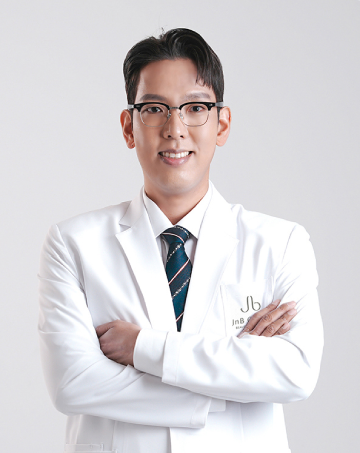
Dr. JuYong Kang
Representative Director & Chief Physician
JNB Clinic Plastic Surgery & Otolaryngology (ENT)
Dr. JuYong Kang Representative Director & Chief Physician, JNB Clinic Specialist in Plastic Surgery and Otolaryngology (ENT)
Dr. Kang trained at Kyung Hee University School of Medicine and completed advanced graduate-level study at Kyung Hee University Graduate School of Medicine. His clinical background spans rhinoplasty, nasal airway reconstruction, facial plastic and reconstructive surgery, sleep disorders, and stem cell therapy — a combination that is uncommon and clinically significant for patients seeking facial fat grafting.
Prior to founding JNB Clinic, Dr. Kang served as Director at both Byeol Plastic Surgery Clinic and Samsung Dream Otolaryngology Clinic. He holds full membership in a range of specialized professional societies including the Korean Society of Facial Plastic and Reconstructive Surgery, the Korean Society for Stem Cell Therapy, the Korean Rhinologic Society, and the Rhinoplasty Research Society of the Korean Society of Plastic and Reconstructive Surgeons, among others.
His clinical philosophy is grounded in the relationship between facial function and facial aesthetics: "Beautiful, comfortable breathing is where it all begins. The harmony between natural breathing and the face is more important than anything else."
This perspective shapes how fat grafting is planned at JNB Clinic — not as an isolated cosmetic intervention, but as one component of overall facial harmony, structure, and health.
Treatment areas and expected improvements
Fat grafting at JNB Clinic addresses specific anatomical zones based on each patient's individualized analysis. Below are the primary treatment areas and the types of improvements patients may expect.
-
Forehead and temples: The upper third of the face is often among the first areas to show age-related volume loss. A flat or concave forehead diminishes the youthful curvature of the face, while hollow temples break the smooth contour line from forehead to cheekbone. Targeted fat grafting in these zones can restore a softer, more rounded upper face. Patients may notice a more rested and balanced overall facial profile. Results vary depending on fat survival rates, skin thickness, and the degree of volume loss present before treatment.
-
Cheeks and mid-face: The mid-face is central to a youthful facial appearance. Volume loss here flattens the cheek highlight, deepens the nasolabial folds, and causes the lower face to appear heavier by contrast. Fat grafting to the cheek and mid-face can restore definition to the cheekbone area, soften nasolabial shadow lines, and re-establish the inverted triangle of youth. Individual outcomes depend on skin laxity, bone structure, and the volume of viable fat transferred.
-
Under-eye and tear trough area: Hollowing beneath the eye creates persistent dark shadowing that is resistant to topical treatments. Fat grafting to the tear trough and orbital rim area can reduce this shadowing and soften the transition between the lower eyelid and cheek. This is a technically precise zone requiring careful depth and volume calibration. Patients should have realistic expectations — partial improvement is a common and valid outcome in this area.
-
Jawline and lower face: In some patients, targeted lower-face fat grafting can refine the jawline contour or address focal volume deficits that affect facial symmetry. This is assessed individually and planned in conjunction with the overall facial balance analysis.
-
Nasolabial folds and perioral area: Deep nasolabial folds or volume loss around the mouth can contribute significantly to an aged appearance. Fat grafting in this region addresses the underlying volume deficit rather than simply filling the fold from above, as surface-level filler does. Improvement in fold depth and skin quality in this area is a commonly reported benefit.
-
Skin quality and texture: The regenerative components associated with transplanted fat — including adipose-derived cells — may support improvements in skin hydration, elasticity, and fine line appearance. This effect is secondary to the volumizing goal but is a recognized benefit patients may notice over the months following the procedure.
Treatment process and timeline
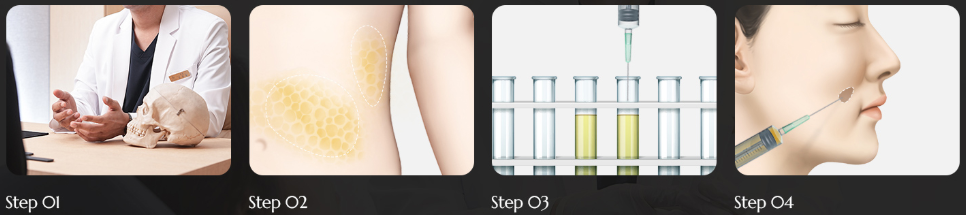
Step 1 — Consultation and facial design
A detailed consultation is conducted to assess facial bone structure, skin thickness, fat distribution, and movement patterns. 3D facial analysis and precise measurements inform the customized treatment plan. Treatment goals, donor site selection, and expected outcomes are discussed thoroughly.
Step 2 — Donor site assessment and preparation
Fat is harvested from areas with sufficient fat reserves — typically the abdomen, thighs, or hips. The appropriate donor site is confirmed during consultation based on each patient's anatomy and the volume of fat required.
Step 3 — Fat harvesting
Fat is carefully collected from the selected donor area using a minimally invasive technique designed to protect fat cell integrity during extraction.
Step 4 — Fat purification
Harvested fat undergoes a purification process to remove impurities and non-viable material, leaving only healthy, high-quality fat cells ready for transfer. PRP or SVF may be incorporated at this stage to support fat survival, based on individual treatment planning.
Step 5 — Micro-layer fat injection
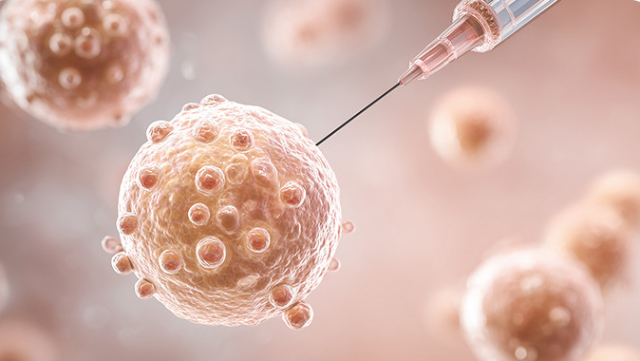
Purified fat is injected into the target facial areas using fine cannulas. Injections are made in thin, even layers at the optimal tissue depth for each zone. This layered approach supports vascularization of the transplanted fat and creates smooth, natural contours rather than localized deposits.
Step 6 — Post-procedure care and follow-up
JNB Clinic provides a structured aftercare program covering fat graft stabilization, swelling reduction, and recovery monitoring. Initial swelling is expected and typically resolves progressively. Patients may return to daily activities the same day, though individual recovery experience varies. Long-term result monitoring is included to assess fat survival and address any asymmetry during the stabilization period.
Procedure time is approximately one to two hours. Anesthesia is local or sedation-based depending on patient preference and the scope of treatment. No hospital stay is required and no stitches need to be removed.
Results, safety, and longevity
Facial fat grafting produces results that develop gradually as post-procedure swelling resolves and transplanted fat cells establish a stable blood supply. The final result is typically assessed at several months following the procedure, once the survival of transplanted fat has stabilized.
Because the transferred material is the patient's own biological tissue, the risk of allergic reaction or foreign body response is low. Fat that successfully integrates becomes a permanent part of the tissue architecture at that site, which differentiates autologous fat transfer from synthetic fillers that are metabolized over time.
However, not all transplanted fat cells survive the transfer process. Fat survival rates vary between patients and between treatment zones. This is a recognized biological variable — not a procedural error — and is one reason that JNB Clinic's micro-layer injection technique and optional PRP/SVF combination are used to optimize the conditions for fat cell survival. In some cases, a secondary session may be considered if the patient desires additional volume after the initial result has fully stabilized.
Common post-procedure effects include swelling, bruising, and mild discomfort at both the donor and injection sites. These typically resolve within the early recovery period. More serious complications are uncommon but possible with any surgical procedure, and are discussed fully during the pre-treatment consultation.
Results are not guaranteed. Natural facial aging continues following fat grafting, and ongoing changes in weight can influence the appearance of transplanted fat over time. A realistic expectation is a natural-looking, meaningfully improved facial appearance that is sustained for longer than conventional dermal fillers — not a permanently frozen or unchanging result.
Why choose JNB Clinic for facial fat grafting?
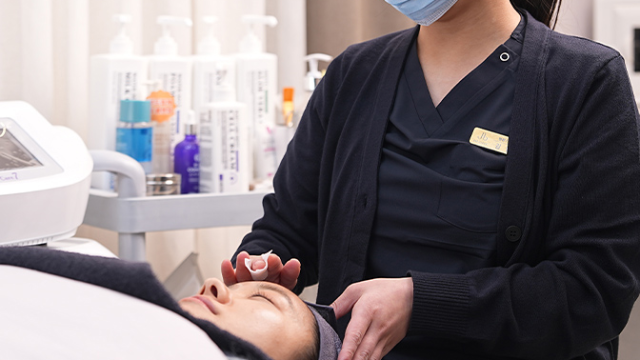
JNB Clinic operates at the intersection of structural surgical expertise and regenerative facial medicine. Dr. JuYong Kang's dual background in plastic surgery and otolaryngology means that facial fat grafting at JNB is planned not just from an aesthetic perspective, but from a deep understanding of facial anatomy, tissue behavior, and the functional relationships between facial structures.
The clinic's approach to fat grafting is defined by precision at every stage — from 3D facial analysis and customized design before the procedure, to the micro-layer injection technique used during fat transfer, to the structured post-procedure care system that monitors fat stabilization and recovery over time. No single element of the process is treated as routine. Each patient's facial structure, skin characteristics, and aesthetic goals produce a unique treatment plan.
JNB Clinic also serves international patients and is equipped to support patients through the full consultation, treatment, and recovery process regardless of location. All aspects of care are coordinated from the initial consultation through to long-term result monitoring.
Key differentiators:
-
Individualized 3D facial analysis and measurement-based treatment design
-
Micro-layer injection technique for optimized fat distribution and survival
-
Optional PRP and SVF integration for enhanced biological outcomes
-
Comprehensive post-procedure care program with structured follow-up
-
Dual specialist expertise in facial plastic surgery and ENT — rare in the field of facial fat grafting
Patient experiences
Patient A — Cheek and nasolabial fold correction
A patient in her mid-forties sought treatment for progressive mid-face hollowing that had left her looking persistently tired despite feeling well. Following consultation and 3D analysis, fat grafting was performed to the cheeks and nasolabial fold area. Over the following months, she reported a more rested appearance and improved skin texture in the treated zone.
Patient B — Temple and forehead restoration
A patient in his early fifties noticed significant temporal hollowing that disrupted his upper facial contour. Fat grafting to the temples and forehead restored a smoother upper face outline. He described the result as natural-looking — an improvement he felt others noticed without being able to identify a specific change.
Patient C — Combined fat grafting and facial contouring
A patient in her late thirties with facial asymmetry involving the cheek and under-eye area underwent a personalized fat grafting plan addressing both zones. The asymmetry was partially corrected with careful volume calibration on the more deficient side. She noted improvement in both the structural balance of her face and the quality of her skin in the treated areas.
Ready to restore natural facial balance?
Take the next step toward a more rested, youthful appearance
Facial fat grafting at JNB Clinic is a highly personalized procedure designed around your unique facial structure, skin characteristics, and aesthetic goals. Using only your own purified fat, Dr. JuYong Kang and the JNB team restore volume where it has been lost — creating results that look natural because they are built from the inside out.
To begin, book a detailed consultation where your facial structure will be assessed through 3D analysis and personalized measurements. Your treatment plan will be designed specifically for you — no templates, no generalized approach. International patients are warmly welcomed, and full coordination support is available throughout the process.
For inquiries, reach the JNB Clinic team directly through the contact form or messaging channels available on this page. A member of the care team will respond to guide you through the next steps.
Fat grafting results vary between individuals. This page is intended for informational purposes and does not constitute medical advice. A full clinical consultation is required to determine suitability for treatment.
Other Services
Explore additional treatments offered by our specialists.

Silhouette Lifting
Silhouette Soft is a minimally invasive, absorbable thread lift that repositions sagging facial tissue while simultaneously triggering the skin's natural collagen production.
Learn More

Botox
Botox — short for botulinum toxin — is a refined, medical-grade protein that temporarily reduces the activity of targeted facial muscles.
Learn More

Facial Liposuction
Facial liposuction is a minimally invasive contouring procedure that removes localized fat deposits from specific areas of the face and lower face.
Learn More