Personalized Nasal & Facial Care • Dedicated International Patient Concierge


Deviated Septum Surgery
Deviated Septum / Septal Deviation
The nasal septum is the wall of cartilage and bone that divides the nasal cavity into two passages.
Schedule a Consultation
What is deviated septum correction in functional nasal surgery?
The nasal septum is the wall of cartilage and bone that divides the nasal cavity into two passages. When this structure is off-center — due to genetics, growth, or injury — it is referred to as a deviated nasal septum. The deviation narrows one or both nasal passages, restricting airflow and contributing to a range of symptoms including chronic congestion, mouth breathing, snoring, disrupted sleep, headaches, and recurring sinus infections.
Septoplasty is the surgical procedure designed to correct this deviation. At JNB Clinic, the procedure is performed entirely through the nostrils using endoscopic visualization, with no external incisions. The deviated portion of the septum — whether cartilage, bone, or both — is carefully repositioned, reshaped, or partially removed to restore proper nasal alignment and airflow.
What distinguishes the approach at JNB Clinic is the simultaneous assessment and treatment of contributing structural issues. Enlarged inferior turbinates — the soft tissue ridges inside the nose that frequently enlarge in response to septal deviation — are reduced at the same time, widening the airway further and delivering more comprehensive functional improvement. In appropriate cases, a closed rhinoplasty procedure may also be performed concurrently to address any external nasal asymmetry.
Before surgery, each patient undergoes 3D-CT imaging of the nasal structures. This allows the surgical team to map the precise location and nature of the deviation and design a personalized correction plan rather than applying a generalized approach.
Who needs deviated septum treatment?
A deviated septum does not always require surgery. However, when structural deviation is the confirmed cause of ongoing airway obstruction and quality-of-life impairment, surgical correction is often the most effective long-term solution. You may be a candidate for deviated septum surgery if you experience one or more of the following:
-
Persistent nasal congestion that does not respond adequately to medication
-
Chronic difficulty breathing through one or both nostrils
-
Frequent or recurring rhinitis symptoms linked to nasal structural issues
-
Snoring or sleep disturbances related to nasal airway restriction
-
Recurring headaches potentially associated with nasal obstruction
-
A history of nasal bone fracture followed by worsening breathing function
-
Visible or felt nasal asymmetry alongside breathing difficulties
-
Dissatisfaction with the outcome of a previous nasal surgery
-
Septal deviation that has recurred following prior surgical treatment
-
A desire to address both functional breathing and the cosmetic appearance of the nose in a single procedure
Chronic rhinitis and septal deviation commonly occur together. Addressing only one component while the other remains untreated may limit the overall improvement in symptoms. A comprehensive functional evaluation at JNB Clinic identifies all contributing factors before any treatment plan is established.
Meet the specialist in functional nasal surgery
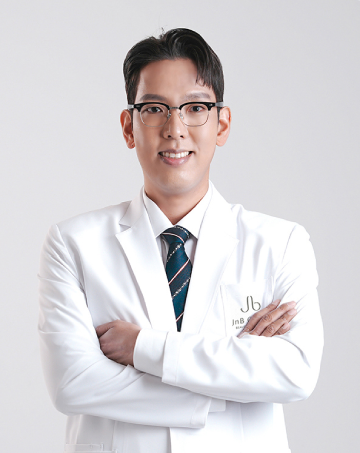
Dr. JuYong Kang
Representative Director & Chief Physician
JNB Clinic Plastic Surgery & Otolaryngology (ENT)
Dr. JuYong Kang Representative Director & Chief Physician, JNB Clinic Specialist in Plastic Surgery and Otolaryngology (ENT)
Dr. JuYong Kang holds dual specialization in plastic surgery and otolaryngology, a combination that positions him to address both the functional and structural dimensions of nasal surgery with equal precision. He trained at Kyung Hee University School of Medicine and completed advanced graduate medical education at Kyung Hee University Graduate School of Medicine.
His clinical career has included directorship at Byeol Plastic Surgery Clinic and Samsung Dream Otolaryngology Clinic prior to founding JNB Clinic, where he now serves as Representative Director and Chief Physician. His areas of clinical focus include rhinoplasty, nasal airway reconstruction, facial plastic and reconstructive surgery, sleep disorders, and stem cell therapy — making him fluent across both cosmetic and functional ENT medicine.
Dr. Kang holds full membership in the Korean Society of Otorhinolaryngology-Head and Neck Surgery, the Korean Rhinologic Society, the Korean Society of Facial Plastic and Reconstructive Surgery, the Korean Society for Stem Cell Therapy, the Korean Sleep Research Society, the Rhinoplasty Research Society under the Korean Society of Plastic and Reconstructive Surgeons, and the Anti-Aging Plastic Surgery Research Society.
His guiding philosophy: "Beautiful, comfortable breathing is where it all begins. The harmony between natural breathing and the face is more important than anything else."
This philosophy is reflected in every functional nasal surgery performed at JNB Clinic — where restoring airway function is never treated as secondary to aesthetics, and where both are considered together whenever possible.
Treatment areas and expected improvements
Deviated septum surgery at JNB Clinic addresses several interconnected anatomical targets. Below is an overview of what is treated and what patients may expect.
-
Nasal septum (cartilage and bone): The deviated cartilage and bony portions of the septum are the primary targets of septoplasty. Depending on the nature and location of the deviation, the septum may be straightened, reshaped, partially excised, or reconstructed using repositioned cartilage. The goal is to restore midline alignment and create symmetrical, unobstructed airflow through both nasal passages. Improvement in nasal breathing is typically noticeable within one to two weeks as post-surgical swelling resolves.
-
Inferior turbinates: The inferior turbinates are bony structures lined with soft tissue that regulate airflow and humidify inhaled air. In the presence of a deviated septum, turbinates on the wider side of the nasal cavity frequently enlarge as a compensatory response, further narrowing the airway. At JNB Clinic, turbinate reduction is performed alongside septal correction to address this contributing factor directly and deliver a more complete functional outcome. Patients who have only had the septum corrected elsewhere — without turbinate treatment — may experience persistent obstruction for this reason.
-
Overall nasal airway patency: By correcting both the deviation and the associated turbinate enlargement, the combined procedure is designed to meaningfully reduce nasal airway resistance. Patients can generally expect improved ease of breathing through the nose, reduced mouth breathing, and better sleep quality. Individual outcomes vary depending on the severity and complexity of the initial deviation, the presence of additional contributing factors, and the patient's overall nasal anatomy.
A clear variability statement is important here: surgical results depend on individual anatomy, healing response, and whether all contributing factors were identifiable and addressable at the time of surgery. No surgical procedure can guarantee a specific functional outcome for every patient.
Treatment process and timeline
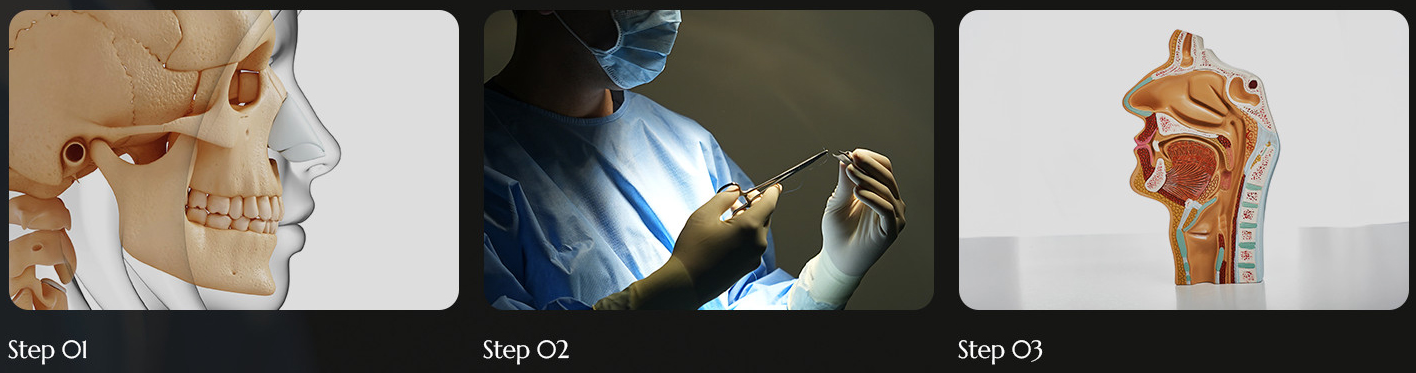
Step 1 — Initial consultation and functional evaluation
The process begins with a thorough clinical consultation with Dr. JuYong Kang. The patient's symptoms, history, prior surgeries, and breathing concerns are discussed in detail. A physical nasal examination is performed to assess the external and internal nasal structures.
Step 2 — 3D-CT imaging and diagnostic assessment
3D-CT imaging is used to comprehensively analyze the internal nasal architecture — including the precise location of the septal deviation, the condition of the turbinates, and any additional structural abnormalities. This imaging forms the foundation of the individualized surgical plan.
Step 3 — Surgical planning and pre-operative preparation
Based on the imaging and clinical findings, a personalized surgical plan is prepared. If the patient is also a candidate for simultaneous closed rhinoplasty to address external nasal asymmetry, this is discussed and planned at this stage. Pre-operative instructions are provided regarding medications, eating, and any necessary health assessments.
Step 4 — Surgical procedure (approximately 1 hour)
The procedure is performed under local anesthesia with sedation or general anesthesia, depending on the case and patient preference. An internal incision is made within the nasal mucosa to access the septum. The deviated cartilage and bone are corrected through repositioning, reshaping, or selective removal. Turbinate reduction is performed simultaneously. The corrected septum is stabilized and reconstructed into proper alignment. No external incisions are made. Minimal bleeding is achieved through the precision of the endoscopic approach. The procedure takes approximately one hour, and patients are discharged the same day.
Step 5 — Immediate postoperative care
Following surgery, patients receive detailed nasal irrigation instructions to support healthy mucosal regeneration and reduce the risk of postoperative complications. Hyperbaric oxygen therapy is also offered as part of the postoperative care program to support recovery.
Step 6 — Follow-up and monitoring
Regular endoscopic follow-up examinations are scheduled to monitor healing progress. Additional treatment is provided when clinically necessary. Normal breathing typically improves noticeably within one to two weeks as swelling subsides and the nasal passages open fully.
Results, safety, and longevity
Most patients experience meaningful improvement in nasal breathing within one to two weeks of surgery. The degree and durability of improvement are influenced by the initial severity of the deviation, the presence of co-existing conditions such as allergic rhinitis, and how closely postoperative care instructions are followed.
Because the procedure addresses structural anatomy rather than symptoms alone, results tend to be stable over time. Preserving healthy septal tissue during surgery — rather than removing more than necessary — contributes to long-term structural integrity and reduces the risk of post-surgical instability.
From a safety standpoint, the absence of external incisions means visible scarring is not a concern. The endoscopic technique minimizes bleeding during surgery and supports a shorter recovery period. As with any surgical procedure, risks exist and may include temporary swelling, minor bleeding, infection, or in rare cases, the need for revision surgery. Patients with recurrent septal deviation following prior surgery are also candidates for corrective treatment at JNB Clinic.
All patients are screened carefully before surgery to confirm candidacy. The risks, limitations, and realistic expectations of the procedure are discussed in full during the consultation process.
Why choose JNB Clinic for deviated septum surgery?
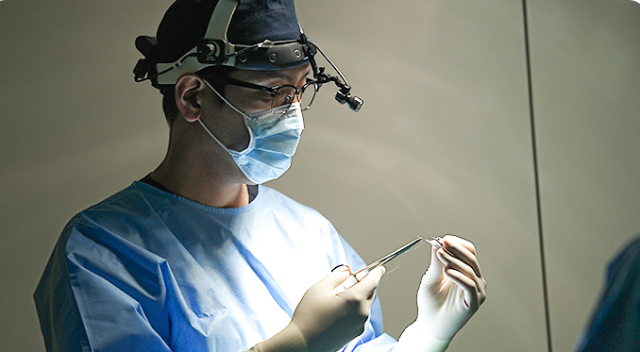
JNB Clinic brings together a rare combination of otolaryngology and plastic surgery expertise under the leadership of Dr. JuYong Kang — a dual-specialist with extensive clinical experience in both functional nasal reconstruction and cosmetic nasal surgery. This integrated approach means that structural correction and aesthetic refinement can be considered together, rather than in isolation, and addressed in a single surgical session when appropriate.
The clinic's use of 3D-CT imaging before surgery ensures that treatment planning is based on precise anatomical data rather than surface-level assessment alone. The endoscopic surgical approach used at JNB Clinic allows for highly accurate correction within the nasal cavity while preserving as much healthy tissue as possible — a factor that directly supports long-term stability and reduces the likelihood of recurrence.
Postoperative support is structured and comprehensive, including hyperbaric oxygen therapy, detailed nasal irrigation protocols, and scheduled endoscopic follow-up examinations. This level of aftercare reflects the clinic's commitment to outcomes beyond the operating room.
Key reasons patients choose JNB Clinic for deviated septum correction:
-
Dual-specialist surgeon in both ENT and plastic surgery, with membership across seven professional medical societies
-
Personalized surgical planning based on 3D-CT imaging of each patient's nasal anatomy
-
Fully endoscopic, no-external-incision technique with minimal bleeding and same-day discharge
-
Simultaneous turbinate reduction to address all contributing factors in one procedure
-
Structured postoperative care program including hyperbaric oxygen therapy and endoscopic monitoring
-
Option for simultaneous closed rhinoplasty when both functional and aesthetic correction is desired
Patient Experiences
Patient A — Chronic obstruction following nasal injury
A patient in their early 30s presented with worsening nasal congestion that began following a sports injury several years prior. Imaging confirmed a significant post-traumatic septal deviation with compensatory turbinate enlargement on the opposite side. Following combined septoplasty and turbinate reduction, the patient reported substantially improved nasal airflow and a reduction in sleep disturbances within two weeks of surgery.
Patient B — Recurrent deviation after prior septoplasty
A patient in their mid-40s had undergone septoplasty at another facility but continued to experience one-sided nasal obstruction. A reassessment at JNB Clinic identified residual cartilaginous deviation that had not been fully addressed. Revision septoplasty using the endoscopic approach restored bilateral nasal airflow without any external scarring.
Patient C — Combined functional and cosmetic concern
A patient in their late 20s presented with a visibly asymmetric nose and confirmed septal deviation contributing to one-sided airway obstruction. After consultation with Dr. Kang, the patient underwent simultaneous closed rhinoplasty and septoplasty in a single procedure. Both the functional breathing concern and the external nasal asymmetry were addressed without external incisions.
Final call to action
Ready to breathe better? Speak with Dr. JuYong Kang at JNB Clinic.
If you have been living with chronic nasal congestion, difficulty breathing, recurring rhinitis, or the long-term effects of a nasal injury, a structural evaluation may be the first step toward lasting relief. At JNB Clinic, deviated septum surgery is performed with precision endoscopic technique, personalized planning, and comprehensive postoperative care — all under the guidance of a dual-specialist surgeon with deep experience in functional nasal reconstruction.
Book your functional nasal consultation today →
Prefer to reach us directly? Contact JNB Clinic through our website or consultation inquiry form to schedule your assessment with Dr. JuYong Kang.
All consultations begin with a comprehensive clinical evaluation. Surgical recommendations are made only when clinically appropriate and following full discussion of your individual anatomy, goals, and medical history.
Other Services
Explore additional treatments offered by our specialists.

Silhouette Lifting
Silhouette Soft is a minimally invasive, absorbable thread lift that repositions sagging facial tissue while simultaneously triggering the skin's natural collagen production.
Learn More

Botox
Botox — short for botulinum toxin — is a refined, medical-grade protein that temporarily reduces the activity of targeted facial muscles.
Learn More

Facial Liposuction
Facial liposuction is a minimally invasive contouring procedure that removes localized fat deposits from specific areas of the face and lower face.
Learn More