Personalized Nasal & Facial Care • Dedicated International Patient Concierge


Rhinoplasty (Nose Reshaping Surgery)
3D Custom Rhinoplasty
3D custom rhinoplasty is a surgical approach that replaces the traditional use of pre-manufactured, standard-sized implants with implants engineered specifically for each patient's nasal anatomy.
Schedule a Consultation
What is 3D custom rhinoplasty?
3D custom rhinoplasty is a surgical approach that replaces the traditional use of pre-manufactured, standard-sized implants with implants engineered specifically for each patient's nasal anatomy. Rather than selecting from off-the-shelf sizes, the surgical team begins by conducting a 3D-CT scan that captures the precise shape, angles, left-right symmetry, skin thickness, and cartilage integrity of your individual nose.
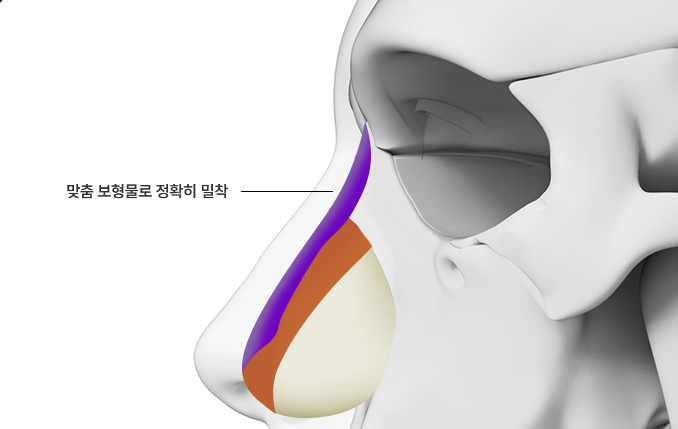
From this three-dimensional data, a prosthesis is designed and fabricated to fit your nasal bone with a contact accuracy measured in 0.1mm increments. Before surgery begins, a virtual simulation models the expected outcome, allowing both the surgeon and the patient to compare the planned result against the patient's actual facial proportions. This approach is sometimes described as "bespoke nose surgery" because the implant is made exclusively for you — it is not adapted from a shared mold.
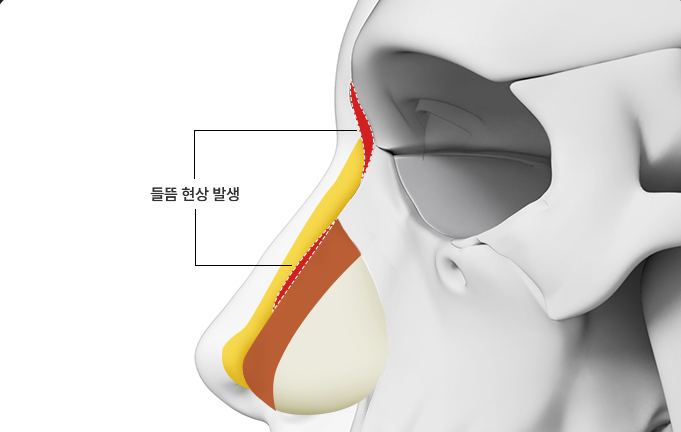
The distinction matters clinically. Standard implants, when placed into a nasal cavity they were not shaped for, carry a higher risk of lateral displacement, dorsal protrusion (visible ridging along the bridge), and tissue thinning over time. A 3D-printed custom implant seated precisely against your nasal bone creates stable fixation, distributes pressure evenly, and reduces the structural complications that can necessitate revision surgery.
At JNB Clinic, this process integrates both cosmetic design goals and functional airway considerations. Beautiful, comfortable breathing is the foundation from which every surgical plan is built.
Who needs 3D custom rhinoplasty?
This approach is particularly suitable for patients whose nasal structure does not align well with the proportions assumed by standard implants, as well as those seeking a higher level of precision and long-term structural stability. It may also be appropriate for revision cases where a previous implant caused complications.
You may be a suitable candidate if you identify with one or more of the following:
-
You want a natural-looking result — not a nose that looks surgically altered, but one that looks as though it always belonged to your face
-
You have noticeable nasal asymmetry — including left-right imbalance in the bridge, tip, or nostrils
-
You are concerned about side effects — and want a surgical plan that prioritizes structural fit, reduces movement risk, and lowers the chance of revision
-
You have functional concerns — such as breathing difficulty, nasal airway narrowing, or structural deviation that affects sleep quality or daily comfort
-
Your facial midline appears elongated or your brow ridge looks sunken — and you want proportional improvement across the full mid-face
-
You want refined, harmonious nasal lines — and are looking for surgery that designs the tip and bridge in relation to the entire face, not in isolation
-
You are planning or recovering from a previous rhinoplasty — including revision cases where the original implant caused protrusion, asymmetry, or tissue changes
-
You want to preview your outcome before surgery — through pre-operative simulation based on your own 3D imaging data
Candidates should be in general good health, have realistic expectations, and be prepared to discuss both cosmetic goals and any underlying functional concerns during consultation. Patients who are not yet fully developed (under approximately 18 years of age) may not be suitable candidates at this time.
Meet the specialist: Dr. JuYong Kang
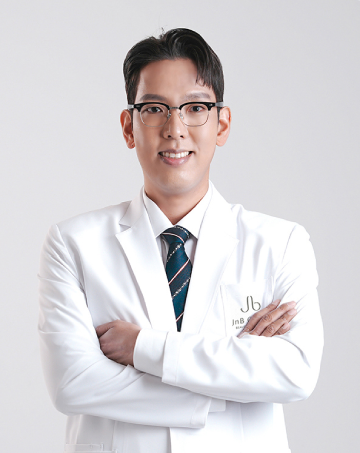
Dr. JuYong Kang
Representative Director & Chief Physician
JNB Clinic Plastic Surgery & Otolaryngology (ENT)
Dr. JuYong Kang Representative Director & Chief Physician — JNB Clinic Dual Specialist: Plastic Surgery & Otolaryngology (ENT)
Dr. JuYong Kang holds a rare dual qualification that bridges cosmetic rhinoplasty and functional ENT medicine. He completed his medical training at Kyung Hee University School of Medicine, followed by advanced graduate-level study at Kyung Hee University Graduate School of Medicine. He previously served as Director at Byeol Plastic Surgery Clinic and Samsung Dream Otolaryngology Clinic before establishing JNB Clinic as its Representative Director.
Dr. Kang holds active membership in the Korean Society of Otorhinolaryngology-Head and Neck Surgery, the Korean Rhinologic Society, the Korean Society of Facial Plastic and Reconstructive Surgery, the Korean Society for Stem Cell Therapy, the Korean Sleep Research Society, the Rhinoplasty Research Society of the Korean Society of Plastic and Reconstructive Surgeons, and the Anti-Aging Plastic Surgery Research Society. His clinical scope encompasses rhinoplasty, nasal airway reconstruction, facial plastic and reconstructive surgery, sleep disorder surgery, and stem cell therapy.
His guiding philosophy: "Beautiful, comfortable breathing is where it all begins. The harmony between natural breathing and the face is more important than anything else."
This perspective shapes every surgical consultation at JNB Clinic — structural integrity and airway function are assessed alongside aesthetic goals, and no plan is finalized until both dimensions are addressed.
Treatment areas and expected improvements
-
-
-
-
-
-
-
-
| Conventional RhinoplastyUses pre-made implants, making it difficult toaccurately reflect each patient's unique nasal anatomy.Lower implant-to-bone conformity may increasethe risk of implant movement or asymmetry.Structural limitations may contribute to bending, protrusion, or other implant-related issues.Standardized manufacturing methods offer limited design customization options. | Customized 3D RhinoplastyCreates a fully customized implant based on the patient's CT scan data.Designed for precise conformity to the nasal bone, helping achieve stable fixation.High-precision design down to 0.1 mm helps minimize bending and protrusion.Shorter surgical time and faster recovery may help reduce the likelihood of complications. |
3D custom rhinoplasty at JNB Clinic addresses the following anatomical targets:
-
Nasal bridge (dorsum): The dorsum is the uppermost visible structure of the nose, extending from the radix (where the nose meets the forehead) to the supratip. In patients with a flat or low bridge — common across many East Asian facial profiles — a standard implant placed here may not follow the natural curve of the underlying nasal bone, resulting in a visible seam or dorsal ridge. A CT-fabricated custom implant is contoured in 0.1mm increments to conform precisely to the patient's actual bone surface, reducing the risk of protrusion and improving long-term stability.
Expected improvements: a more defined, elevated bridge that integrates naturally with the forehead and tip; reduced visible implant edges; improved facial vertical proportion. Outcomes vary by individual anatomy and will be discussed during simulation planning.
-
**Nasal tip (lobule and alar cartilages): **The tip is among the most complex areas of nasal surgery because it is composed of cartilage rather than bone, and because it defines the final impression of the nose from every angle. JNB Clinic's approach designs the tip in relation to the full face — considering the ratio between the bridge, the columella, and the nostril base — rather than adjusting its projection in isolation.
Expected improvements: a more refined, natural tip shape; improved tip-bridge proportion; reduction in bulbous or rounded tip appearance. Some tip refinement may involve cartilage work, and individual tissue characteristics will influence final results.
-
**Left-right nasal symmetry: ** Structural asymmetry — whether in the nasal bone, the cartilaginous framework, or the soft tissue — is one of the most common concerns among rhinoplasty patients. 3D-CT scanning identifies asymmetric deviation before surgery, allowing the surgical plan to account for these differences with a custom implant that compensates for the asymmetry rather than overlaying a symmetric prosthesis onto an asymmetric foundation.
Expected improvements: improved visual balance between the left and right sides of the nose, mid-face, and nostril base. Results depend on the severity of the underlying structural deviation.
-
**Nasal airway and functional structure: ** Dr. Kang's ENT background allows JNB Clinic to assess the internal nasal airway as part of the rhinoplasty process. Patients presenting with nasal obstruction, breathing difficulty during sleep, or septal deviation may have these functional concerns addressed in coordination with the cosmetic surgical plan.
Expected improvements: improved nasal airflow; reduction in airway obstruction symptoms; functional improvement that supports both daytime comfort and sleep quality. Functional outcomes are individually determined and are not guaranteed.
Treatment process and timeline
Step 1 — Initial consultation
The process begins with a comprehensive in-person consultation with Dr. JuYong Kang. During this session, the patient's cosmetic concerns, functional history (including any breathing difficulties), prior surgical history, and expectations are thoroughly reviewed. Reference images the patient wishes to discuss may be brought to this consultation.
Step 2 — 3D-CT diagnostic assessment
A 3D-CT scan is performed to capture the full dimensional structure of the patient's nose — including the nasal bone shape and angles, left-right asymmetry, cartilage condition, and skin thickness. This data forms the foundation of the surgical plan. The scan allows the surgeon to identify structural points requiring reinforcement, anticipate challenges, and avoid surprises during surgery.
Step 3 — Virtual simulation and implant fabrication
Using the CT data, a 1:1 custom prosthesis is designed to fit the patient's specific nasal architecture. A virtual simulation models the expected post-operative appearance, which the patient can review and discuss before any commitment to surgery. The implant is then fabricated with 0.1mm precision engineering.
Step 4 — Surgery (closed rhinoplasty approach)
Surgery is performed under sedation anesthesia, with general anesthesia available if required. The procedure takes approximately 1 to 2 hours. The closed rhinoplasty technique is used where appropriate, meaning all incisions are made inside the nostrils — leaving no external visible scarring. The custom implant is placed to fit precisely against the nasal bone surface, and cartilage work is performed as planned.
Step 5 — Immediate post-operative care
Following surgery, the patient will be monitored during recovery. Sutures are typically removed approximately 7 days after surgery. Medical aftercare guidance is provided covering activity restrictions, wound care, and what to expect during the initial healing phase.
Step 6 — Recovery and follow-up
Major swelling typically subsides within 1 to 2 weeks. Residual fine swelling and the final settling of tissues continues over 3 to 4 weeks, with individual variation. Follow-up appointments allow the clinical team to monitor healing progress and address any questions. Implant stability is expected to improve as natural tissue integration occurs around the prosthesis.
Results, safety, and longevity
Because the 3D custom implant is fabricated to conform exactly to the patient's nasal bone, it is designed to achieve stable fixation once tissue has grown around it — a process sometimes described as semi-permanent integration, as the surrounding tissue stabilizes the implant in position over time.
However, no surgical procedure carries absolute guarantees. Individual results are influenced by skin thickness, tissue characteristics, healing response, and the complexity of each patient's anatomy. The simulation shown before surgery represents a planned outcome, not a contractual promise.
Potential risks associated with rhinoplasty include swelling, bruising, temporary numbness, asymmetry, infection, implant-related complications, and the possibility of revision surgery. The 3D custom approach is specifically designed to reduce the structural risk factors — displacement, protrusion, and poor nasal bone contact — that are more commonly associated with standard pre-manufactured implants, particularly the risk of visible ridging along the dorsum. The 0.1mm precision design and precise bone-surface contact significantly minimizes these concerns compared to off-the-shelf options, though no surgical approach eliminates risk entirely.
Patients on blood-thinning medications, those with active infections, or those with specific health conditions may not be immediate surgical candidates. A thorough pre-operative medical review is conducted for every patient.
Why choose JNB Clinic for 3D custom rhinoplasty?
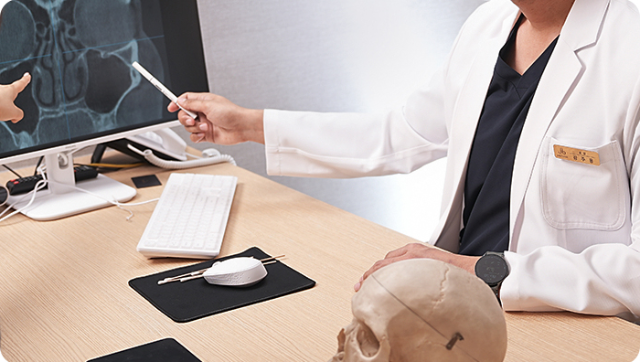
JNB Clinic was established around a single philosophy: that rhinoplasty should address how a person breathes as much as how they look. That perspective — rooted in Dr. JuYong Kang's dual expertise as both a plastic surgeon and a board-recognized otolaryngologist — shapes every clinical decision made at the clinic. Most rhinoplasty centers approach the nose as an aesthetic object. JNB Clinic treats it as a functional anatomical system.
The 3D custom rhinoplasty program reflects this commitment to precision. From CT-based scanning and virtual outcome simulation through to individually fabricated custom implants, every step in the process is designed to fit one patient — not a population average. The clinic serves both domestic and international patients seeking a higher standard of individualized surgical planning than is typically available through clinics offering standardized implant options.
Key differentiators:
-
Dual surgical expertise — Dr. Kang's combined specialization in plastic surgery and ENT medicine means functional airway concerns are assessed and addressed as part of every rhinoplasty consultation, not as a separate referral
-
3D-CT precision system — Pre-operative CT scanning captures nasal bone shape, cartilage condition, skin thickness, and asymmetry in three dimensions; the implant is then fabricated to match this data with 0.1mm accuracy
-
Virtual simulation before surgery — Patients review a modeled projection of their expected outcome against their actual face before committing to the procedure
-
Closed technique approach — Where appropriate, surgery is performed entirely through internal incisions, leaving no external scarring on the nasal skin
Patient experiences
Patient A — Revision rhinoplasty with structural concerns
This patient had undergone rhinoplasty at another clinic and noticed visible ridging developing along the bridge approximately two years post-surgery. After a CT-based assessment at JNB Clinic, it was determined that the original implant had poor contact with the nasal bone surface. A custom-fabricated replacement implant was designed to match her specific bone geometry. Following recovery, the ridge appearance resolved and the bridge profile appeared significantly more natural.
Patient B — First-time rhinoplasty with asymmetry concerns
This patient sought rhinoplasty to address an uneven nasal bridge that had bothered her since adolescence. 3D-CT imaging confirmed left-right asymmetry in the underlying bone structure. The custom implant was designed to account for this asymmetry, and virtual simulation was used to show the expected post-operative facial balance before surgery was scheduled. At her 4-week follow-up, swelling had substantially resolved and the bridge appeared proportional and symmetric.
Patient C — Rhinoplasty with functional airway concern
This patient presented with both cosmetic goals and chronic nasal congestion affecting sleep. Dr. Kang assessed the nasal airway alongside the cosmetic plan, and the surgical approach addressed both. At follow-up, the patient reported improved nasal airflow alongside visible improvement in nasal bridge definition.
Ready to begin? Schedule your consultation at JNB Clinic
Your nose is not a template. It deserves a surgical plan designed specifically for it.
At JNB Clinic, every 3D custom rhinoplasty begins with a comprehensive one-on-one consultation with Dr. JuYong Kang — covering your anatomy, your goals, your functional health, and a simulation of your expected result before any decision is made. Whether you are considering rhinoplasty for the first time or exploring revision options after a previous procedure, we invite you to discuss your case with a specialist who treats both form and function as equally essential.
Book your consultation today — complete our online consultation form or contact the clinic directly to schedule a date that suits you.
For international patients, remote pre-consultation is available before your in-person visit. Our team will guide you through each step of the process.
Other Services
Explore additional treatments offered by our specialists.

Silhouette Lifting
Silhouette Soft is a minimally invasive, absorbable thread lift that repositions sagging facial tissue while simultaneously triggering the skin's natural collagen production.
Learn More

Botox
Botox — short for botulinum toxin — is a refined, medical-grade protein that temporarily reduces the activity of targeted facial muscles.
Learn More

Facial Liposuction
Facial liposuction is a minimally invasive contouring procedure that removes localized fat deposits from specific areas of the face and lower face.
Learn More