Personalized Nasal & Facial Care • Dedicated International Patient Concierge

Medical Guide
What's Included in JNB Clinic's Post-Surgery Care Program — and What to Confirm at Consultation
A plain guide to JNB Clinic's Signature Post-Surgery Care program: the three documented phases, what is included, and what to confirm at consultation.
Schedule a ConsultationWhat's Included in JNB Clinic's Post-Surgery Care Program — and What to Confirm at Consultation
Medically reviewed by Dr. Kang Ju-Yong, M.D., Board-Certified Otolaryngology (ENT) Specialist & Chief Director, JNB Clinic · Last updated July 2026
If you are planning rhinoplasty in Seoul, the recovery plan matters as much as the surgery itself. At JNB Clinic in Gangnam, the JNB Signature Post-Surgery Care program is the clinic's structured rhinoplasty aftercare package — a documented three-phase schedule of visits that begins two days after surgery and, for JNB Signature rhinoplasty patients, continues for up to one year. This guide walks through what the clinic states is included at each phase, explains the terms in plain language, and flags the details you should confirm directly with the clinic at consultation. Prices, exact inclusions, and any exclusions are not published, so treat those as questions to raise rather than assumptions to make.
Recovery from any nasal surgery is gradual and individual. The goal here is not to promise a particular result or timeline, but to help you understand how JNB Clinic organizes the days and weeks after surgery so you can plan your stay, your travel, and your expectations with clarity.
Why a structured aftercare plan matters after rhinoplasty
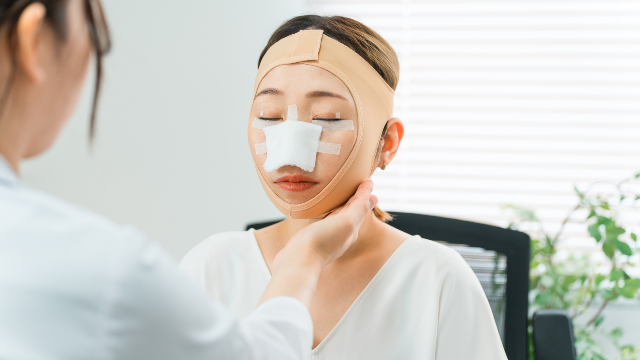
Rhinoplasty is a procedure where the early healing period genuinely shapes the experience. According to the American Society of Plastic Surgeons (ASPS), pain and swelling tend to be most pronounced in the first week, tapes and a splint are usually worn during that time, and sutures and the splint are typically removed within the first week. ASPS also notes that while initial swelling settles within a few weeks, subtle refinement of the nasal contour can continue for up to a year. Mayo Clinic similarly describes rhinoplasty recovery as a staged process that unfolds over an extended period rather than all at once.
That is precisely why a scheduled series of follow-up visits is useful. Instead of leaving you to guess when the splint comes off or when stitches are removed, JNB Clinic maps these milestones onto specific days. This reflects the clinic's stated philosophy, "Beauty that Breathes," which treats the nose as both a cosmetic and a functional, structural feature — meaning aftercare is framed around stable healing, not just appearance.
A word on scope: general surgical wound guidance from MedlinePlus emphasizes following your surgeon's specific instructions, keeping the area protected, attending scheduled follow-up visits, and watching for warning signs such as increasing drainage, worsening pain, or fever. JNB Clinic's program is designed to build these check-ins into your calendar, but your own surgeon's post-operative instructions always take precedence over any general article.
The three documented phases of JNB Signature Post-Surgery Care
JNB Clinic describes its Signature Post-Surgery Care program as unfolding in three phases, each tied to a point in your recovery. Below is what the clinic documents for each phase. Where the clinic does not publish specifics, that is noted as something to confirm.
Phase 1 — around Day +2: splint removal, hyperbaric oxygen therapy, and Smart LED care
The first scheduled visit is roughly two days after surgery. According to the clinic, this phase includes splint removal, hyperbaric oxygen therapy, and Smart LED care.
The splint is the external support worn over the nose in the initial days. Its removal is a routine, expected milestone in rhinoplasty recovery. ASPS notes that the splint and tapes are generally worn during the first week, so an early check is consistent with standard practice, though the exact timing of splint removal for your case is something the surgeon determines.
Hyperbaric oxygen therapy and Smart LED care are described by JNB Clinic as components of its recovery program. Here it is worth being precise about what these terms mean, without overstating benefit. Hyperbaric oxygen therapy (HBOT) involves breathing oxygen in a pressurized chamber. The U.S. Food and Drug Administration (FDA) explains that HBOT devices are regulated medical devices and are cleared as safe and effective only for certain specific conditions, and that HBOT should be used under the care of a doctor at an appropriately equipped facility. This article describes hyperbaric oxygen and Smart LED simply as elements the clinic includes in its post-surgery program; it does not claim they speed rhinoplasty healing or guarantee any outcome. If you would like to understand the intended role of these adjuncts in your specific recovery, ask the clinic to explain it during consultation.
Phase 2 — around Day +7: suture removal and relay care
The second phase is scheduled for approximately one week after surgery. The clinic documents this phase as including suture removal and "relay care."
Suture (stitch) removal at around the one-week mark aligns with what ASPS describes for rhinoplasty, where sutures are commonly removed in the first week. "Relay care" is JNB Clinic's own term for continued, handed-over care as you move from the immediate post-operative days into the next stage of recovery. Because the clinic does not spell out every element bundled into relay care on its public pages, the exact services included in this step are best confirmed at consultation — a good, concrete question to ask when you plan your visit.
Phase 3 — around two weeks: medical skin scaling and hyperbaric oxygen refresh
The third documented phase is scheduled around the two-week point and includes what the clinic calls medical skin scaling and a hyperbaric oxygen refresh.
Medical skin scaling is described as a skin-focused care step. As with the earlier adjuncts, this article presents it as part of the clinic's recovery program rather than as a treatment with a promised effect on your surgical result. The "hyperbaric oxygen refresh" is a repeat of the hyperbaric oxygen element introduced in Phase 1. Again, the appropriate expectation to set is procedural: these are scheduled components of the program, and their purpose and suitability for you should be discussed with the clinic.
Follow-up for up to one year
Beyond the three structured phases, JNB Clinic states that it accompanies JNB Signature rhinoplasty patients for up to one year after surgery. This longer horizon reflects the reality of rhinoplasty healing: both ASPS and Mayo Clinic describe nasal refinement continuing for months, with subtle changes to the nasal contour potentially visible over the course of roughly a year.
For international patients, JNB Clinic also describes structured remote follow-up that continues after you return home, using the clinic's English-language communication channels. This matters if you are traveling from the United States, because most of that one-year window will happen after you have left Korea. What that remote follow-up involves in practice — how often, through which channels, and what is reviewed — is worth clarifying with the clinic so you know what support to expect once you are back home.
Understanding the program's components in plain terms
It helps to separate two kinds of items in the program: the clinical milestones and the supportive adjuncts.
The clinical milestones — splint removal, suture removal, and scheduled follow-up checks — are the routine, expected touchpoints of rhinoplasty recovery. They are the moments when healing is assessed and the nose is monitored. These are consistent with how major medical sources describe standard rhinoplasty aftercare.
The supportive adjuncts — hyperbaric oxygen therapy, Smart LED care, and medical skin scaling — are additional elements the clinic includes in its program. This guide deliberately does not assert that any of these adjuncts improves your surgical outcome, shortens recovery, or produces a guaranteed effect. The responsible way to think about them is as part of the clinic's overall recovery experience, whose specific role in your case is a consultation topic. For hyperbaric oxygen in particular, the FDA's guidance that it be used under medical supervision is a reasonable anchor for your questions.
What to confirm at your consultation

Because JNB Clinic does not publish prices or an itemized inclusion-and-exclusion list, the most useful thing this article can do is give you a checklist of questions:
- Cost and what it covers. Ask whether the Post-Surgery Care program is included with the surgery or billed separately, and what each phase covers. No pricing is published, so this must come from the clinic.
- Exact inclusions and exclusions. Confirm precisely what is included in each phase — especially the "relay care" step — and whether anything commonly assumed (medications, additional visits, imaging) is separate.
- Timing flexibility. The phases are described as Day +2, Day +7, and around two weeks. Ask how these can flex around your travel dates and any unexpected changes in your schedule.
- Adjunct details. Ask the clinic to explain the intended purpose of hyperbaric oxygen therapy, Smart LED care, and medical skin scaling in your recovery, and whether they are suitable for you.
- Remote follow-up. Clarify what the up-to-one-year follow-up looks like after you return home, and which English-language channels are used.
- Warning signs and contact. Ask who to contact and how, if you notice anything concerning during recovery, both in Korea and after you travel.
You can raise all of these through the clinic's consultation channel. When you are ready to ask, the clinic's contact page is the place to begin, and international patients can request an online consultation before traveling.
Planning your stay in Korea
Timing your trip around the program is practical. JNB Clinic suggests that international rhinoplasty patients plan to stay in Korea for roughly 7–10 days after surgery to attend follow-up visits, splint care, and recovery checks before flying home. The clinic also notes, based on its general positioning, that some patients may be able to travel after about a week, though it stresses that recovery time varies with the individual and the technique used and should be confirmed directly.
Mapping this onto the phases: Phase 1 (around Day +2) and Phase 2 (around Day +7) fall neatly within a typical 7–10 day stay, while the Phase 3 visit (around two weeks) and the extended follow-up may occur later or remotely, depending on your travel plans. If you would like to see the kinds of results the clinic shares, its before-and-after gallery is available, with the reminder that individual results vary and are never guaranteed.
Finally, remember that JNB Clinic's rhinoplasty is performed by Dr. Kang Ju-Yong, a board-certified ENT (otolaryngology) specialist and the clinic's Chief Director, with over 13 years of experience focused on functional and aesthetic rhinoplasty. The aftercare program is part of how the clinic supports the recovery that follows surgery — not a substitute for the individualized instructions your surgeon gives you.
The Bottom Line
- JNB Clinic's Signature Post-Surgery Care program is a documented three-phase rhinoplasty aftercare package: Phase 1 around Day +2 (splint removal, hyperbaric oxygen therapy, Smart LED care), Phase 2 around Day +7 (suture removal and relay care), and Phase 3 around two weeks (medical skin scaling and hyperbaric oxygen refresh).
- For JNB Signature rhinoplasty patients, the clinic states it provides follow-up for up to one year, including remote follow-up after international patients return home.
- Splint removal, suture removal, and scheduled checks are routine rhinoplasty milestones; hyperbaric oxygen, Smart LED, and skin scaling are described here as program components, not as treatments with guaranteed benefits.
- Prices, exact inclusions and exclusions, and adjunct details are not published — confirm all of these directly at consultation.
- International patients are advised to plan roughly 7–10 days in Korea after surgery, though recovery time varies and should be confirmed with the clinic.
Frequently Asked Questions
What is included in the JNB Signature Post-Surgery Care program?The clinic documents three phases: Phase 1 (around Day +2) with splint removal, hyperbaric oxygen therapy, and Smart LED care; Phase 2 (around Day +7) with suture removal and relay care; and Phase 3 (around two weeks) with medical skin scaling and a hyperbaric oxygen refresh, followed by follow-up for up to one year for Signature rhinoplasty patients.
How much does the program cost?JNB Clinic does not publish prices, and this article does not estimate any. Whether the program is bundled with surgery or billed separately, and what each phase covers, should be confirmed directly with the clinic at consultation.
When is the splint removed?The program schedules splint removal in Phase 1, around two days after surgery. This is consistent with general rhinoplasty guidance that the splint is worn in the early recovery period, though the exact timing for your case is determined by your surgeon.
What is "relay care" in Phase 2?Relay care is the clinic's term for continued, handed-over care as you move past the immediate post-operative days. The clinic does not itemize every element publicly, so ask what is specifically included when you consult.
Does hyperbaric oxygen therapy or Smart LED care improve my results?This article describes them only as components of the clinic's recovery program and makes no claim about their effect on your surgical outcome. The FDA advises that hyperbaric oxygen therapy be used under a doctor's care. Ask the clinic to explain the intended role of each adjunct for you.
How long do I need to stay in Korea?JNB Clinic suggests international patients plan for roughly 7–10 days after surgery to attend early follow-up visits. Some patients may travel after about a week, but recovery time varies with the individual and technique, so confirm your plan with the clinic.
What happens after I return home?The clinic describes structured remote follow-up through its English-language channels, continuing within the up-to-one-year window for Signature rhinoplasty patients. Clarify the frequency and format with the clinic before you travel.
This article is for general informational purposes and does not constitute individualized medical advice. It describes the components of JNB Clinic's post-surgery care program as documented by the clinic and does not assert any specific medical benefit or guaranteed outcome. Always follow the personalized instructions of your treating surgeon, and confirm prices, inclusions, and details directly with the clinic.
More Articles
Continue reading our clinical guides.

Benefits of Stem Cell Therapy for Skin Rejuvenation
Discover the benefits of stem cell therapy for skin rejuvenation, including improved texture, reduced wrinkles, and a more youthful appearance.
Learn More

Recovery After Autologous Cartilage Nose Surgery
Learn what to expect during recovery after autologous cartilage nose surgery, including healing timelines, aftercare tips, and results.
Learn More

Revision Rhinoplasty: Everything You Need to Know Before Your Second Nose Surgery
Revision Rhinoplasty: Learn what to expect from a second nose surgery, including risks, recovery, and results. Explore your options and learn more.
Learn More