Personalized Nasal & Facial Care • Dedicated International Patient Concierge
Medical Guide
Understanding Rhinoplasty Risks: An Honest Safety Overview
An honest, sourced overview of rhinoplasty risks and complications: is rhinoplasty safe, what to expect in recovery, and how to lower your risk sensibly.
Schedule a ConsultationUnderstanding Rhinoplasty Risks: An Honest Safety Overview
Medically reviewed by Dr. Kang Ju-Yong, M.D., Board-Certified Otolaryngology (ENT) Specialist & Chief Director, JNB Clinic · Last updated July 2026
Rhinoplasty risks and complications are exactly what a careful patient should read about before deciding, and the most common question — is rhinoplasty safe? — deserves an honest answer rather than a sales pitch. Rhinoplasty is a well-established operation that is generally safe in experienced hands, and serious complications are uncommon. But it is real surgery, and it carries recognized risks: reactions to anesthesia, bleeding, infection, breathing changes, numbness, asymmetry, scarring, a small chance of a hole in the nasal septum, and the possibility that a revision is needed later. This overview explains each of these in plain language, using authoritative medical sources, so you can weigh them sensibly, without fear-mongering and without false promises.
Understanding risk is not about scaring yourself out of a decision. It is about making an informed one, asking your surgeon the right questions, and setting realistic expectations for both the result and the recovery. No ethical surgeon can guarantee an outcome, and this article does not. What it can do is give you a clear, balanced picture.
Is rhinoplasty safe? An honest baseline
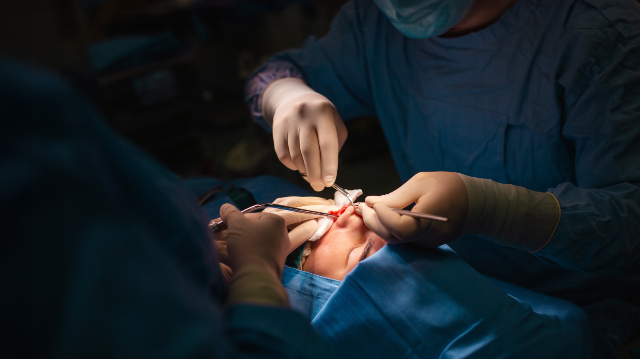
The reassuring headline first: Mayo Clinic states that rhinoplasty risks are small and complications are rare, while also being clear that all surgeries carry risk and that your surgeon should discuss the risks and benefits with you before the operation. That is the right frame — low overall risk, but not zero, and worth understanding.
Two things drive how safe any individual rhinoplasty is. The first is who performs it and where. The second is your own anatomy and health. Both are within your influence: you choose your surgeon and facility, and you can prepare your body and follow instructions. The sections below walk through what can happen, why, and what genuinely helps.
First, the normal recovery that is not a complication
Much of what patients notice after a nose job is expected healing, not a complication, and confusing the two causes needless anxiety. Swelling and bruising are the most visible examples. The ASPS explains that while initial swelling subsides within a few weeks, the new nasal contour can take up to a year to fully refine, and that swelling may come and go — even worsening in the morning — during that first year. Mayo Clinic similarly describes short-term swelling and black-and-blue coloring around the eyelids in the first two to three weeks, with nasal swelling sometimes lasting up to a year, and notes most people feel like themselves again about a week after surgery.
So a nose that still looks slightly swollen at three months, a tip that feels firm, or a contour that is still settling are usually signs of ordinary healing, not that something has gone wrong. Knowing this helps you judge your own recovery calmly and recognize the difference between patience and a genuine problem.
The recognized risks and complications
Authoritative sources describe a consistent set of rhinoplasty risks. Here is what each means in practice.
Anesthesia risks
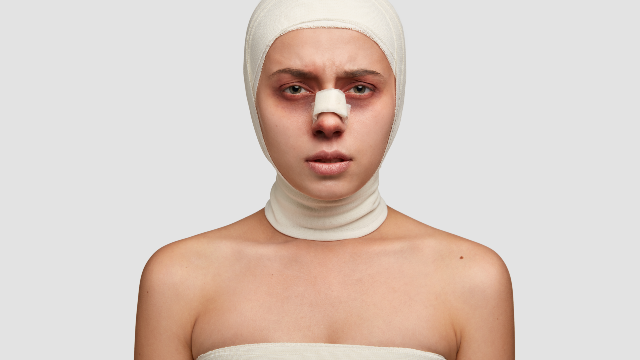
Rhinoplasty is performed under anesthesia, and both the ASPS and Mayo Clinic list anesthesia reactions among the risks. Mayo Clinic explains that the type used depends on how complex the surgery is and what the surgeon prefers — ranging from local anesthesia with sedation to general anesthesia, which affects the whole body and requires a breathing tube. Who administers and monitors your anesthesia is a core safety question. Ask what type is planned for your case, who provides it, and how you will be monitored during and after surgery.
Bleeding
Some minor bleeding and drainage in the days after surgery is normal, but bleeding is also listed as a recognized risk by both Mayo Clinic and the ASPS. Surgeons reduce it with careful technique and specific after-surgery instructions: Mayo Clinic advises resting with your head raised above your chest, avoiding intense activity, not blowing your nose, and sneezing or coughing with your mouth open. It also cautions against medicines containing aspirin or ibuprofen for two weeks before and after surgery because they can increase bleeding. Following these instructions is one of the simplest ways to lower your own risk.
Infection
Infection is a recognized complication of any surgery, and rhinoplasty is no exception; the ASPS and Mayo Clinic both list it. Signs to watch for during recovery include increasing redness or warmth, worsening pain, fever, or unusual discharge. Surgeons lower the risk through sterile technique and, where appropriate, medications; Mayo Clinic notes you will be given instructions on medications to help healing and reduce the potential for infection, and it warns that smoking and vaping can slow healing and raise the risk of infection and tissue problems. Stopping smoking before and after surgery is a meaningful, patient-controlled risk reduction.
Breathing changes
Because the nose is both a structure and an airway, rhinoplasty can affect breathing. Mayo Clinic lists difficulty breathing through the nose among the possible risks. It is also worth understanding the related procedure that addresses breathing directly: septoplasty, which Mayo Clinic describes as surgery to straighten the wall inside the nose (the nasal septum) when it is bent or crooked and making breathing harder. A septoplasty is often performed at the same time as a rhinoplasty. If breathing is one of your concerns, discuss the functional side of your surgery specifically, not just the appearance.
Numbness and skin changes
Mayo Clinic lists permanent numbness in and around the nose, and lasting pain, discoloration, or swelling, among the possible risks; the ASPS similarly notes change in skin sensation, such as numbness or pain, and skin discoloration and swelling. Some altered sensation in the early recovery period is common and usually improves, but ask your surgeon what to expect for your case.
Scarring
Scarring is listed by both the ASPS (poor wound healing or scarring) and Mayo Clinic. The relevance of scarring depends partly on the surgical approach. Mayo Clinic notes rhinoplasty may be done entirely inside the nose or through a small external incision at the base of the nose between the nostrils; approaches that work inside the nose avoid a visible external scar. Ask which approach your surgeon recommends and why.
Asymmetry and an unsatisfactory appearance
Because tiny changes to the nose's structure produce visible differences, the aesthetic result is a genuine consideration. The ASPS lists an unsatisfactory nasal appearance among the risks, and Mayo Clinic notes the possibility of an uneven-looking nose. Mayo Clinic is candid that even a few millimeters can make a big difference and that, in some cases, the small changes are not enough and a second surgery is considered. This is exactly why realistic expectations and a thorough consultation matter so much.
Septal perforation
A rarer complication is septal perforation — a hole in the wall between the two nostrils. The ASPS describes it as rare and notes that additional surgical treatment may be necessary to repair it, but that it may be impossible to fully correct. Mayo Clinic likewise lists it among possible risks. It is uncommon, but it belongs in an honest overview.
The possibility of revision
Finally, revision. The ASPS lists the possibility of revisional surgery as a recognized part of rhinoplasty, and Mayo Clinic notes that if a second surgery is needed to make further changes, you generally must wait at least a year, because the nose keeps changing during that time. Revision is not evidence of a failed operation — noses settle slowly and unpredictably — but the possibility should be part of your planning and your budget. No surgeon can promise you will never want or need one.
Why rhinoplasty is technically demanding
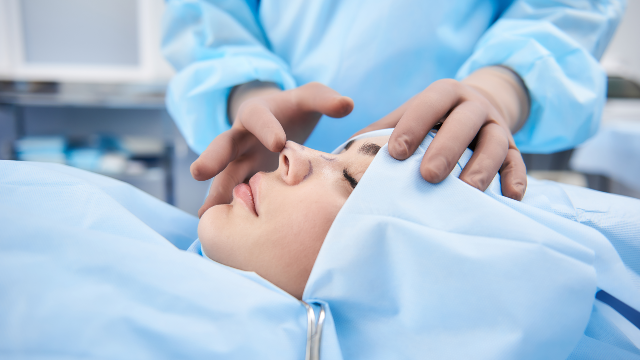
It helps to understand why these risks exist. Mayo Clinic is unusually direct on this point: it calls rhinoplasty a difficult operation. The nose is a complicated three-dimensional shape in the middle of the face; the changes made are often very small, so the margin for error is small too; swelling and local anesthetic distort the nose during surgery, hiding some of those small changes; and there is no single fixed sequence of steps, because surgeons personalize each operation to the patient's anatomy and goals.
None of that is a reason to avoid rhinoplasty. It is a reason to take surgeon selection seriously. Mayo Clinic advises looking for a surgeon with training and board certification in an appropriate specialty who frequently performs rhinoplasty, a good reputation, and a facility that is accredited — and someone who helps you understand what will happen during your surgery.
How JNB Clinic frames the risks of its approach
Clinics should be transparent about risk, and JNB Clinic frames rhinoplasty's risks in line with the general picture above: swelling, bruising, inflammation, the possibility of scar tissue or contracture, asymmetry, and the possibility that a revision or touch-up is needed. Consistent with mainstream medicine, the clinic is explicit that individual results vary and are not guaranteed. That honesty is the correct starting point, and it is the same message this article carries throughout.
One distinction is worth explaining because it relates directly to a specific category of risk. JNB Clinic focuses on implant-free rhinoplasty using the patient's own (autologous) cartilage — from the ear, rib, or septum — rather than synthetic implants such as silicone. The clinic's rationale is that using your own tissue is designed to reduce implant-related risks such as capsule contracture, chronic inflammation, and implant displacement. It is important to be precise here: avoiding synthetic implants addresses implant-specific risks, but it does not eliminate the general risks of surgery covered above — anesthesia, bleeding, infection, swelling, asymmetry, or the possibility of revision still apply to any rhinoplasty, whatever the material used. Autologous cartilage is one approach with its own trade-offs, decided case by case; for example, rib-cartilage techniques involve harvesting cartilage from the rib. The right approach for any individual depends on anatomy and goals and is determined at a personal consultation.
Procedures at JNB Clinic are performed by Dr. Kang Ju-Yong, a licensed physician in South Korea and a board-certified Ear, Nose, and Throat (ENT) specialist (otorhinolaryngologist) and Chief Director — not a plastic surgeon — with over 13 years of experience focused on functional and aesthetic rhinoplasty. The clinic uses 3D-CT imaging as a standard part of its functional nasal evaluation and surgical planning. You can read more about the clinic's background on its About Us page.
What genuinely lowers your risk
Risk is not entirely in your hands, but a meaningful part of it is. Drawing the practical points from the sources above:
- Choose your surgeon and facility carefully. Mayo Clinic advises a surgeon with appropriate training and board certification who does rhinoplasty often, plus an accredited surgical facility. Verify credentials directly and ask exactly who will operate.
- Have a thorough consultation and realistic expectations. Mayo Clinic emphasizes discussing your goals honestly and understanding what surgery can and cannot achieve; the ASPS stresses that you sign consent only after risks are fully explained. Unrealistic expectations are a common source of dissatisfaction.
- Optimize your health before surgery. Stop smoking and vaping, which Mayo Clinic links to slower healing and higher infection risk; avoid aspirin and ibuprofen around the time of surgery as directed; and disclose your full medical history, including any bleeding disorder.
- Follow after-surgery instructions closely. Rest with your head elevated, avoid intense activity, do not blow your nose, protect your nose from pressure and sun, and attend follow-up visits. These simple steps reduce bleeding, swelling, and infection risk.
- Be patient with results. Because swelling can last up to a year and the nose settles slowly, give your result time before judging it, and discuss any concern with your surgeon rather than assuming the worst.
Realistic expectations: results vary, always
The single most important idea in an honest safety overview is that outcomes are not guaranteed. Mayo Clinic notes that an experienced surgeon can usually achieve results both surgeon and patient are satisfied with, but that sometimes the small changes are not enough and a further surgery is considered. MedlinePlus, the U.S. National Library of Medicine's consumer health resource, frames cosmetic surgery as reshaping appearance, with both physical changes and effects on self-esteem — a reminder that motivation and expectations are part of the picture, not just anatomy.
That is not a reason to be discouraged; it is a reason to be clear-eyed. Rhinoplasty performed by a qualified, experienced surgeon on a well-informed, healthy patient with realistic goals is a generally safe operation with a low rate of serious complications. Understanding the risks — and doing your part to reduce them — is how you give yourself the best chance of a result you are happy with, while accepting honestly that no outcome can be promised.
The Bottom Line
- Rhinoplasty is generally safe in experienced hands, and Mayo Clinic notes serious complications are rare — but it is real surgery with recognized risks that every patient should understand.
- Recognized risks include anesthesia reactions, bleeding, infection, breathing changes, numbness, scarring, asymmetry, rare septal perforation, and the possibility of revision, per the ASPS and Mayo Clinic.
- Much of what patients notice is normal healing; the ASPS notes the nose can take up to a year to refine, so patience matters and swelling is not a complication.
- JNB Clinic frames risks honestly (swelling, bruising, inflammation, scar tissue or contracture, asymmetry, possible revision; results vary and are not guaranteed) and uses autologous cartilage to reduce implant-specific risks — though general surgical risks still apply.
- You can lower risk by choosing a qualified surgeon and accredited facility, optimizing your health, following instructions, and setting realistic expectations; no outcome is ever guaranteed.
Frequently Asked Questions
Is rhinoplasty safe?Generally, yes, in experienced hands. Mayo Clinic states that rhinoplasty risks are small and complications are rare, while also being clear that all surgery carries some risk and that your surgeon should discuss the risks and benefits with you beforehand. Safety depends heavily on the surgeon's qualifications, the facility, your anatomy and health, and how well you follow after-surgery instructions.
What are the main risks and complications of rhinoplasty?The ASPS and Mayo Clinic list anesthesia risks, bleeding, infection, difficulty breathing through the nose, numbness or altered sensation, poor wound healing or scarring, skin discoloration and lasting swelling, an uneven or unsatisfactory appearance, rare septal perforation (a hole in the septum), and the possibility of revisional surgery. Your surgeon should explain how these apply to your specific case.
Is swelling after rhinoplasty a complication?Usually not. Swelling and bruising are expected. The ASPS notes swelling can come and go and take up to a year for the nasal contour to fully refine, and Mayo Clinic describes swelling sometimes lasting that long. Prolonged mild swelling is typically normal healing; signs like spreading redness, fever, or worsening pain are different and should be assessed.
How likely is it that I will need a revision?Revision is a recognized possibility rather than a certainty. The ASPS lists possible revisional surgery among rhinoplasty's risks, and Mayo Clinic notes that if a second surgery is needed you generally wait at least a year, because the nose keeps changing. Discuss the likelihood for your case, and any clinic's revision approach, before you decide. JNB lists revision rhinoplasty among its services; confirm details directly.
Does using my own cartilage instead of an implant make rhinoplasty safer?Autologous cartilage is designed to reduce implant-specific risks such as capsule contracture, chronic inflammation, and implant displacement, which is why JNB Clinic focuses on this implant-free approach. However, it does not remove the general risks of surgery — anesthesia, bleeding, infection, swelling, asymmetry, and possible revision still apply to any rhinoplasty. Each approach has trade-offs decided at consultation.
Can rhinoplasty affect my breathing?It can. Mayo Clinic lists difficulty breathing through the nose among the possible risks. A related procedure, septoplasty, straightens a bent nasal septum to improve breathing and is often done at the same time as rhinoplasty. If breathing is a concern for you, discuss the functional side of surgery specifically with an appropriately qualified surgeon.
What can I do to reduce my own risk?Choose a qualified surgeon and accredited facility, have a thorough consultation with realistic goals, disclose your full medical history, stop smoking and vaping, avoid aspirin and ibuprofen around surgery as directed, and follow after-surgery instructions closely. Mayo Clinic and the ASPS support each of these measures. Being patient with your result also helps you avoid unnecessary worry.
Who performs rhinoplasty at JNB Clinic?Procedures are performed by Dr. Kang Ju-Yong, a board-certified ENT (otolaryngology) specialist and Chief Director with over 13 years focused on functional and aesthetic rhinoplasty — he is not a plastic surgeon. The clinic uses 3D-CT imaging in its planning and focuses on implant-free, autologous-cartilage techniques, individualized after consultation. No outcome is guaranteed.
This article is for general informational purposes and does not constitute individualized medical advice. Rhinoplasty risks, recovery, and results vary by patient, technique, and circumstances, and no specific outcome is guaranteed. General risk information reflects independent authoritative sources and is not a prediction for your case. Always consult a qualified physician for an evaluation and a full discussion of the risks and benefits before making any treatment decision.
More Articles
Continue reading our clinical guides.

Benefits of Stem Cell Therapy for Skin Rejuvenation
Discover the benefits of stem cell therapy for skin rejuvenation, including improved texture, reduced wrinkles, and a more youthful appearance.
Learn More

Recovery After Autologous Cartilage Nose Surgery
Learn what to expect during recovery after autologous cartilage nose surgery, including healing timelines, aftercare tips, and results.
Learn More

Revision Rhinoplasty: Everything You Need to Know Before Your Second Nose Surgery
Revision Rhinoplasty: Learn what to expect from a second nose surgery, including risks, recovery, and results. Explore your options and learn more.
Learn More