Personalized Nasal & Facial Care • Dedicated International Patient Concierge


Medical Guide
Revision Rhinoplasty: Everything You Need to Know Before Your Second Nose Surgery
Revision Rhinoplasty: Learn what to expect from a second nose surgery, including risks, recovery, and results. Explore your options and learn more.
Schedule a ConsultationRevision Rhinoplasty: Everything You Need to Know Before Your Second Nose Surgery
Revision rhinoplasty is one of the most complex and nuanced procedures in all of facial surgery. Whether you are living with breathing difficulties after a previous operation, experiencing cosmetic results that do not match your expectations, or dealing with structural complications years after your first procedure, a second nose surgery may offer meaningful improvement — but it requires careful consideration and the right specialist.
This guide is designed to help patients understand what revision rhinoplasty involves, who is a suitable candidate, and what to realistically expect from the process.
What Is Revision Rhinoplasty?
Revision rhinoplasty — also called secondary rhinoplasty — refers to any corrective nose surgery performed after a previous rhinoplasty procedure. Unlike primary rhinoplasty, which works with the nose's original anatomy, revision surgery must navigate the altered tissue, scar formation, and structural changes left behind by earlier operations.
This makes it significantly more demanding, both diagnostically and technically. The surgeon must first understand what was done previously, how the tissues have healed, and what structural elements remain viable before designing a new surgical plan.
Revision rhinoplasty may address:
Cosmetic dissatisfaction (asymmetry, irregular contour, over-resection, unnatural appearance)
Functional problems (nasal obstruction, breathing difficulties, collapsed nasal valve)
Implant-related complications (displacement, visibility, or infection from synthetic materials)
Structural distortion from trauma or poor healing
Why Do Patients Seek a Second Nose Surgery?
Studies suggest that revision rhinoplasty accounts for a significant portion of rhinoplasty procedures performed globally. Patients seek corrective surgery for a wide range of reasons.
Some find that their nose appears artificial — a common outcome when primary surgery was overly aggressive or relied too heavily on implants rather than the patient's own cartilage. Others develop breathing problems that were not present before surgery, resulting from internal structural changes that were not adequately accounted for at the time.
In some cases, initial results look acceptable but change over time as scar tissue matures, cartilage warps, or implants shift. These are not always signs of surgical error — natural tissue behavior can alter outcomes even when the original procedure was performed correctly.
Whatever the reason, the decision to pursue revision surgery should be made thoughtfully, with realistic expectations and a clear understanding of the challenges involved.
Am I a Candidate for Revision Rhinoplasty?
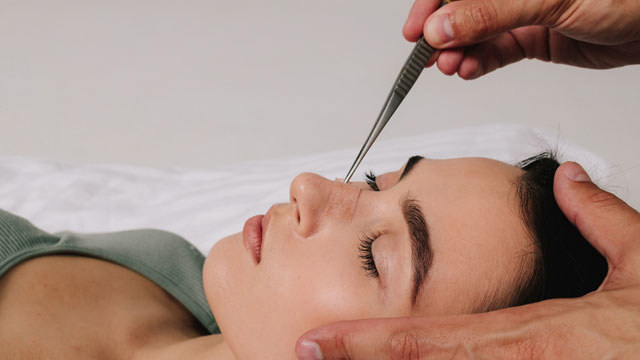
Not every patient who is unhappy with their rhinoplasty results is immediately ready for revision surgery. Determining candidacy requires a thorough clinical evaluation.
Timing Matters
Most surgeons recommend waiting at least 12 months after the original procedure before considering revision. The nose undergoes significant internal changes during this period as swelling subsides and tissues settle. What appears to be a cosmetic problem at six months may resolve considerably by the one-year mark.
Medical and Structural Assessment
A qualified revision rhinoplasty specialist will assess the internal and external nasal structures before recommending surgery. This includes evaluating the quality and availability of cartilage grafts, the degree of scar tissue formation, the condition of the nasal skin, and the integrity of the existing support framework.
Patients with sufficient residual cartilage — typically from the septum, ear, or rib — and skin of moderate thickness tend to achieve more predictable outcomes. Those with very thin skin or significant structural compromise may face greater surgical complexity.
Realistic Expectations
Being a good candidate also means having a realistic understanding of what revision surgery can and cannot achieve. In complex cases, improvement rather than perfection is the honest and appropriate goal.
The Revision Rhinoplasty Process at JNB Clinic
At JNB Clinic in Gangnam, Seoul, revision rhinoplasty is approached as a medically integrated procedure — one that simultaneously addresses both functional breathing concerns and cosmetic restoration. This dual focus is central to the clinic's philosophy.
Pre-Surgical Evaluation
Every revision rhinoplasty patient undergoes a comprehensive consultation and diagnostic imaging process. JNB Clinic uses high-resolution 3D computed tomography (CT) scanning to map the internal nasal structures in precise detail — including bone density, cartilage integrity, septal position, and sinus health.
This level of diagnostic clarity allows Dr. Kang to identify hidden structural problems that a standard physical examination might miss, and to plan the surgery with a high degree of precision before any incision is made.
Closed Rhinoplasty Technique
Where clinically appropriate, JNB Clinic performs revision procedures using the closed (endonasal) rhinoplasty approach, in which all incisions are made internally through the nostrils. This eliminates external scarring — an important consideration for revision patients who may already have scar tissue from a previous open procedure.
The closed technique also preserves the natural supportive ligaments and vascular supply of the nose, which can reduce swelling and promote faster recovery — though individual outcomes will always vary depending on the complexity of each case.
Structural Corrections
Depending on the patient's needs, revision surgery at JNB Clinic may involve one or more of the following:
Septal cartilage grafting to rebuild structural support
Nasal valve reconstruction to restore adequate airflow
Turbinate reduction to address persistent nasal congestion
Cartilage redraping or repositioning to correct cosmetic irregularities
Implant removal or replacement where synthetic materials have caused complications
Each surgical plan is individualized. There is no standardized protocol applied uniformly across all patients.
About Dr. Ju-yong Kang: Dual Expertise in ENT and Facial Reconstruction
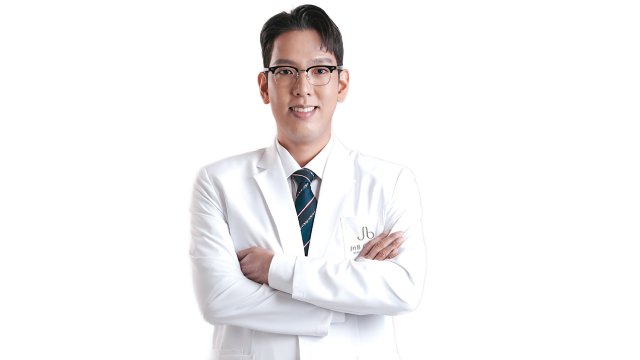
The success of revision rhinoplasty depends significantly on the surgeon's depth of experience and anatomical understanding. Dr. Ju-yong Kang, Representative Director and Chief Physician at JNB Clinic, brings a dual clinical background that is particularly well-suited to the demands of secondary nasal surgery.
As a board-trained Otolaryngologist (ENT specialist) with advanced specialization in aesthetic facial reconstruction, Dr. Kang is trained to evaluate and treat the nose from both a functional and cosmetic perspective simultaneously. This integrated approach is especially valuable in revision cases, where the two concerns are often intertwined.
Dr. Kang holds active memberships in several professional societies, including the Korean Society of Otorhinolaryngology-Head and Neck Surgery, the Korean Rhinologic Society, and the Korean Society of Facial Plastic and Reconstructive Surgery. He is a graduate of Kyung Hee University School of Medicine and has served as director at multiple ENT and plastic surgery clinics in Seoul.
Why JNB Clinic for Revision Rhinoplasty in Seoul?
JNB Clinic, located at 119 Dosan-daero, Gangnam-gu — conveniently accessible from Sinsa Station — was established with a specific clinical mandate: to provide rhinoplasty that does not compromise respiratory function in pursuit of aesthetic outcomes.
Several features of the clinic make it a clinically appropriate choice for patients considering revision rhinoplasty:
Integrated functional and aesthetic approach: Every surgical plan accounts for both breathing performance and external appearance.
Advanced imaging technology: 3D CT scanning provides diagnostic accuracy that supports more predictable surgical outcomes.
Hospital-grade surgical environment: Operating suites meet strict sterilization and safety standards.
Dedicated post-operative care: Structured recovery protocols are provided to support proper healing after complex corrective procedures.
The clinic's operating philosophy — summarized as Beauty in Every Breath — reflects a medical position that a well-performed rhinoplasty should improve, not impair, nasal function.
Recovery, Safety, and Realistic Outcomes
What to Expect During Recovery
Revision rhinoplasty typically involves a longer and more involved recovery than primary surgery. Patients can generally expect visible bruising and swelling for two to three weeks, with residual subtle swelling continuing for up to a year as the final contours emerge.
JNB Clinic provides integrated post-operative care that includes swelling management therapies and follow-up monitoring to ensure tissues heal appropriately. Patients are advised to avoid strenuous activity and direct nasal pressure during the early recovery phase.
Safety Considerations
Choosing a surgeon with formal ENT and reconstructive training reduces certain categories of risk in revision rhinoplasty — particularly those related to breathing outcomes. However, all surgical procedures carry inherent risks, including infection, asymmetry, scarring, and the possibility that additional correction may be needed. These risks should be discussed openly during consultation.
Realistic Outcomes
Most patients who undergo revision rhinoplasty at a qualified clinic achieve meaningful improvement in either function, appearance, or both. However, revision surgery is rarely capable of delivering a result identical to what a well-performed primary procedure would have produced on untouched anatomy.
Honest pre-surgical communication about achievable goals is a clinical priority at JNB Clinic. The aim is always to leave patients better off — both medically and aesthetically — than before the revision.
Taking the Next Step
If you are considering revision rhinoplasty, the most important first step is a thorough in-person consultation with a surgeon who has verifiable experience in both functional nasal surgery and cosmetic nasal reconstruction.
JNB Clinic welcomes patients for detailed pre-surgical evaluations, including 3D CT imaging and a personalized review of previous surgical history. The clinic is located at 119 Dosan-daero, Gangnam-gu, Seoul, easily accessible via Sinsa Station on Line 3.
Revision rhinoplasty is a significant decision. The right information, combined with the right specialist, is the most reliable foundation for a safe and satisfying outcome.
More Articles
Continue reading our clinical guides.

Benefits of Stem Cell Therapy for Skin Rejuvenation
Discover the benefits of stem cell therapy for skin rejuvenation, including improved texture, reduced wrinkles, and a more youthful appearance.
Learn More

Recovery After Autologous Cartilage Nose Surgery
Learn what to expect during recovery after autologous cartilage nose surgery, including healing timelines, aftercare tips, and results.
Learn More
Revision Rhinoplasty: Everything You Need to Know Before Your Second Nose Surgery
Revision Rhinoplasty: Learn what to expect from a second nose surgery, including risks, recovery, and results. Explore your options and learn more.
Learn More