Personalized Nasal & Facial Care • Dedicated International Patient Concierge

Medical Guide
The JNB Signature Post-Surgery Care Program: What Happens After Rhinoplasty
Inside the JNB Signature Post-Surgery Care program: the three documented phases of rhinoplasty aftercare in Korea and up-to-one-year follow-up explained.
Schedule a ConsultationThe JNB Signature Post-Surgery Care Program: What Happens After Rhinoplasty
Medically reviewed by Dr. Kang Ju-Yong, M.D., Board-Certified Otolaryngology (ENT) Specialist & Chief Director, JNB Clinic · Last updated July 2026
The JNB Signature Post-Surgery Care program is JNB Clinic's structured, three-phase plan for the weeks after rhinoplasty, and understanding it is one of the most practical things you can do when planning a nose surgery in Korea. A rhinoplasty aftercare program in Korea is not simply a single follow-up visit; at JNB Clinic in Gangnam, Seoul, it is a defined sequence of appointments and care steps that begins a couple of days after surgery and, according to the clinic, continues with follow-up for up to one year. This article walks through exactly what the program includes, phase by phase, so you know what to expect, what to ask about, and how to plan your time, especially if you are traveling internationally.
A note on how to read this guide: everything below describes the documented components of JNB Clinic's program. Where a component involves a general therapy, such as hyperbaric oxygen or LED light, this article describes it only as a scheduled part of the program and points to neutral, authoritative context rather than making any claim about how it heals, treats, or improves results. Recovery is individual, outcomes are never guaranteed, and any specifics not documented here should be confirmed directly with the clinic.
Why Aftercare Deserves as Much Attention as Surgery
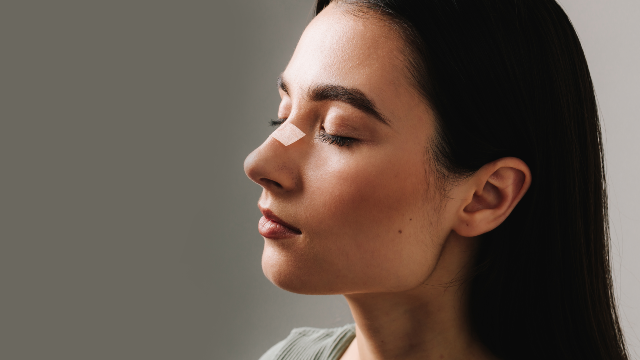
It is easy to focus entirely on the operation and treat recovery as an afterthought. That is a mistake, particularly for rhinoplasty. The American Society of Plastic Surgeons (ASPS) describes rhinoplasty recovery as a gradual process: most people take about a week off, wear a splint and tapes during the first week, and have the splint and sutures removed within that first week, while swelling and bruising ease over the following weeks. ASPS also notes that full healing is lengthy, with the final nasal shape sometimes not fully settled for up to a year and swelling that can come and go during the first year. Mayo Clinic likewise frames rhinoplasty as a demanding procedure with a recovery that unfolds over time.
Because so much of the result depends on how the early weeks are managed, a clinic's aftercare structure is worth studying closely. The CDC's Yellow Book, writing for people considering care abroad, specifically advises confirming what follow-up is included, whether follow-up occurs at the same facility, and how any complications would be handled, because some overseas facilities charge separately for follow-up care. A named, phased program answers many of those questions in advance, which is part of why JNB Clinic documents its aftercare as a defined program rather than leaving it open-ended.
The Three Phases of the JNB Signature Post-Surgery Care Program
JNB Clinic's program is organized into three phases keyed to time after surgery. The structure below reflects the clinic's documented plan. Exact timing can shift with your individual recovery and the technique used, so treat the day markers as the clinic's standard schedule rather than fixed guarantees, and confirm your personal timeline with the clinic.
Phase 01 — Around Day 2: Splint Removal, Hyperbaric Oxygen Therapy, and Smart LED Care
The first phase takes place around the second day after surgery (Day+2) and includes three documented components:
- Splint removal. The external splint placed after rhinoplasty is removed in this early visit. Splint and tape use in the first days is a standard part of rhinoplasty recovery; ASPS notes that patients wear a splint and tapes in the initial period and that the splint is typically removed within the first week.
- Hyperbaric oxygen therapy (HBOT). HBOT is scheduled as a component of this phase. As neutral background, the U.S. Food and Drug Administration (FDA) explains that HBOT involves breathing oxygen in a pressurized chamber and that the FDA regulates both the oxygen and the hyperbaric chambers used. The FDA further advises that HBOT should be used under the care of a doctor and in a facility with appropriate accreditation. This article presents HBOT only as a documented step in JNB Clinic's program and makes no claim about its effect on healing; if you want to understand its role in your specific plan, ask the clinic directly.
- Smart LED care. The clinic includes an LED light-based care step it calls Smart LED care. As with HBOT, this is described here strictly as a scheduled program component, not as a treatment with a promised outcome.
Phase 01 is essentially the transition out of the immediate post-operative state: the splint comes off, and the first structured care steps begin. It is also the point at which many patients get their first look at the nose without the splint, though it is important to remember, as ASPS emphasizes, that early swelling is significant and the appearance at this stage is far from the final result.
Phase 02 — Around Day 7: Suture Removal and Relay Care
The second phase takes place around one week after surgery (Day+7) and centers on two documented elements:
- Suture removal. External sutures are removed around this point. This aligns with the general rhinoplasty timeline described by ASPS, in which sutures and the splint are removed within the first week and bruising around the eyes has largely resolved by about one week. JNB Clinic's documentation likewise notes that suture removal after nasal surgery is typically performed around postoperative day 7.
- Relay care. The clinic describes this phase as including "relay care," a hand-off of ongoing recovery support that continues the monitoring begun in Phase 01 and carries it forward into the next stage of healing.
For many patients, Phase 02 is a meaningful milestone. With the splint already removed in Phase 01 and sutures removed here, the most visible external elements of the early recovery are behind you. ASPS notes that at around this point most people are able to return to work or school, while cautioning that the recovery process continues well beyond it and that strenuous activity should still be avoided. This is also the window that international patients should pay close attention to when planning travel, discussed further below.
Phase 03 — Around Two Weeks: Medical Skin Scaling and Hyperbaric Oxygen Refresh
The third documented phase takes place around two weeks after surgery and includes:
- Medical skin scaling. The clinic includes a medical skin-scaling step in this phase. It is presented here as a scheduled program component; this article makes no claim about its clinical effects.
- Hyperbaric oxygen refresh. A further HBOT session, described by the clinic as a "refresh," is scheduled in this phase. Again, the FDA's general guidance is that HBOT is regulated and should be provided under a doctor's care in an appropriately accredited setting; here it is noted only as a documented part of the program.
Phase 03 rounds out the structured, in-clinic portion of the early recovery. By this point the splint and sutures are gone and the initial care sequence is complete, but, as ASPS stresses, healing continues for months, with swelling that can fluctuate and a final shape that may take up to a year to settle.
Follow-Up for Up to One Year
Beyond the three phases, JNB Clinic states that it accompanies patients for up to one year after surgery. This extended follow-up horizon matters because, as ASPS explains, rhinoplasty results genuinely take a long time to mature: initial results may appear after about a month, but the final nose shape may not be fully visible for up to a year, and swelling can come and go during that first year. A program designed to stay in contact across that window is aligned with the actual timeline of rhinoplasty healing.
The clinic also indicates that international patients can continue with remote follow-up after they return home, which is directly relevant to the CDC's advice that medical tourists coordinate follow-up care and understand how it will be handled. If continuity of care is a priority for you, ask the clinic specifically how remote follow-up works, what is included, and over what period.
What This Means for International Patients
If you are traveling from the United States or elsewhere, the phased structure has practical implications for how long you should plan to stay and when it may be reasonable to fly home.
The program's in-clinic phases span roughly the first two weeks, with Phase 01 around Day 2, Phase 02 around Day 7, and Phase 03 around two weeks. Based on the clinic's general positioning, some patients may be able to travel after roughly one week, but recovery time varies by individual and by technique and should be confirmed with the clinic directly. There is an additional, safety-based reason not to rush your flight: both ASPS and the CDC advise that patients undergoing cosmetic procedures to the face, eyelids, or nose wait 7 to 10 days after the procedure before flying. Planning your departure with that guidance in mind, and confirming your personal timeline with JNB Clinic, helps you attend the early phases and reduce avoidable travel risk.
A few planning questions worth raising:
- Which phases require an in-person visit, and which elements, if any, can be handled remotely?
- Given my technique and expected recovery, when is it reasonable for me to fly home?
- How does remote follow-up work after I return, and what does the up-to-one-year follow-up include?
- Will I receive documentation of my care and records I can share with a clinician at home?
You can raise these directly through JNB Clinic's contact and consultation page, and you can read about other patients' experiences through the clinic's customer reviews and before-and-after pages.
How to Compare Aftercare Programs Responsibly

If you are weighing more than one clinic, the JNB program offers a useful template for what to compare. Rather than asking only "how much does surgery cost," ask "what does aftercare include, for how long, and where." The CDC specifically warns that some overseas facilities charge substantial separate fees for follow-up care and that patients should confirm whether follow-up occurs at the same facility. A defined program with named phases makes that comparison concrete.
When comparing, keep the components in perspective. Therapies like hyperbaric oxygen, LED light care, and skin scaling appear in various clinics' aftercare offerings. The responsible way to evaluate them is not to assume a benefit but to ask the clinic to explain their role in your plan, and to remember the FDA's general guidance that a therapy such as HBOT should be delivered under a doctor's care in an appropriately accredited setting. This article does not claim any of these components speeds healing or improves results; it simply documents that they are scheduled parts of the JNB program.
A Realistic View of Recovery
No aftercare program, however structured, can guarantee a particular outcome. ASPS is clear that rhinoplasty recovery is gradual, that swelling can persist and fluctuate for up to a year, and that surgical risk is never zero. Mayo Clinic frames rhinoplasty as a demanding operation. JNB Clinic's own materials note that recovery generally takes roughly two to six months depending on the complexity of the surgery and the individual's healing, and that results and recovery vary from person to person.
Read in that light, the value of the JNB Signature Post-Surgery Care program is its structure and continuity: a defined sequence of early-recovery steps across the first two weeks, followed by a stated commitment to follow-up for up to one year, including remote follow-up for international patients. That structure is designed to keep you supported and monitored through the phase when rhinoplasty results are actively settling, which is precisely the window ASPS and Mayo Clinic identify as important. It is a framework for care, not a promise of a specific result.
The Bottom Line
- The JNB Signature Post-Surgery Care program has three documented phases: Phase 01 (around Day 2) with splint removal, hyperbaric oxygen therapy, and Smart LED care; Phase 02 (around Day 7) with suture removal and relay care; and Phase 03 (around two weeks) with medical skin scaling and a hyperbaric oxygen refresh.
- JNB Clinic states it accompanies patients for up to one year after surgery, with remote follow-up available for international patients after they return home.
- The phased timing aligns with the general rhinoplasty timeline described by ASPS, in which the splint and sutures come out in the first week and the final shape can take up to a year to settle.
- Components such as HBOT, LED, and skin scaling are described here only as scheduled program parts, not as treatments with promised effects; the FDA advises HBOT be used under a doctor's care in an accredited setting.
- Recovery varies by person and technique, no outcome is guaranteed, and any detail not documented here, including timing and what is bundled, should be confirmed with the clinic.
Frequently Asked Questions
What are the three phases of the JNB Signature Post-Surgery Care program?Phase 01 takes place around Day 2 and includes splint removal, hyperbaric oxygen therapy, and Smart LED care. Phase 02 takes place around Day 7 and includes suture removal and relay care. Phase 03 takes place around two weeks and includes medical skin scaling and a hyperbaric oxygen refresh. The clinic then continues follow-up for up to one year.
When is the splint removed after rhinoplasty at JNB Clinic?The external splint is removed in Phase 01, around the second day after surgery. This is consistent with the general rhinoplasty timeline described by ASPS, in which the splint is typically removed within the first week. Your exact timing may vary and should be confirmed with the clinic.
When are sutures removed?Suture removal is part of Phase 02, around one week after surgery (Day+7). ASPS notes that sutures and the splint are generally removed within the first week of rhinoplasty recovery, which aligns with this schedule.
Does the program guarantee a better result or faster healing?No. The program is a structured sequence of aftercare steps, not a guarantee of any outcome. This article describes components such as hyperbaric oxygen, LED, and skin scaling only as scheduled parts of the program and makes no claim about their effects. ASPS notes that recovery is gradual and surgical risk is never zero, and results vary by individual.
How long should international patients stay in Korea?The in-clinic phases span roughly the first two weeks. Some patients may be able to travel after about a week, but this varies by individual and technique and should be confirmed with the clinic. Both ASPS and the CDC advise waiting 7 to 10 days after a nose procedure before flying, so plan your departure accordingly.
What happens after I return home?JNB Clinic indicates that international patients can continue with remote follow-up after returning home, as part of follow-up that extends up to one year. The CDC recommends coordinating follow-up care and obtaining copies of your medical records in English, so ask the clinic how remote follow-up works and what documentation you will receive.
Is hyperbaric oxygen therapy safe?The FDA states that HBOT is regulated and, when used for cleared indications under a doctor's care in an appropriately accredited facility, is generally safe with rare serious complications. The FDA also cautions against unproven claims about HBOT. In the JNB program, HBOT is a scheduled component; discuss its role and any questions about it directly with the clinic.
How long does full rhinoplasty recovery take?Recovery is gradual. ASPS notes that initial results may appear after about a month, but the final nasal shape can take up to a year to settle, with swelling that comes and goes during the first year. JNB Clinic's materials note recovery generally takes roughly two to six months depending on complexity and individual healing. Timelines vary from person to person.
This article is for general informational purposes and does not constitute individualized medical advice. Program details, timing, and what is included should be confirmed directly with JNB Clinic, and any medical or surgical decision should be made in consultation with a qualified clinician. Individual results and recovery vary, and no specific outcome is guaranteed.
More Articles
Continue reading our clinical guides.

Benefits of Stem Cell Therapy for Skin Rejuvenation
Discover the benefits of stem cell therapy for skin rejuvenation, including improved texture, reduced wrinkles, and a more youthful appearance.
Learn More

Recovery After Autologous Cartilage Nose Surgery
Learn what to expect during recovery after autologous cartilage nose surgery, including healing timelines, aftercare tips, and results.
Learn More
Revision Rhinoplasty: Everything You Need to Know Before Your Second Nose Surgery
Revision Rhinoplasty: Learn what to expect from a second nose surgery, including risks, recovery, and results. Explore your options and learn more.
Learn More