Personalized Nasal & Facial Care • Dedicated International Patient Concierge

Medical Guide
Stem Cell Therapy and Revision Rhinoplasty: The Facts
Stem cell therapy for revision rhinoplasty is not FDA-approved, and the FDA warns of serious risks. Learn what to ask your surgeon before you agree to it.
Schedule a ConsultationStem Cell Therapy and Revision Rhinoplasty: The Facts
Medically reviewed by Dr. Kang Ju-Yong, Korean Board-Certified Otorhinolaryngologist (ENT Specialist)
If you are researching revision rhinoplasty, you may have come across clinics that mention "stem cell therapy" as a way to support recovery. This is a topic that deserves careful, honest framing rather than marketing enthusiasm. This article explains what stem cell therapy is in this context, why the U.S. Food and Drug Administration (FDA) has issued warnings about unapproved stem cell products, and why the revision surgery itself — not any add-on — is what actually corrects a previous nose surgery.
What Revision Rhinoplasty Actually Is
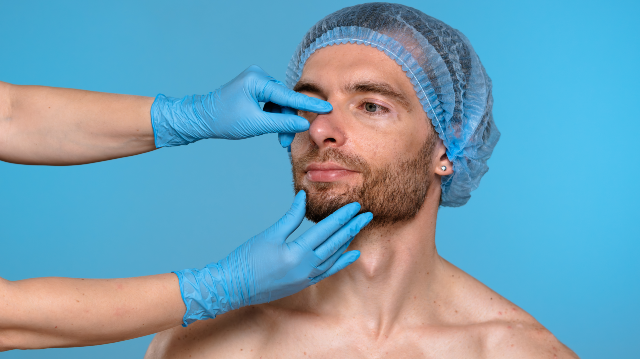
Revision rhinoplasty is a surgical procedure performed to improve or correct the results of a previous nose surgery. It is generally considered more complex than a first-time (primary) rhinoplasty because scar tissue, altered anatomy, and reduced or damaged cartilage from the earlier operation make the nasal structure harder to work with.
At JNB Clinic, revision cases are approached as structural surgery. Dr. Kang Ju-Yong is a board-certified Ear, Nose, and Throat (ENT) specialist who focuses on implant-free techniques that rebuild and support the nose using the patient's own (autologous) cartilage, which may be taken from the septum, ear, or rib depending on how much structural support is needed. This is real surgery with real surgical considerations — anesthesia, incisions, healing, and the possibility that a further revision could be needed. It is not a quick or guaranteed fix, and outcomes vary from person to person.
Understanding this distinction matters. The correction in revision rhinoplasty comes from the surgical plan and the reconstruction of nasal structure. Any "regenerative" add-on discussed alongside surgery is a separate question entirely, and it should be evaluated on its own evidence — which brings us to stem cell therapy.
What "Stem Cell Therapy" Means in This Context
Stem cells are cells that can develop into other cell types, and researchers have studied them for a wide range of potential uses. In an aesthetic or recovery-support context, some clinics may describe using stem cell preparations — or related products such as exosomes — as an adjunct intended to accompany a procedure. It is important to be precise: an adjunct is something offered alongside the main treatment, not the treatment itself.
We want to be very clear about what we are not saying. We are not claiming that stem cell therapy speeds healing after rhinoplasty, improves surgical results, reduces swelling, or produces any specific benefit. Those would be efficacy claims, and the evidence does not support making them for aesthetic or post-surgical recovery use. Instead, this should be understood as an unproven adjunct that some clinics may discuss, with limited scientific evidence behind it in this setting.
The FDA Position: Not Approved, and a Documented Safety Concern
This is the most important part of the article, so we will state it plainly. Stem cell therapy is not approved by the U.S. FDA for aesthetic use or for supporting recovery after cosmetic surgery. Beyond simply lacking approval, the FDA has gone further and issued warnings and consumer alerts specifically about unapproved stem cell and regenerative medicine products, cautioning the public about their potential for serious harm.
According to the FDA, generally all stem cell products require FDA approval, and for almost all of these products it is not yet known whether they provide any benefit — or even whether they are safe to use. The agency has warned that unapproved regenerative medicine products carry documented safety risks, which may include cells moving to another part of the body and turning into unintended tissue or growing excessively (potentially forming a tumor), infections from contamination during processing, and the therapy simply failing to work as hoped. The FDA also cautions that relying on unproven products can delay proper diagnosis and discourage patients from pursuing treatments that are known to be safe and effective.
"Not FDA-approved" is not a technicality to gloss over. It means these products have not cleared the review process designed to establish that a medical product is both safe and effective for its intended use. When you read glowing descriptions of stem cell add-ons, remember that the U.S. regulator overseeing these products has actively warned consumers about them.
It is also worth noting that regulatory frameworks differ from country to country, and a product being available or marketed in one place does not mean it has been shown to be safe or effective, or that it would meet the standard for approval elsewhere. The honest way to describe stem cell therapy in the setting of rhinoplasty recovery is that it remains investigational and unproven, and that the FDA's cautions apply regardless of how confidently it may be presented in marketing materials. Availability is not the same as evidence.
Membership in a Society Is Not the Same as Proof
You may see it noted that Dr. Kang is a member of Korean stem cell treatment societies. It is worth explaining exactly what that means and — just as importantly — what it does not mean.
Professional society memberships are affiliations. They reflect a physician's participation in a field or area of ongoing study. They are not board certifications, they are not regulatory approvals, and they are not evidence that a therapy is effective or that it will help you. A membership tells you a doctor is engaged with a subject; it does not transform an unproven treatment into a proven one. We mention this because affiliations are sometimes presented in ways that can be misread as endorsements of efficacy, and we would rather you understand the distinction clearly.
For the record, Dr. Kang's board certification is in otorhinolaryngology (ENT). That is the credential relevant to nasal surgery. It is separate from any society membership related to stem cells, and neither the certification nor the membership should be read as a claim that stem cell therapy works for rhinoplasty recovery.
Questions Worth Asking Before You Agree to Any Adjunct
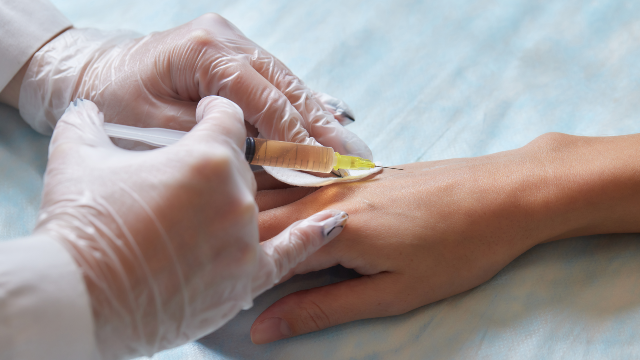
If a clinic anywhere in the world offers a stem cell or regenerative add-on, treating the conversation as a rigorous one protects you. Consider asking:
- Is this product FDA-approved for this use, and if not, what is its regulatory status? (For stem cell products used this way, the honest answer is that it is not FDA-approved.)
- What is the actual scientific evidence that this helps in my situation, and where can I read it?
- What are the specific risks, and what would happen if there were a complication?
- What are the alternatives, including simply not using the adjunct at all?
- How does the cost compare, and what am I actually paying for?
A trustworthy surgeon will welcome these questions and answer them without pressure. Anyone who reacts to reasonable questions with vague reassurances rather than evidence is giving you useful information about how they operate. You can raise all of these points directly with our team through our contact page, and we encourage the same level of scrutiny at any clinic you consider.
Where Your Attention Is Better Spent
Because the correction in revision rhinoplasty comes from the surgery itself, the factors that genuinely shape your outcome are the ones worth focusing on: the surgeon's experience with complex and revision cases, an honest assessment of your existing nasal anatomy and remaining cartilage, a realistic surgical plan, and diligent aftercare and follow-up. At JNB Clinic, structured post-surgery follow-up is part of the care model, and international patients typically plan to remain in Korea for roughly 7–10 days after surgery for splint care and initial checks.
None of this involves a promise. Revision rhinoplasty carries genuine surgical risks — bleeding, infection, asymmetry, changes in breathing, and the possibility that another revision may be needed — and swelling can take many months, sometimes up to a year at the tip, to fully settle. Results vary, and no ethical clinic can guarantee a specific outcome. You can learn more about our ENT-led, implant-free approach on our main website, and the most reliable next step is always an individual evaluation.
The Bottom Line
- Stem cell therapy is not FDA-approved for aesthetic or post-surgical recovery use, and the FDA has issued warnings and consumer alerts about the serious risks of unapproved stem cell and regenerative medicine products.
- We make no claim that stem cell therapy speeds healing, improves results, or provides any benefit for rhinoplasty recovery; the evidence in this setting is limited, and it should be viewed only as an unproven adjunct some clinics may discuss.
- A physician's membership in a stem cell society is a professional affiliation, not a board certification and not proof of efficacy.
- Revision rhinoplasty is surgery; the correction comes from the surgical plan and cartilage reconstruction, and it carries real risks with no guaranteed result.
- Ask any clinic about regulatory status, evidence, risks, and alternatives — and make decisions in consultation with a qualified surgeon.
Frequently Asked Questions
Is stem cell therapy approved by the FDA for rhinoplasty recovery?
No. Stem cell therapy is not FDA-approved for aesthetic use or for supporting recovery after cosmetic surgery. The FDA has also issued consumer alerts warning about the serious risks of unapproved stem cell and regenerative medicine products, so it should not be assumed to be safe or effective in this setting.
Does JNB Clinic claim stem cells improve revision rhinoplasty results?
No. We make no claim that stem cell therapy speeds healing or improves surgical outcomes. The correction in revision rhinoplasty comes from the surgery itself, and any regenerative adjunct should be understood as unproven with limited evidence.
Dr. Kang belongs to a stem cell society — doesn't that mean it works?
No. A society membership is a professional affiliation, not a board certification and not evidence of efficacy. Dr. Kang's board credential is in otorhinolaryngology (ENT), and neither his membership nor his certification is a claim that stem cell therapy works for rhinoplasty recovery.
What are the real risks of unapproved stem cell products?
The FDA has described risks including cells growing in unintended ways or forming a tumor, contamination and infection, the therapy failing to work, and delays in receiving proven, effective care. These are among the reasons the agency warns consumers about unapproved products.
What actually determines my revision rhinoplasty outcome?
Your outcome is shaped by the surgeon's experience with complex cases, your existing nasal anatomy and available cartilage, a realistic surgical plan, and careful aftercare. Even then, results vary and no specific outcome can be guaranteed.
What should I ask a clinic that offers a stem cell add-on?
Ask whether it is FDA-approved for this use, what evidence supports it, what the specific risks and alternatives are, and what you are paying for. A trustworthy surgeon will answer these questions with evidence rather than pressure.
This article is for general educational purposes only and reflects information available at the time of writing. It does not constitute medical advice and is not a substitute for an in-person evaluation and personalized guidance from a qualified surgeon. Revision rhinoplasty is surgery and carries real risks, including bleeding, infection, asymmetry, breathing changes, and the possible need for further revision; results vary and no outcome can be guaranteed. Always discuss the risks, evidence, and alternatives of any treatment or adjunct with your surgeon. It is not a self-diagnosis tool.
More Articles
Continue reading our clinical guides.

Benefits of Stem Cell Therapy for Skin Rejuvenation
Discover the benefits of stem cell therapy for skin rejuvenation, including improved texture, reduced wrinkles, and a more youthful appearance.
Learn More

Recovery After Autologous Cartilage Nose Surgery
Learn what to expect during recovery after autologous cartilage nose surgery, including healing timelines, aftercare tips, and results.
Learn More

Revision Rhinoplasty: Everything You Need to Know Before Your Second Nose Surgery
Revision Rhinoplasty: Learn what to expect from a second nose surgery, including risks, recovery, and results. Explore your options and learn more.
Learn More