Personalized Nasal & Facial Care • Dedicated International Patient Concierge

Medical Guide
Silhouette Thread Lift: How Absorbable Sutures Lift
Silhouette thread lift uses absorbable sutures for an immediate lift plus gradual collagen. Learn how it works, candidacy, risks, and whether it fits you.
Schedule a ConsultationSilhouette Thread Lifting: Immediate Repositioning with Absorbable Sutures
Medically reviewed by Dr. Kang Ju-Yong, Korean Board-Certified Otorhinolaryngologist (ENT Specialist)
Silhouette thread lifting is a minimally invasive treatment that uses absorbable sutures to reposition mildly sagging facial tissue and encourage the skin to produce more of its own collagen over time. For patients researching lower-downtime alternatives to surgery, it can sound appealing, but it is important to understand what threads can and cannot do. This article explains how the technique works, how the Silhouette name relates to different regulatory markets, who tends to be a suitable candidate, and the risks and limits you should weigh before deciding.
What Is a Silhouette Thread Lift?
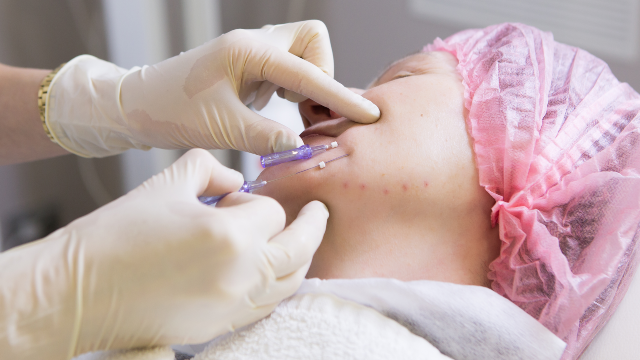
A thread lift is a procedure in which fine, dissolvable sutures are placed beneath the skin through small entry points using a needle or cannula. The threads are positioned in a pattern designed to gently reposition soft tissue that has begun to descend, producing a subtle lifting effect. Because there are no true incisions, only entry points that usually fade within days, this is considered a minimally invasive treatment rather than surgery.
Silhouette-brand threads are one family of products used for this purpose. They are made from absorbable materials and, in the versions with cones, carry small bidirectional cones along the suture that grip and support the tissue as it is lifted. Over the following months, the body gradually breaks down the suture material while the surrounding skin responds to the presence of the thread. At JNB Clinic, thread lifting is offered within a broader lifting and anti-aging category, and candidacy is assessed individually during consultation. You can learn more about the clinic's approach on the JNB Clinic website.
Silhouette Soft vs. Silhouette InstaLift: Names and Regulatory Status
The Silhouette name appears differently depending on the market, and this distinction matters for US patients. Internationally, and in markets cleared by Korea's Ministry of Food and Drug Safety (MFDS) or carrying a CE mark, the product is commonly known as Silhouette Soft. In the United States, the closely related, US Food and Drug Administration (FDA)-cleared counterpart is marketed as Silhouette InstaLift.
According to FDA records, the Silhouette InstaLift device consists of an absorbable suture with bidirectional cones made from a bioresorbable poly(L-lactide) and poly(lactide-co-glycolide) material. The FDA has cleared it, through the 510(k) pathway, for use in mid-face suspension surgery to temporarily fixate the cheek. It is worth noting that a device being FDA "cleared" is not the same as being FDA "approved"; clearance means the device was found substantially equivalent to an existing legally marketed device, and it does not guarantee a particular cosmetic result for any individual. Because product availability, brand names, and specific materials can differ between Korea and the United States, ask JNB Clinic directly which thread product would be used in your treatment and what its regulatory status is.
How Absorbable Threads Work: Two Effects
Silhouette-style threads are generally described as producing two effects that occur over different time frames.
The first is immediate and mechanical. When the threads are placed and secured, the cones and the suture itself lift and reposition the soft tissue, so many patients see a subtle change at the end of the appointment. This is a repositioning of existing tissue rather than the removal of any skin.
The second effect is gradual. As the absorbable material slowly dissolves over the following months, it can stimulate the body's natural collagen response in the treated area. This is the same principle behind several energy-based skin-tightening treatments, which also rely on prompting new collagen rather than cutting tissue. The gradual component means results are not fully defined on the day of treatment, and the degree of improvement varies from person to person depending on skin quality, age, and the extent of laxity.
A Thread Lift Is Not a Surgical Facelift
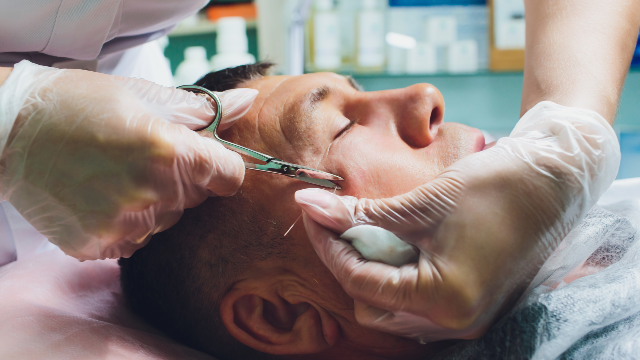
This is the single most important point to understand. A thread lift is not a facelift, and it does not deliver facelift-level or permanent results. A surgical facelift (rhytidectomy) involves repositioning deeper tissues and removing excess skin; according to Mayo Clinic, its results are not permanent but can generally be expected to last around a decade. A thread lift does not remove skin and its effect is temporary.
Thread lifting is best suited to mild-to-moderate skin laxity and early sagging, such as softening early jowls or refining facial contours. If you have significant sagging, heavy or thick skin, or substantial excess tissue, threads are unlikely to achieve the change you are hoping for, and you may be better served by a surgical consultation to discuss appropriate options. An honest assessment during consultation is essential, and a reputable clinic will tell you when a non-surgical treatment is not the right tool for your concern. If you are unsure which category you fall into, the team can help clarify during an evaluation; you can reach out through the JNB Clinic contact page.
Who May Be a Candidate
Suitable candidates are typically people with mild-to-moderate facial sagging and reasonable skin elasticity who want a subtle, natural-looking lift with limited downtime and who understand that the effect is temporary. Candidacy is always individualized. During a consultation, the physician evaluates your facial balance, skin condition, and the degree of laxity to decide whether threads are appropriate and, if so, how they would be placed.
Certain people may not be good candidates, and specific contraindications should be confirmed with the clinic. As a general principle across aesthetic procedures, active skin infection in the treatment area, certain medical conditions, and unrealistic expectations are reasons to reconsider or postpone. The only way to know whether this treatment fits your anatomy and goals is an in-person evaluation.
What the Procedure Involves
A typical thread lift begins with a detailed consultation and facial assessment to map where the threads would be placed. On treatment day, the area is prepared, and the threads are introduced beneath the skin through small entry points using a fine needle or cannula. Local anesthesia is commonly used for thread lifts to keep the procedure comfortable; confirm the specific anesthesia and comfort measures with JNB Clinic, as protocols are individualized.
Because there are no large incisions, the appointment is relatively short compared with surgery, and many patients return to routine activities quickly. Your provider will give you individualized aftercare instructions and arrange any follow-up needed to monitor healing.
Recovery and What to Expect
Recovery from a thread lift is usually mild but not nonexistent. Swelling, bruising, and mild tenderness for several days up to about a week are common. Some patients notice temporary dimpling at the entry points or a pulling sensation, which typically resolves as swelling subsides over roughly two to four weeks. Following your provider's aftercare guidance, such as avoiding vigorous facial movement, sleeping position advice, and skipping strenuous activity for a period, helps the tissue settle.
Because a portion of the result depends on the gradual collagen response, the final appearance develops over the weeks and months after treatment rather than being fully visible immediately. Patience and realistic expectations are part of the process.
Risks and Limitations
No aesthetic procedure is risk-free, and threads carry their own considerations. Reported risks include dimpling or puckering of the skin, thread visibility or palpability, asymmetry, and, less commonly, extrusion of a thread (the thread working its way toward the surface) or infection. Some of these can require additional treatment to correct. Bruising and swelling are expected short-term effects rather than complications.
The most fundamental limitation is that results are temporary and modest. Threads cannot substitute for surgery when there is significant laxity, and they cannot stop the ongoing process of aging. Results vary from patient to patient, and no ethical clinic can guarantee a specific outcome. Discussing these risks and limits openly during consultation is the best way to decide whether the trade-offs make sense for you.
How Long Results Last
Thread lift results are temporary. In general, patients can expect the effect to last somewhere in the range of several months to around a year and a half, depending on the specific thread material used, your skin quality, and how your body responds. Because the sutures are absorbable, the lifting support fades as the material dissolves, and repeat treatments are often needed to maintain the effect. There is no fixed schedule that applies to everyone; your provider can give you a more tailored estimate after assessing your skin.
Questions to Ask During a Consultation
Being an informed patient improves your experience and your safety. Consider asking which specific thread product would be used and its material and regulatory status, whether you are a suitable candidate given your degree of laxity, what results are realistically achievable, how long they are likely to last, what the recovery and aftercare involve, what the most likely risks are for someone with your skin, and what happens if you are not satisfied. A clinic that welcomes these questions and answers them candidly is one that respects informed consent.
The Bottom Line
- Silhouette thread lifting uses absorbable sutures to produce an immediate mechanical lift plus gradual collagen stimulation as the material dissolves over months.
- "Silhouette Soft" is the international and MFDS/CE name; the US FDA-cleared counterpart is Silhouette InstaLift, made from absorbable poly(L-lactide)/poly(lactide-co-glycolide) material with bidirectional cones. "Cleared" is not the same as "approved."
- A thread lift is not a surgical facelift; it suits mild-to-moderate laxity, and significant sagging usually warrants a surgical consultation instead.
- Results are temporary (commonly several months to about 18 months), and risks include dimpling, thread visibility, asymmetry, extrusion, and infection.
- Results vary; candidacy is individualized, and only an in-person evaluation can determine whether threads fit your anatomy and goals.
Frequently Asked Questions
Is a Silhouette thread lift the same as a facelift?
No. A facelift is a surgical procedure that repositions deeper tissue and removes excess skin, with longer-lasting results. A thread lift is minimally invasive, removes no skin, and produces a temporary, more subtle effect. They address different degrees of sagging.
What is the difference between Silhouette Soft and Silhouette InstaLift?
They are related products marketed under different names in different regulatory markets. Silhouette Soft is the international and MFDS/CE name, while Silhouette InstaLift is the US FDA-cleared counterpart. Ask JNB Clinic which specific product would be used in your treatment.
How long do thread lift results last?
Results are temporary. Depending on the thread material, your skin, and your body's response, the effect commonly lasts from several months to around 18 months. Because the sutures are absorbable, maintenance treatments are often needed over time.
Does a thread lift hurt, and is there downtime?
Local anesthesia is commonly used, so the procedure is generally well tolerated. Afterward, expect mild swelling, bruising, and tenderness for several days to about a week, with settling over roughly two to four weeks. Follow your provider's aftercare instructions.
What are the main risks of thread lifting?
Reported risks include dimpling, visible or palpable threads, asymmetry, and, less commonly, thread extrusion or infection. Some issues may require additional treatment. Discuss the risks most relevant to your skin during your consultation.
Am I a good candidate for a thread lift?
Thread lifts tend to suit people with mild-to-moderate laxity and reasonable skin elasticity who want a subtle, temporary lift. If you have significant sagging, a surgical consultation may be more appropriate. Candidacy can only be confirmed with an in-person evaluation.
Are the threads permanent inside my skin?
No. Silhouette threads are absorbable, meaning the body gradually breaks down the material over months. The lifting support fades as the sutures dissolve, which is why the results are temporary.
This article is for general educational purposes only and reflects general information about aesthetic thread-lifting procedures. It does not describe a guaranteed outcome, and individual results vary. It is not a substitute for a personalized, in-person consultation with a qualified clinician who can evaluate your anatomy, skin, and goals and discuss the risks and alternatives with you. It is not a self-diagnosis tool.
More Articles
Continue reading our clinical guides.

Benefits of Stem Cell Therapy for Skin Rejuvenation
Discover the benefits of stem cell therapy for skin rejuvenation, including improved texture, reduced wrinkles, and a more youthful appearance.
Learn More

Recovery After Autologous Cartilage Nose Surgery
Learn what to expect during recovery after autologous cartilage nose surgery, including healing timelines, aftercare tips, and results.
Learn More

Revision Rhinoplasty: Everything You Need to Know Before Your Second Nose Surgery
Revision Rhinoplasty: Learn what to expect from a second nose surgery, including risks, recovery, and results. Explore your options and learn more.
Learn More