Personalized Nasal & Facial Care • Dedicated International Patient Concierge

Medical Guide
Rhinoplasty Swelling and Final Result Timeline Guide
Understand rhinoplasty swelling and the real timeline to your final result, why the nasal tip takes longest, and what supports gradual, patient healing.
Schedule a ConsultationRhinoplasty Swelling and Final Result Timeline Guide
Medically reviewed by Dr. Kang Ju-Yong, Korean Board-Certified Otorhinolaryngologist (ENT Specialist)
One of the most common questions after nose surgery is simple: when will I finally see my real result? The honest answer is that rhinoplasty rewards patience, because swelling resolves gradually over many months rather than in a few weeks. Understanding why this happens, and what a realistic timeline looks like, can spare you a great deal of worry during recovery. This guide is educational and does not replace an in-person evaluation with your surgeon.
Why the Nose Swells After Surgery
Swelling, known medically as edema, is a normal part of healing after any operation. During rhinoplasty, the surgeon works with the delicate framework of cartilage, bone, and soft tissue that gives the nose its shape. In response to this work, the body sends fluid and healing cells to the area, and the nose becomes swollen and sometimes bruised.
The nose is a small, structured region with relatively thin skin over a complex framework, so even modest amounts of swelling are visible and can change how the nose looks from week to week. Early on, this swelling is obvious. Over time it becomes more subtle, but subtle residual swelling can linger far longer than most people expect, especially at the tip. This is why the nose you see in the first days after surgery is not the nose you will have a year later.
It also helps to understand that swelling is not a single, steady thing that shrinks in a straight line. It can fluctuate day to day and even within a single day, often looking worse in the morning after lying flat overnight and easing as you stay upright. Activity, salt intake, sleep position, and simply how you are feeling can all nudge the amount of visible swelling up or down temporarily. These short-term ups and downs are normal and do not change the overall direction of healing, which is a slow, steady decrease over months.
At JNB Clinic in Seoul, rhinoplasty is performed by an ENT (ear, nose, and throat) specialist using the patient's own cartilage, with a structured aftercare program designed to support this gradual healing process. You can read more about the clinic's approach on the JNB Clinic website.
The Two Phases of Rhinoplasty Swelling
Early Gross Swelling
In the first days and weeks, swelling is at its most dramatic. Research using three-dimensional photographic analysis has found that nasal volume tends to reach its maximum around 7 to 14 days after surgery, so it is completely normal for the nose to look larger or more swollen in the first week or two. A splint on the outside of the nose and sometimes packing inside support the new structure during this stage.
Most of this early, obvious swelling begins to settle over the following weeks. Bruising around the eyes fades, and the general contour of the nose starts to emerge. Even so, the nose at this point is still noticeably swollen compared with where it will eventually settle.
Prolonged Residual Swelling
After the early phase, a second, much slower phase takes over: prolonged residual swelling. This is subtle, often only noticeable to you and your surgeon, but it is the reason the final result takes so long to appear. Studies tracking swelling over time show that it decreases progressively over many months, with near resolution only well beyond the 250-day mark in some measurements.
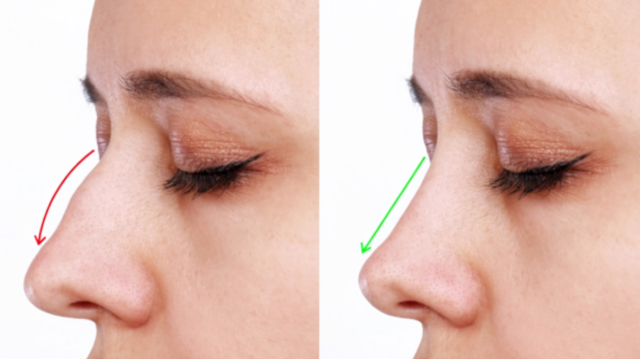
This residual swelling is not distributed evenly. It tends to concentrate in certain areas and resolves last at the nasal tip, where the skin is thicker and the tissue framework is most intricate. Understanding this two-phase pattern is the key to setting realistic expectations for your recovery.
A Realistic Timeline to Your Final Result
Every person heals differently, so treat the following as a general guide rather than a fixed schedule.
The First Few Weeks
Expect visible swelling and bruising in the first week or two, peaking within the first couple of weeks. Once the splint comes off, the nose looks less alarming, but it is still swollen. Many people feel comfortable returning to light daily activities during this period, though this varies by individual and by the specifics of the surgery.
One to Three Months
Over the first one to three months, a large portion of the noticeable swelling settles. The nose starts to look more natural, and friends may not detect that you had surgery. However, the tip in particular can still feel firm or slightly swollen, and fine details are not yet finished refining. The American Society of Plastic Surgeons notes that while initial swelling subsides within a few weeks, the contour continues to refine well beyond that.
Six to Twelve Months and Beyond
The refined, more definitive result generally emerges over roughly 6 to 12 months as the last residual swelling resolves, particularly at the tip. For some people the process takes longer than a year. According to the American Society of Plastic Surgeons, it can take up to a year, or even one to two years for complete healing, for the nasal contour to fully refine, and swelling may come and go during that first year.
When It Takes Even Longer
Certain factors extend the timeline. Thicker skin holds swelling longer and takes more time to reveal the underlying shape. Revision rhinoplasty, which operates on tissue that has already healed once, can also involve a longer and less predictable recovery. Your surgeon can give you a sense of where you may fall based on your individual anatomy, but no timeline is guaranteed.
What Helps Swelling Settle
You cannot rush biology, but you can support your healing and avoid setbacks. The most important rule is to follow your surgeon's specific post-operative instructions and to attend your scheduled follow-up visits.
- Follow your aftercare plan. Take any prescribed medications as directed, protect your nose from impact, and avoid activities your surgeon has told you to hold off on. JNB Clinic provides a dedicated post-care program to support recovery.
- Keep your head elevated. Resting with your head elevated, especially in the early days, can help reduce fluid buildup and morning swelling.
- Protect your skin from the sun. Sun protection during healing helps avoid irritation and pigment changes in the sensitive skin over your nose.
- Attend follow-ups. Regular checks let your surgeon monitor healing and catch any concerns early. For international patients, JNB Clinic advises planning to stay in Korea for approximately 7 to 10 days after surgery for follow-up and splint care, with additional follow-up available after you return home.
- Be patient. Perhaps the most underrated step is simply giving your nose time. Comparing your nose day to day can be misleading; the meaningful changes happen over months.
If you have questions about your own recovery or want to discuss what to expect, you can reach the team through the JNB Clinic contact page.
Every Recovery Is Individual
It is worth repeating that these timelines are averages, not promises. Your skin type, the complexity of your surgery, whether it is a first-time or revision procedure, and your body's own healing tendencies all influence how quickly swelling resolves and what your final result looks like. Results vary from person to person, and no surgeon can guarantee a specific outcome or an exact date when swelling will be completely gone.
If something concerns you during recovery, such as unusual pain, signs of infection, or sudden changes, contact your surgical team rather than trying to interpret it yourself. Educational reading is helpful for setting expectations, but it cannot account for the specifics of your anatomy or your operation, and only your surgeon can assess your nose in person and advise you on what is normal for your particular case.
The Bottom Line
- Swelling after rhinoplasty happens in two phases: dramatic early swelling that peaks around one to two weeks, then subtle residual swelling that lingers for months.
- Most noticeable swelling settles over the first one to three months, while the refined final result generally emerges over roughly 6 to 12 months, sometimes longer.
- The nasal tip is usually the last area to fully settle, and thicker skin or revision surgery can extend the timeline.
- Following your aftercare plan, keeping your head elevated, protecting your skin from the sun, attending follow-ups, and being patient all support healing.
- Every recovery is individual; timelines are averages, results vary, and no specific outcome or exact end date can be guaranteed.
Frequently Asked Questions
How long until rhinoplasty swelling fully goes down?
Most obvious swelling settles over the first one to three months, but subtle residual swelling, especially at the tip, can take roughly 6 to 12 months or longer to resolve fully. Thicker skin and revision surgery tend to lengthen this. Your surgeon can give you a more personalized estimate based on your anatomy.
Why is my nose still swollen months after surgery?
Prolonged residual swelling is a normal part of healing and resolves slowly over many months. It concentrates in areas like the nasal tip, where the skin is thicker and the framework is more complex. This is expected and does not mean anything is wrong, though you should raise any concerns with your surgeon.
When will I see my final rhinoplasty result?
The more definitive result usually appears over roughly 6 to 12 months as the last swelling resolves, and for some people it takes longer than a year. The American Society of Plastic Surgeons notes full refinement can take up to a year or more. Patience is essential, as day-to-day comparisons can be misleading.
Why does the nasal tip take the longest to heal?
The tip has thicker skin and a more intricate underlying structure than other parts of the nose, so it holds subtle swelling the longest. As a result, the tip is often the final area to reveal its refined shape. This is why the overall timeline extends well beyond the first few weeks.
Can I do anything to speed up swelling resolution?
You cannot force the biological process, but you can support it and avoid setbacks. Follow your surgeon's post-operative instructions, keep your head elevated early on, protect your skin from the sun, and attend all follow-up visits. Always ask your surgeon before trying anything intended to reduce swelling.
Does swelling affect everyone the same way?
No. Skin thickness, surgical complexity, whether it is a first-time or revision procedure, and individual healing all affect how swelling behaves and how long it lasts. Because of this, timelines are averages rather than guarantees, and your experience may differ from someone else's.
This article is for general educational purposes only and does not constitute medical advice. Rhinoplasty is a surgical procedure that carries real risks, including bleeding, infection, asymmetry, changes in breathing, and the possible need for revision surgery; swelling timelines and final results vary from person to person, and no specific outcome or exact healing date can be guaranteed. Always consult a qualified surgeon in person for advice about your own recovery, and confirm current travel, entry, and visa rules through official government sources before planning international treatment. It is not a self-diagnosis tool.
More Articles
Continue reading our clinical guides.

Benefits of Stem Cell Therapy for Skin Rejuvenation
Discover the benefits of stem cell therapy for skin rejuvenation, including improved texture, reduced wrinkles, and a more youthful appearance.
Learn More

Recovery After Autologous Cartilage Nose Surgery
Learn what to expect during recovery after autologous cartilage nose surgery, including healing timelines, aftercare tips, and results.
Learn More

Revision Rhinoplasty: Everything You Need to Know Before Your Second Nose Surgery
Revision Rhinoplasty: Learn what to expect from a second nose surgery, including risks, recovery, and results. Explore your options and learn more.
Learn More