Personalized Nasal & Facial Care • Dedicated International Patient Concierge

Medical Guide
Rhinoplasty Recovery at JNB Clinic: Week-by-Week Healing
A week-by-week rhinoplasty recovery timeline covering the nasal splint, swelling, bruising, activity, and how long the final nose shape takes to appear.
Schedule a ConsultationRhinoplasty Recovery at JNB Clinic: A Week-by-Week Healing Timeline
Medically reviewed by Dr. Kang Ju-Yong, Korean Board-Certified Otorhinolaryngologist (ENT Specialist)
One of the most common questions before nose surgery is simple: how long until I look and feel like myself again? The honest answer is that rhinoplasty recovery happens in stages, with the dramatic early changes settling within a few weeks and the last, subtle refinements taking months. Knowing what each phase tends to look like can help you plan your time off, you, and your expectations. This guide is educational, and every recovery is individual, so your surgeon's instructions always take priority.
Why Rhinoplasty Recovery Happens in Phases
The nose heals from the inside out. Surgery involves reshaping bone, cartilage, and the soft tissue and skin that drape over them. The bruising and dramatic swelling you see in the first couple of weeks come mostly from the surrounding soft tissue, and that resolves relatively quickly. The deeper, longer-lasting swelling sits within the nasal tip and skin, and it fades slowly over many months. This is why your nose can look great at one month and then keep quietly refining for the rest of the year.
Several factors influence how fast you move through these phases: the extent of the work performed, whether cartilage grafts or extensive dissection were needed, your skin thickness, whether it is a first surgery or a revision, and your own body's healing response. Thicker skin, for example, tends to hold swelling at the tip longer. Because of all this, the timeline below describes typical patterns, not a promise, and results vary from person to person.
Day 0 to 7: The First Week
The first week is the most intense part of recovery, and also the phase that improves the fastest.
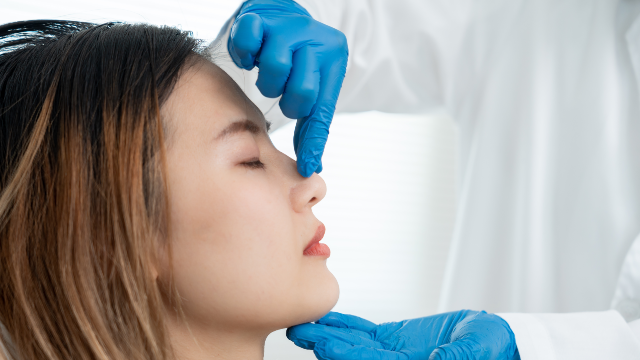
Immediately after surgery you will usually have an external splint or cast on the bridge of your nose to protect the new structure, and sometimes internal support inside the nostrils. Expect nasal congestion and the sensation of a bad head cold; this comes from internal swelling and any dressings, not from mucus you can simply blow out. You should avoid blowing your nose during this period.
Swelling and bruising around the nose, cheeks, and under the eyes typically peak in the first few days and then begin to fade. Mild pain and tenderness are normal and are usually managed with the medication your surgeon prescribes. Most surgeons recommend keeping your head elevated, even while sleeping, and resting rather than being active, since raising your heart rate and blood pressure can worsen swelling and bruising.
Toward the end of this week many patients have their splint removed and, when used, sutures or internal dressings taken out. Having the splint off is a psychological milestone, but keep in mind the nose underneath is still swollen and will not yet reflect the final result.
Around Week 1: Splint Removal
Splint removal is one of the clearest markers in the timeline, and it commonly happens around the end of the first week. Once the splint comes off, your nose will look swollen and may feel numb or stiff, which is expected. The skin can be sensitive, and the bridge may look wider or the tip more puffy than it eventually will be.
For patients traveling internationally, this stage is a key reason to plan enough time in the country of surgery. JNB Clinic documents that international patients should plan to stay in Korea for approximately 7 to 10 days after surgery to attend follow-up visits, splint care, and recovery checks before traveling home. The clinic also notes that final recovery continues after you leave, with online follow-up available if needed. Building this buffer into your plans means your surgical team can remove the splint, check your healing, and address any early concerns before a long flight. If you are coordinating travel, the JNB Clinic contact page is the place to confirm scheduling and aftercare details.
Weeks 2 to 4: Visible Bruising Fades
During the second, third, and fourth weeks the most obvious signs of surgery ease considerably. Bruising around the eyes generally fades over this period, and much of the puffiness in the surrounding soft tissue subsides. Many people feel comfortable being seen in public and returning to desk work or school within one to two weeks, though this depends on the individual and the extent of the surgery.
This is also when patients often ease back into light daily activities. As a general pattern, some people return to light activity within roughly a week after the splint is removed, while swelling and bruising continue to improve over the following weeks. Strenuous exercise, heavy lifting, contact sports, and anything that risks bumping the nose usually need to wait longer, and your surgeon will give you specific clearance dates. Protecting your nose from any impact during this vulnerable period is essential, because the reshaped structure is still healing.
Months 1 to 3: The Nose Starts to Take Shape
By the one-month mark, the nose usually looks considerably more natural, and much of the readily visible swelling has settled. This is often the stage where friends and family who were not told about the surgery may simply notice you look refreshed rather than obviously operated on.
Over months two and three, the shape continues to refine as the mid-portion of the swelling resolves. Objective studies of post-rhinoplasty swelling support this pattern: three-dimensional analysis has found that roughly two-thirds of the edema resolves within about the first month, with the remaining swelling receding gradually over the rest of the year. In practical terms, you will look good during this window, but small day-to-day fluctuations in swelling, sometimes worse in the morning, are still normal.
You can generally resume more of your normal routine during these months, following your surgeon's guidance on exercise and sun protection. Continuing to attend scheduled follow-up visits allows your surgical team to monitor healing, swelling, and the stability of any cartilage grafts.
Months 6 to 12: The Final Result
The last stretch of recovery is the most gradual and the least visible to others. Subtle swelling, especially around the nasal tip where the skin is thickest, can take roughly 6 to 12 months to fully resolve. As it does, the tip becomes more defined and the final contour emerges. Broader estimates from professional sources note that while immediate recovery takes a few weeks, complete healing can take a year or longer.
For patients with thicker skin or those who have had revision surgery, this final settling can take toward the longer end of the range. Patience genuinely matters here, and comparing your nose too critically at three months can be misleading, because it is not yet the finished product. Once this phase completes, the result your surgeon and you worked toward is what you see. You can learn more about the clinic's structured, year-long aftercare approach on the JNB Clinic website.
Realistic Risks and How to Support Healing
Rhinoplasty is surgery, and even a smooth recovery carries real risks. Depending on the procedure, possible complications include swelling, bruising, pain, infection, bleeding, temporary or persistent nasal blockage, changes in the sense of smell, asymmetry, contour irregularities, and the possibility that a revision is needed. Contact your surgeon promptly if you notice signs such as significant bleeding, spreading redness, fever, or worsening pain, rather than assuming they are part of normal healing.
To support your recovery, the most reliable advice is to follow the personalized post-operative instructions your surgical team gives you. Common recommendations include keeping your head elevated, taking prescribed medications as directed, avoiding strenuous activity and nose trauma, protecting the nose from sun, and attending every scheduled follow-up visit. No two recoveries are identical, and following your own surgeon's aftercare plan is far more useful than any generic timeline.
The Bottom Line
- Rhinoplasty recovery unfolds in phases: intense but fast-improving in week one, visibly better by weeks 2 to 4, natural-looking by one to three months, and fully settled at roughly 6 to 12 months.
- The splint is typically removed around the end of the first week, and the nose underneath will still be swollen at that point.
- International patients at JNB Clinic are advised to plan to stay in Korea for approximately 7 to 10 days after surgery for follow-up and splint care.
- Tip swelling is the slowest to resolve, especially with thicker skin or revision surgery, so the final result takes months to appear.
- Recovery is individual, results vary, no outcome is guaranteed, and your surgeon's aftercare instructions should always come first.
Frequently Asked Questions
When will my splint come off after rhinoplasty?
The external splint or cast is usually removed around the end of the first week, often at a follow-up visit. Your nose will still look swollen once it comes off, which is completely normal. Your surgeon will confirm the exact timing based on your procedure and healing.
How long until the bruising goes away?
Bruising around the eyes and cheeks typically peaks in the first few days and then fades over the following one to two weeks. Some people conceal residual discoloration with makeup once the skin has healed, but check with your surgeon first. As with everything in recovery, the exact pace varies from person to person.
When can I exercise again?
Light daily activity often resumes within roughly a week after the splint is removed, but strenuous exercise, heavy lifting, and contact sports usually need to wait longer to avoid raising blood pressure or bumping the nose. Your surgeon will give you specific clearance dates. Returning too early can worsen swelling or risk injury to the healing structure.
Why does my nose still look swollen months later?
Deep swelling within the nasal tip and skin resolves slowly, and subtle tip swelling can take about 6 to 12 months to fully settle. This is why the nose keeps refining long after the obvious bruising is gone. Thicker skin and revision surgery tend to extend this final phase.
How long should international patients stay in Korea after surgery?
JNB Clinic documents that international patients should plan to stay in Korea for approximately 7 to 10 days after surgery to attend follow-up visits, splint care, and recovery checks before traveling home. Final recovery continues after you return, with online follow-up available if needed. Confirm your specific schedule with the clinic when planning travel.
When will I see the final result?
Most of the visible swelling settles within the first one to three months, but the true final shape emerges once the last tip swelling resolves, generally around 6 to 12 months and sometimes longer. Patience is important, since the nose at three months is not yet finished. Results are individual and are not guaranteed.
This article is for general educational purposes only and describes a surgical procedure whose recovery, risks, and outcomes vary from person to person. It does not constitute medical advice, does not guarantee any particular result, and cannot replace an in-person evaluation and personalized aftercare plan from a qualified surgeon. Always follow your own surgeon's post-operative instructions. It is not a self-diagnosis tool.
More Articles
Continue reading our clinical guides.

Benefits of Stem Cell Therapy for Skin Rejuvenation
Discover the benefits of stem cell therapy for skin rejuvenation, including improved texture, reduced wrinkles, and a more youthful appearance.
Learn More

Recovery After Autologous Cartilage Nose Surgery
Learn what to expect during recovery after autologous cartilage nose surgery, including healing timelines, aftercare tips, and results.
Learn More

Revision Rhinoplasty: Everything You Need to Know Before Your Second Nose Surgery
Revision Rhinoplasty: Learn what to expect from a second nose surgery, including risks, recovery, and results. Explore your options and learn more.
Learn More