Personalized Nasal & Facial Care • Dedicated International Patient Concierge

Medical Guide
Rhinoplasty After Nasal Filler: Are You a Candidate?
Had nasal filler and now considering surgery? What removal before rhinoplasty is for, what the FDA says about filler in the nose, and how planning shifts.
Schedule a ConsultationRhinoplasty Candidacy for Patients Who Have Previously Had Nasal Filler
Medically reviewed by Dr. Kang Ju-Yong, Korean Board-Certified Otorhinolaryngologist (ENT Specialist)
Rhinoplasty after filler injections is one of the most common questions asked by patients who tried a non-surgical option first and later decided they wanted something more durable. Having had injectable material placed in the nose does not, on its own, close the door on surgery. What it does is add a step — and sometimes a waiting period — before a surgical plan can be drawn with confidence. This article sets out what that extra step is for, what public health authorities say about injectable material in the nose, and what JNB Clinic documents about assessment and sequencing.
Why an Injection History Changes the Planning Conversation
A surgeon designing a nose is working from what can be seen, felt and imaged. Every one of those inputs assumes the tissue being examined is the patient's own anatomy.
Residual injectable material disturbs that assumption. It can sit above or around the structures a surgeon needs to measure. It can make a bridge look higher than the underlying framework actually is, or mask a contour irregularity that the operation was supposed to address. None of this is a reason to refuse surgery. It is a reason to establish what is tissue and what is not before the design is finalized.
JNB Clinic frames the matter in exactly those terms. Its material on filler removal before rhinoplasty describes the purpose as taking away residual filler material so that the nasal structure can be assessed accurately, which in turn supports safer and more predictable surgical planning. The clinic lists the circumstances in which patients ask for it: previous injections that have altered the shape of the nose, produced asymmetry, distorted nasal anatomy, or that may interfere with accurate surgical correction.
The clinic is explicit that this is positioned as a preparatory step before rhinoplasty for patients with prior injections, not as a stand-alone cosmetic treatment. That distinction matters. The purpose is diagnostic accuracy and surgical planning, not a cosmetic result in itself.
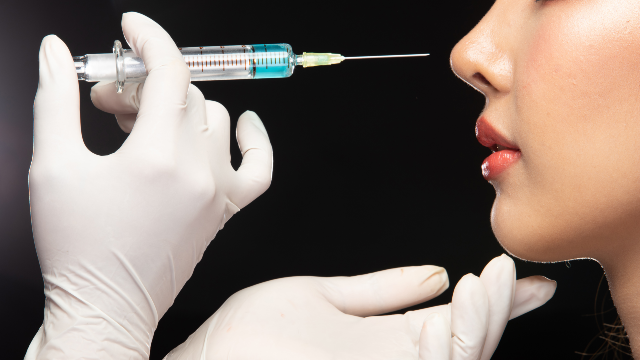
What the FDA States About Fillers and the Nose
Any discussion of injectable material in the nose should start with what the regulator actually publishes, rather than with marketing language.
The U.S. Food and Drug Administration maintains a consumer and clinician page on dermal fillers. It lists the uses for which these devices have been approved in adults aged 22 and over — moderate to severe facial wrinkles and skin folds, augmentation of lips, cheeks, chin and the back of the hand, correction of contour deficiencies, and restoration in facial fat loss associated with HIV.
The same page then sets out uses the agency recommends against. Among them, the FDA advises against injecting filler into the glabella between the eyebrows, the nose, the area around the eyes, the forehead or the neck. The agency states that these uses are not approved.
The FDA also describes the complication it regards as the most concerning: unintentional injection into a blood vessel, which can block blood flow and starve tissue of its supply. The agency notes that the chance of this happening is low, but that when it does happen the consequences can be serious and may be lasting, with reported complications including tissue death, vision problems including blindness, and stroke.
On removal, the FDA makes a point that patients rarely hear in advance. If filler is removed or reduced because of side effects, injections, surgery or other interventions may be required, and those carry their own risks. The agency adds that it may be difficult or impossible to remove the material — particularly so-called permanent products, or anything not based on hyaluronic acid.
The American Society of Plastic Surgeons (ASPS) covers the same ground from the clinical side. It reports that severe complications from dermal fillers are uncommon, and lists the potential risks: asymmetry, bruising, bleeding at the injection site, infection, lumps, filler that can be felt beneath the skin, skin necrosis from disrupted blood flow, and under- or over-correction. ASPS notes that in very rare cases filler may be injected into a blood vessel rather than beneath the skin, and that the consequences depend on where the blockage occurs — skin loss or wounds if the skin is affected, loss of eyesight if the eye is.
These are statements by public authorities about a category of treatment. They are not an assessment of any individual's previous injections, which only an examining physician can make.
What JNB Clinic Documents About Assessment
JNB Clinic describes its consultation for filler removal before rhinoplasty as covering several specific elements: evaluation of the previous filler history, assessment of the current shape of the nose, identification of remaining filler material, examination of skin and soft tissue condition, and planning for removal ahead of surgery.
Candidacy, as the clinic sets it out, covers patients with a history of nose filler injections who are considering rhinoplasty or revision rhinoplasty, and patients who need an accurate evaluation of their natural nasal anatomy before surgery.
In its own patient questions, the clinic puts the candidacy case plainly: someone who previously received hyaluronic acid nose fillers and is planning surgical rhinoplasty is a good candidate for removal first, particularly where remaining material may affect an accurate evaluation of the natural structure. Removing or dissolving it beforehand allows the surgeon to assess the nose more precisely and to build a more accurate surgical plan.
Whether removal is appropriate in any individual case, and how it would be carried out, is determined at consultation. Enquiries about arranging that assessment go through the clinic's contact page.

How the Sequence Is Structured
The clinic sets out the steps in order: consultation and nasal assessment; evaluation of where filler was previously placed; removal or dissolution of the material as appropriate; reassessment of the natural nasal structure; and then planning and scheduling of rhinoplasty if it is indicated.
Two features of that sequence are worth dwelling on.
First, reassessment is its own step. The nose is examined again after the material is gone, not before. The surgical plan is built on the second examination.
Second, the decision to proceed to surgery sits at the end, conditional on indication. The clinic describes follow-up evaluation after removal, with the nasal anatomy reassessed before rhinoplasty planning continues. Its published answer on recovery after this step says that timing varies with the individual's condition and treatment plan, and that the surgeon monitors healing and advises when the nose is ready for surgery, with swelling settled and the tissues in good condition.
Patients traveling from abroad should factor this into their expectations about trip length and scheduling, and confirm the shape of the sequence with the clinic rather than assuming a single visit covers everything.
Where Removal Fits Among the Clinic's Rhinoplasty Options
The clinic lists the alternatives available to a patient at this stage: proceeding with rhinoplasty where there was no previous filler treatment; undergoing removal before a primary rhinoplasty; or requiring removal before a revision rhinoplasty, depending on the condition of the nose.
Once the material has been removed and the structure reassessed, the clinic describes removal as most commonly combined with non-implant rhinoplasty, functional rhinoplasty, autologous rib cartilage rhinoplasty or revision rhinoplasty.
That list reflects the clinic's wider position. Its signature approach is implant-free: reshaping and supporting the nose with the patient's own septal, ear or rib cartilage rather than silicone or other artificial implants, with the aim of natural-looking appearance, long-term structural stability and preserved or improved nasal function. Its by-type program analyzes the nose by sub-type — low bridge, wide bridge, short or upturned nose, hooked nose, long or drooping nose, crooked nose, bulbous tip — using high-resolution 3D scanning of facial contour, skin thickness and existing structure before a design is proposed.
A 3D scan is only as useful as the anatomy it is scanning. That is the practical reason the preparatory step exists.
What Surgery Itself Involves, and Why Accuracy Matters
ASPS describes the standard anatomy of the operation. Rhinoplasty is performed either as a closed procedure, with incisions hidden inside the nose, or an open procedure with an incision across the columella between the nostrils. Through those incisions the skin covering the nasal bones and cartilages is raised so the structure underneath can be reshaped. A large nose may be reduced by removing bone or cartilage; in other cases cartilage grafts are added, most commonly from the septum, occasionally from the ear and rarely from a rib. A deviated septum can be straightened at the same time to improve breathing. Skin and tissue are then redraped and the incisions closed, with splints and packing supporting the nose for a few days.
Note how much of that depends on knowing the starting structure precisely. The decision about how much to remove or add is a judgment about millimeters of the patient's own framework. Material that is not framework makes that judgment harder.
ASPS also sets expectations about the finish. Results are long-lasting; initial swelling settles within a few weeks, but it can take up to a year for the nasal contour to fully refine, with gradual changes in appearance over that period.
Questions Worth Asking at the Consultation
ASPS publishes a checklist for the rhinoplasty consultation. Several of its items apply with extra force to a patient with an injection history: am I a good candidate for this procedure, what will be expected of me to achieve a good result, which surgical technique is recommended for me, what are the risks and complications associated with my procedure, how are complications handled, and how can I expect my nose to look over time.
Add to those the questions specific to this situation. What material was used, if I know, and does that change the plan? Can the remaining material be identified on examination or imaging? If removal is recommended, what happens between removal and surgery, and how long is that interval likely to be? Will the surgical design be drawn before or after the reassessment?
Bring whatever documentation exists from the previous injections — dates, product names, how many sessions — even if it is incomplete. It is easier to hand over a partial record than to reconstruct one from memory.
The clinic's about page sets out how it approaches assessment and planning across its rhinoplasty program.
The Bottom Line
- A history of nasal filler does not rule out rhinoplasty, but it usually adds a preparatory step so the underlying structure can be assessed accurately.
- The FDA states that it recommends against injecting dermal filler into the nose and that such use is not approved, and warns that unintended injection into a blood vessel can block blood supply with serious consequences.
- The FDA also notes that removal may require injections, surgery or other interventions, and that some material may be difficult or impossible to remove.
- JNB Clinic offers filler removal before rhinoplasty as a preparatory step rather than a stand-alone cosmetic treatment, with reassessment of the natural structure before the surgical plan is finalized.
- The clinic's consultation for this step covers filler history, current nose shape, identification of remaining material and the condition of the skin and soft tissue.
Frequently Asked Questions
Does having had filler automatically mean I need removal first?
Not automatically. JNB Clinic describes removal as indicated where remaining material may affect accurate evaluation of the natural nasal structure. Whether that applies to an individual nose is decided at consultation after examination.
Why can't the surgeon simply operate around the filler?
Because the design depends on measuring the patient's own framework. The clinic's stated rationale for removal is that taking away residual material allows accurate assessment of the nasal structure and supports more predictable planning.
How long is the gap between removal and surgery?
The clinic states that timing varies with the individual's condition and treatment plan, and that the surgeon monitors healing and advises when the nose is ready, with swelling settled and the tissue in good condition. Confirm the expected interval directly with the clinic before booking travel.
Is all filler removable?
The FDA notes that it may be difficult or impossible to remove filler material, especially products described as permanent or those not made from hyaluronic acid, and that removal procedures carry their own risks. What is feasible in a particular case is a clinical question for the examining physician.
What should I tell the surgeon about my injections?
As much as you can document: when they were done, how many sessions, and what product was used if you know it. The clinic's consultation for this step explicitly includes evaluation of previous filler history and identification of remaining material.
Which rhinoplasty procedures can follow once the material is gone?
The clinic lists non-implant rhinoplasty, functional rhinoplasty, autologous rib cartilage rhinoplasty and revision rhinoplasty as the procedures most commonly combined with removal, once the nasal structure has been reassessed.
Can I be assessed before traveling to Korea?
The clinic supports English communication for international patients and offers online consultation where appropriate before travel. An in-person examination still precedes any final surgical plan.
Offered for informational purposes and educational purposes, this article is not a self-diagnosis tool and does not establish whether any individual is a candidate for surgery; that determination belongs to a qualified medical professional after examination and, where indicated, imaging.
More Articles
Continue reading our clinical guides.

Benefits of Stem Cell Therapy for Skin Rejuvenation
Discover the benefits of stem cell therapy for skin rejuvenation, including improved texture, reduced wrinkles, and a more youthful appearance.
Learn More

Recovery After Autologous Cartilage Nose Surgery
Learn what to expect during recovery after autologous cartilage nose surgery, including healing timelines, aftercare tips, and results.
Learn More

Revision Rhinoplasty: Everything You Need to Know Before Your Second Nose Surgery
Revision Rhinoplasty: Learn what to expect from a second nose surgery, including risks, recovery, and results. Explore your options and learn more.
Learn More