Personalized Nasal & Facial Care • Dedicated International Patient Concierge


Medical Guide
Revision Rhinoplasty: Traveling to Korea vs. Staying in the US
Revision rhinoplasty Korea vs US: compare surgeon credentials, planning, aftercare, costs, and travel risks to decide where to have corrective nose
Schedule a ConsultationRevision Rhinoplasty: Traveling to Korea vs. Staying in the US
Medically reviewed by Dr. Kang Ju-Yong, M.D., Board-Certified Otolaryngology (ENT) Specialist & Chief Director, JNB Clinic · Last updated July 2026
Weighing revision rhinoplasty in Korea vs the US is one of the harder decisions in cosmetic surgery, and the question "should I travel abroad for revision rhinoplasty" deserves a careful, balanced answer. A revision—corrective surgery after a previous nose operation—is technically more demanding than a first-time procedure, so where and by whom it is performed matters even more. This guide lays out the real factors on both sides: surgeon credentials, planning technology, aftercare, follow-up, cost considerations, and the specific health risks of traveling for surgery, drawing on guidance from the American Society of Plastic Surgeons (ASPS), the U.S. Centers for Disease Control and Prevention (CDC), and Mayo Clinic. The goal is to help you ask the right questions, not to push a single answer.
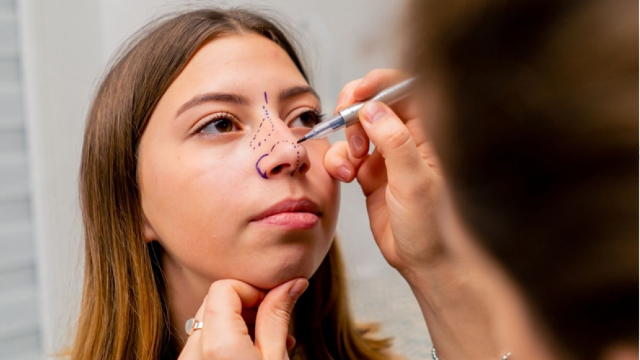
Why revision rhinoplasty is different
Rhinoplasty reshapes the bone and cartilage of the nose to change its appearance, improve breathing, or both, and Mayo Clinic notes it can address either aesthetic or functional concerns. A revision procedure is undertaken when a previous surgery left problems behind—unsatisfactory cosmetic results, asymmetry, a collapsed or contracted nose, breathing difficulty, over- or under-correction, or complications related to prior implants.
Because the first operation has already altered the anatomy—removing tissue, creating scar tissue, and sometimes leaving a synthetic implant in place—the surgeon working on a revision has less native material to work with and a more complex field to navigate. ASPS explains that primary rhinoplasty sometimes requires cartilage grafts, most commonly taken from the nasal septum. In revision cases, septal cartilage may already have been used or may be insufficient, so a surgeon may need to draw on other cartilage sources. This added complexity is precisely why the choice of surgeon and setting carries so much weight.
Factor 1: Surgeon credentials and how to verify them
The single most important variable in any revision is the surgeon. In the United States, patients can look for board certification, hospital privileges, and membership in recognized professional societies, and these credentials are relatively easy to check.
ASPS specifically cautions that when patients travel abroad for cosmetic surgery, it may be difficult to assess the training and credentials of surgeons outside the United States. This is not a statement that surgeons abroad are unqualified—ASPS acknowledges there are many skilled, qualified plastic surgeons practicing all over the world—but rather that the verification process is less familiar to a foreign patient. The practical response is to do more homework, not less: confirm the surgeon's specialty training, ask how many revision cases they handle, and understand exactly who will perform your surgery.
At JNB Clinic in the Gangnam district of Seoul, revision rhinoplasty is a documented core service performed by Dr. Kang Ju-Yong, a board-certified otolaryngology (ENT) specialist and rhinoplasty surgeon who serves as Chief Director. JNB's revision approach uses the patient's own (autologous) cartilage to restore stability, proportion, and long-term functional support, including in cases involving prior implant-related complications. You can review the clinic's clinician background on the About Us page and read patient accounts on the customer reviews and before and after pages.
Factor 2: Planning and technology
Revision surgery rewards meticulous planning because the anatomy is unpredictable. Detailed imaging helps the surgeon understand what was done previously and what structural material remains.
JNB Clinic uses 3D-CT analysis as part of its diagnostic and surgical-planning process, allowing precise evaluation of the nasal structure and a customized plan before surgery. For international patients, JNB also offers teleconsultation before travel, so a preliminary assessment—review of surgical history, discussion of goals, and initial planning—can begin remotely. This matters for a revision because it lets both patient and surgeon establish realistic expectations before committing to a long trip.
Staying in the US offers a parallel advantage: in-person consultations are logistically simple, and any pre-operative imaging or testing happens close to home. Neither model is inherently superior; the question is whether the specific surgeon, wherever located, has the planning tools and experience the case requires.
Factor 3: Technique and cartilage source
A recurring theme in revision rhinoplasty is where replacement cartilage comes from. ASPS notes that septal cartilage is the most common graft source, but revisions often exhaust or lack it. JNB Clinic's stated philosophy is implant-free reconstruction using the patient's own cartilage—drawing on septal, ear, or rib cartilage as the case requires—rather than silicone or other synthetic implants. For patients whose original problem was an implant complication, an autologous-only approach is one option to discuss.
This is a clinical decision, not a marketing point. Whether autologous cartilage, an implant, or a combination is most appropriate depends on your individual anatomy and history, and it should be settled through consultation with a qualified surgeon who examines your nose directly or through imaging.
Factor 4: Aftercare and follow-up
Recovery is where the Korea-versus-US decision becomes very practical. Rhinoplasty recovery is gradual: ASPS notes that a splint or dressing typically stays in place for about a week, swelling and bruising are most pronounced early on, most patients see initial results after about a month, and the final nose shape may not be fully visible for up to a year. Revision cases can heal even more slowly.
If you travel to Korea, you need to plan a stay long enough to cover the early recovery and initial follow-up before flying home, then arrange for the remainder of your recovery at a distance. JNB Clinic addresses the distance problem in two documented ways: it operates a structured JNB Signature Post-Surgery Care program and commits to follow-up for up to one year, and it provides remote follow-up for international patients after they return home. JNB's aftercare program also includes documented adjunct components such as hyperbaric oxygen therapy and LED therapy; these are described here strictly as parts of the clinic's post-surgery care program, not as treatments proven to cure any condition or guarantee a result.
If you stay in the US, follow-up is simpler by default—your surgeon is nearby if a concern arises, and there is no need to coordinate care across time zones and continents. For some patients, especially those anxious about complications, that proximity is decisive.
Factor 5: Cost considerations—without the hype
Cost is often what starts the conversation about traveling abroad, but it should be evaluated carefully rather than reduced to a headline number. Instead of chasing a percentage discount, compare what is actually included on each side and what could add to the total.
Questions worth asking of any provider, at home or abroad:
- What exactly does the quoted fee include—surgeon's fee, facility, anesthesia, imaging, and follow-up visits?
- Are revision touch-ups, should they be needed, included or billed separately?
- For travel, what are the full costs of flights, accommodation for an extended recovery stay, and a companion if you need one?
- What happens, and who pays, if a complication requires additional care after you return home?
ASPS cautions that plastic surgery tourism is not necessarily a good financial deal once the full picture is considered, and that price-driven decisions can carry hidden costs if complications arise. Framing cost as a set of inclusions and contingencies—rather than a single discount figure—gives you a far more accurate comparison.
Factor 6: The health risks specific to traveling for surgery
Traveling internationally for surgery introduces risks that a local procedure does not. The CDC, which tracks medical tourism, reports that complications from procedures performed abroad can include wound infections and bloodstream infections, and that in some countries the requirements for licensure, credentialing, and accreditation may be less stringent than in the United States, while counterfeit medicines or lower-quality devices may be in use.
Long-distance travel around the time of surgery adds its own hazards. ASPS warns that the risk of blood clots, infections, and other serious complications can be significantly higher when the body is put under the stress of long-distance travel soon after an operation. The CDC recommends seeing a healthcare provider or travel-medicine clinician at least four to six weeks before the trip to discuss your health status, the procedure, and the risks of travel before and after surgery, and to ensure routine vaccinations are up to date.
None of this means medical travel is inherently unsafe—millions of people do it—but these risks are real and should be planned for deliberately, including by allowing enough recovery time before flying and by choosing an accredited facility and a verifiable surgeon.
Putting it together
For a revision rhinoplasty, the decision rarely comes down to Korea or the US as places. It comes down to a specific surgeon's experience with revision cases, the quality of planning, a realistic aftercare plan that accounts for slow healing, an honest accounting of total cost, and a clear-eyed view of travel risk. A patient who finds an excellent, verifiable revision surgeon at home may have little reason to travel; a patient drawn to a particular surgeon's approach abroad can proceed sensibly by doing the credential and safety homework the CDC and ASPS recommend.
If you are considering JNB Clinic for revision rhinoplasty, the clinic's teleconsultation option lets you begin that evaluation before committing to travel. You can start the conversation through the Contact Us page.
The Bottom Line
- Revision rhinoplasty is more complex than a first operation, so surgeon experience with revision cases matters more than location alone.
- ASPS notes it can be harder to verify credentials abroad, so travelers should do more homework—confirming training, revision experience, and who performs the surgery.
- JNB Clinic offers revision rhinoplasty using autologous cartilage, 3D-CT planning, teleconsultation before travel, up-to-one-year follow-up, and the JNB Signature Post-Surgery Care program with remote follow-up after you return home.
- Compare cost as inclusions and contingencies, not a discount percentage; factor in flights, an extended recovery stay, and who covers complications.
- The CDC and ASPS flag real risks of medical travel—infection, variable accreditation, and travel-related complications like blood clots—so plan a pre-travel medical visit and adequate recovery time before flying.
Frequently Asked Questions
Is it safe to travel abroad for revision rhinoplasty?It can be, but travel adds risks. The CDC reports possible complications such as infections and notes accreditation standards vary by country, while ASPS warns that long-distance travel soon after surgery can raise the risk of blood clots and other complications. Careful surgeon vetting and a pre-travel medical consultation are essential.
How do I check a surgeon's credentials in Korea?Ask directly about specialty training, board certification, and how many revision cases the surgeon performs, and confirm exactly who will operate. ASPS notes verifying credentials abroad can be harder, so request this information in writing before you travel.
Does JNB Clinic perform revision rhinoplasty?Yes. Revision rhinoplasty is a documented core service at JNB Clinic, performed by Dr. Kang Ju-Yong using the patient's own cartilage, with 3D-CT planning and teleconsultation available before travel.
How long should I stay in Korea after revision surgery?Plan for enough time to cover early recovery and initial follow-up before flying home. Rhinoplasty splints typically stay on about a week, and swelling is greatest early; your surgeon will advise a timeline for your specific case, with remote follow-up available afterward.
How long does revision rhinoplasty take to fully heal?Healing is gradual. ASPS notes that final rhinoplasty results may not be fully visible for up to a year, and revision cases can heal more slowly, so patience and consistent follow-up are important.
What follow-up does JNB provide after I go home?JNB Clinic provides remote follow-up for international patients after they return home and offers follow-up commitment for up to one year as part of its JNB Signature Post-Surgery Care program.
Is cheaper always better when traveling for surgery?No. ASPS cautions that cosmetic surgery tourism is not necessarily a good deal once travel, extended stays, and the cost of managing any complications are included. Compare total costs and inclusions rather than a single discount figure.
This article is for general informational purposes and does not constitute individualized medical advice. Surgery carries risks, and outcomes vary from person to person. Consult a qualified, appropriately licensed surgeon and, if traveling, a travel-medicine clinician to determine what is right for you.
More Articles
Continue reading our clinical guides.

Benefits of Stem Cell Therapy for Skin Rejuvenation
Discover the benefits of stem cell therapy for skin rejuvenation, including improved texture, reduced wrinkles, and a more youthful appearance.
Learn More

Recovery After Autologous Cartilage Nose Surgery
Learn what to expect during recovery after autologous cartilage nose surgery, including healing timelines, aftercare tips, and results.
Learn More
Revision Rhinoplasty: Everything You Need to Know Before Your Second Nose Surgery
Revision Rhinoplasty: Learn what to expect from a second nose surgery, including risks, recovery, and results. Explore your options and learn more.
Learn More