Personalized Nasal & Facial Care • Dedicated International Patient Concierge


Medical Guide
Recovery After Autologous Cartilage Nose Surgery
Learn what to expect during recovery after autologous cartilage nose surgery, including healing timelines, aftercare tips, and results.
Schedule a ConsultationWhat Is Autologous Cartilage Rhinoplasty?
Autologous cartilage rhinoplasty is a surgical technique that reshapes and reconstructs the nose using the patient's own cartilage — most commonly harvested from the ear (auricular cartilage) or rib (costal cartilage) — rather than synthetic implants. Because the graft material is biologically identical to the patient's tissue, the body is far less likely to reject it, and long-term integration tends to be more stable and natural in appearance.
This approach has become increasingly preferred in South Korea's advanced rhinoplasty landscape, particularly for patients seeking durable results without the risks associated with silicone or Gore-Tex implants. At JNB Clinic in Gangnam, Seoul, autologous cartilage techniques are performed under the supervision of Dr. Ju-yong Kang, a dual-trained otolaryngologist and facial plastic surgeon, with a focus on both structural integrity and natural aesthetic outcomes.
Who Is a Suitable Candidate?
Not every rhinoplasty patient requires autologous cartilage. At JNB Clinic, candidacy is assessed through a comprehensive pre-surgical consultation that includes high-resolution 3D CT imaging to evaluate internal nasal anatomy, bone density, and cartilage availability.
Patients who tend to benefit most from autologous cartilage rhinoplasty include:
Those undergoing revision rhinoplasty after previous implant-based procedures, particularly where implants have shifted, caused thinning of overlying skin, or resulted in visible asymmetry
Patients with weak or underprojected nasal tips who require structural support from cartilage grafting
Individuals with deviated septums or collapsed nasal valves, where functional correction and cosmetic refinement are addressed simultaneously
Patients who prefer to avoid synthetic materials due to personal health concerns or a history of implant-related complications
Dr. Kang evaluates each candidate individually. Suitability depends on the quality and quantity of available donor cartilage, skin thickness, prior surgical history, and the patient's overall health status.
The Surgical Procedure: Step by Step

Pre-Operative Planning
Before surgery, patients at JNB Clinic undergo 3D CT scanning to map internal nasal structures in precise detail. This imaging allows Dr. Kang to identify septal deviations, assess cartilage reserves, and plan the exact dimensions of grafts required. This diagnostic phase reduces intraoperative uncertainty and supports more predictable outcomes.
Cartilage Harvesting
Depending on the volume and type of cartilage needed, Dr. Kang harvests tissue from one of two primary donor sites:
Septal cartilage: Located inside the nose itself, this is the preferred first choice as it requires no additional incisions elsewhere on the body. It is frequently available in sufficient quantities for tip grafting and minor augmentation.
Auricular (ear) cartilage: Used when septal cartilage supply is limited. A small incision behind the ear allows for discreet harvesting with minimal visible scarring.
Costal (rib) cartilage: Reserved for more complex reconstructions or revision cases requiring larger graft volumes. Recovery from the rib donor site adds a separate dimension to post-operative care.
Closed Rhinoplasty Technique
JNB Clinic performs rhinoplasty using a closed (endonasal) approach wherever clinically appropriate. All surgical access is achieved through incisions placed entirely within the nostrils, eliminating external scarring on the columella. This technique also preserves more of the nasal soft tissue architecture, which supports faster healing and reduces postoperative swelling compared to open approaches.
The harvested cartilage is then precisely shaped and placed to achieve the desired structural correction — whether for tip refinement, bridge augmentation, or valve reinforcement — and secured using fine absorbable sutures.
Recovery After Autologous Cartilage Nose Surgery

Recovery from autologous cartilage rhinoplasty follows a predictable timeline, though individual healing rates vary based on the complexity of the procedure, donor site used, and patient physiology.
Week 1: Initial Healing Phase
The first week is the most intensive phase of recovery. Patients can expect:
Swelling and bruising around the nose and under the eyes, which typically peaks at 48–72 hours post-surgery
A protective splint applied externally to maintain the newly shaped nasal framework during early healing
Nasal packing or internal splints in some cases, particularly where septal work has been performed, to stabilize the septum
Mild to moderate discomfort, managed with prescribed analgesics; pain is generally well-controlled
Restricted breathing through the nose due to internal swelling — mouth breathing is common in this phase
Patients are advised to rest with their head elevated, avoid bending or straining, and keep the surgical site dry. External stitches, if any, are typically removed within 5–7 days.
Weeks 2–4: Visible Improvement
By the end of the second week, most patients notice a significant reduction in bruising. The splint is generally removed around day 7–10. At this stage:
Social presentability returns for many patients, though residual swelling remains visible
Patients may return to light sedentary work — though strenuous activity, including exercise and heavy lifting, remains contraindicated
The nose will still appear slightly swollen and the final shape will not yet be fully discernible
Rib cartilage donor site (if applicable) typically shows improving comfort by the end of week two, with the chest wall soreness gradually resolving
Months 1–3: Gradual Refinement
Swelling continues to resolve progressively. The tip of the nose — the last area to fully settle — may remain slightly fuller than the final result. Most patients feel comfortable in social and professional settings by the end of month one. Strenuous exercise can typically resume around week 4–6 with medical clearance.
Months 6–12: Final Result
Because autologous cartilage integrates biologically with surrounding tissue, the final result stabilizes over 6 to 12 months. The cartilage graft becomes fully vascularized — meaning it develops its own blood supply — making results significantly more durable than synthetic implants. At the one-year mark, patients and surgeons can make a full aesthetic assessment of the outcome.
Safety Considerations and Potential Risks
As with all surgical procedures, autologous cartilage rhinoplasty carries a defined set of risks. At JNB Clinic, patient safety protocols are built into every stage of care, from preoperative diagnostics through post-operative follow-up.
Potential complications include infection (minimized through hospital-grade sterile surgical environments), cartilage warping or minor asymmetry during healing, donor site discomfort, and in rare cases, the need for minor corrective procedures. The use of the patient's own tissue significantly reduces the risk of implant migration, extrusion, or immune rejection — outcomes more commonly associated with alloplastic (synthetic) materials.
Patients are encouraged to attend all scheduled follow-up appointments so that the healing process can be monitored and any emerging concerns addressed early.
Dr. Ju-yong Kang: Dual Expertise in Function and Aesthetics
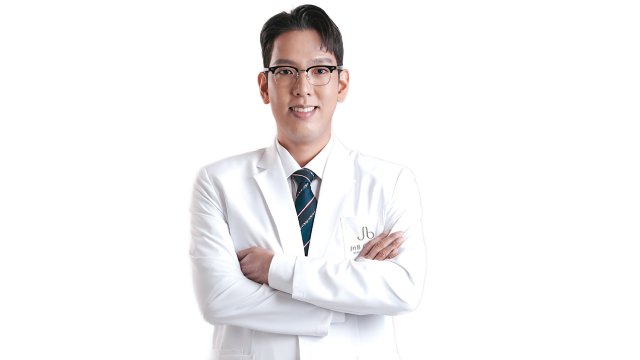
A core differentiator at JNB Clinic is Dr. Kang's background as both a board-affiliated Otolaryngologist (ENT specialist) and a trained facial plastic surgeon. This dual expertise means he approaches nasal surgery with an understanding of both the external aesthetic dimension and the internal airway physiology simultaneously — a clinical perspective that is particularly valuable in autologous cartilage procedures, where structural decisions directly affect breathing function.
Dr. Kang is an active member of multiple Korean medical societies, including the Korean Society of Otorhinolaryngology-Head and Neck Surgery, the Korean Rhinologic Society, and the Korean Society of Facial Plastic and Reconstructive Surgery. He trained at Kyung Hee University School of Medicine and has held director-level clinical roles at specialized surgical clinics in Seoul.
Why JNB Clinic in Gangnam?
Located on the 6th floor of the K-Tower Building at 119 Dosan-daero, Gangnam-gu, and accessible via Sinsa Station, JNB Clinic was established with a clear medical philosophy: "Beauty in Every Breath." This principle reflects the clinic's commitment to ensuring that aesthetic goals never compromise nasal health and respiratory function.
The facility is equipped with high-resolution 3D CT diagnostic imaging for comprehensive pre-surgical planning, hospital-grade operating suites with continuous monitoring and strict sterilization protocols, and integrated post-operative recovery support systems designed to reduce swelling and optimize healing timelines.
Consultations at JNB Clinic are structured around honest, transparent communication. Dr. Kang and his team provide realistic assessments of expected outcomes, including honest discussion of what autologous cartilage rhinoplasty can and cannot achieve, so that patients can make fully informed decisions.
Realistic Expectations: What Autologous Cartilage Rhinoplasty Can Achieve
Patients who undergo autologous cartilage rhinoplasty at JNB Clinic can realistically expect:
A natural-looking nasal contour that harmonizes with individual facial proportions
Durable, long-term structural results due to the biological integration of the graft
Improved nasal airflow when functional corrections are performed simultaneously
No external visible scarring when the closed technique is used
What it does not offer is an instantaneous transformation — the full result requires patience across the healing timeline. Swelling resolution, particularly at the tip, is a gradual process. Managing expectations about this timeline is central to patient satisfaction at JNB Clinic.
More Articles
Continue reading our clinical guides.

Benefits of Stem Cell Therapy for Skin Rejuvenation
Discover the benefits of stem cell therapy for skin rejuvenation, including improved texture, reduced wrinkles, and a more youthful appearance.
Learn More
Recovery After Autologous Cartilage Nose Surgery
Learn what to expect during recovery after autologous cartilage nose surgery, including healing timelines, aftercare tips, and results.
Learn More
Revision Rhinoplasty: Everything You Need to Know Before Your Second Nose Surgery
Revision Rhinoplasty: Learn what to expect from a second nose surgery, including risks, recovery, and results. Explore your options and learn more.
Learn More