Personalized Nasal & Facial Care • Dedicated International Patient Concierge

Medical Guide
Realistic Expectations: What Rhinoplasty Can Change
An honest account of what rhinoplasty can and cannot change, including the limits set by skin thickness, cartilage quality, symmetry and healing response.
Schedule a ConsultationRealistic Expectations: What Rhinoplasty Can and Cannot Change
Medically reviewed by Dr. Kang Ju-Yong, Korean Board-Certified Otorhinolaryngologist (ENT Specialist)
Setting realistic expectations rhinoplasty patients can actually hold is the least glamorous and most useful part of the consultation. The operation can do a great deal, but it works within anatomy you already have, and the factors that set the ceiling — skin thickness, cartilage quality, and your own healing response — are largely fixed before anyone picks up an instrument. This article lays out what the procedure reliably delivers, what sits outside its reach, and why the most trustworthy surgical plan is usually the one that names its limits out loud.
What Rhinoplasty Reliably Changes
Start with the genuine capabilities, because they are substantial.
Mayo Clinic describes rhinoplasty as surgery that alters the shape of the nose, carried out to change appearance, improve breathing, or both. It notes that the upper portion of the nasal framework is bone and the lower portion cartilage, and that surgery can modify bone, cartilage, skin, or all three. The listed reasons for undertaking it include altering the size, shape, or proportions of the nose, correcting problems following an injury, addressing a condition present from birth, and improving some breathing difficulties.
JNB Clinic describes correction organized by nasal sub-type: a low or flat bridge, a wide bridge, a short or upturned nose, a hooked nose with a dorsal hump, a long or drooping nose, a deviated nose, and a bulbous tip. Each is approached according to its specific anatomical cause rather than through a single standard technique — a hooked nose addressed at the hump and the tip together, a bulbous tip addressed through the fat, muscle, and splayed cartilage individually. The clinic states that individual results vary and are not guaranteed.
So the honest headline is that shape, proportion, projection, and in many cases breathing are all genuinely modifiable. The question is by how much, and that is where the limits come in.
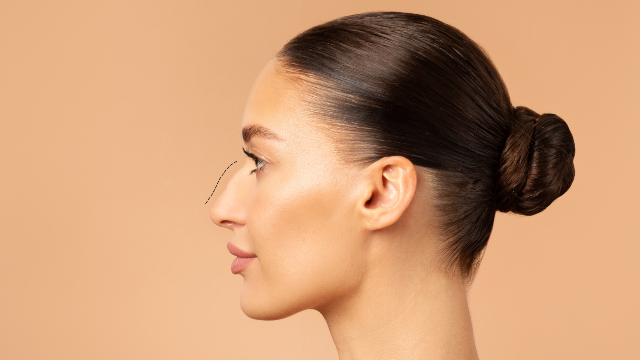
Limit One: Skin Thickness
If there is a single anatomical factor patients underestimate, it is skin.
Mayo Clinic identifies this explicitly, noting during its description of the pre-surgical physical examination that characteristics such as the thickness of the skin and the strength of the cartilage at the end of the nose can affect the result. The underlying logic is simple. Rhinoplasty largely reshapes the framework beneath the skin; the skin then drapes over that new framework. Thick skin drapes less closely, so fine definition created underneath may not translate to the surface as sharply as it would under thinner skin.
This cuts both ways, which is worth knowing. Thinner skin shows refinement more readily but also shows irregularities more readily. Neither is better; they are different starting conditions with different risks, and a surgeon planning well will design for the skin in front of them rather than for an ideal.
JNB Clinic's planning process captures this directly. Its three-dimensional scanning analyzes facial contour, skin thickness, and existing structure before a design is proposed, and skin thickness appears again in its documented consultation process for nasal tip surgery alongside tip shape, cartilage structure, nasal support, and breathing function.
Limit Two: Cartilage Quality and Available Structure
The second constraint is what the surgeon has to build with.
Rhinoplasty that changes shape in a durable way generally requires structural support, and that support has to come from somewhere. Mayo Clinic notes that for modest changes cartilage may be taken from deeper within the nose or from the ear, while larger changes may call for rib cartilage or other materials. JNB Clinic's documented approach is implant-free, using the patient's own septal, ear, or rib cartilage, with technique selected according to how much structural material a case requires.
The limitation follows naturally. The quantity and quality of cartilage available differ from person to person, and a revision case in which cartilage has already been harvested or altered presents a different problem from a first operation. JNB Clinic documents revision rhinoplasty as structural correction for patients who have had previous surgery elsewhere, including implant-related complications, using autologous cartilage to restore stability and proportion. That framing — restoring stability and proportion — is noticeably more measured than the language used for a primary case, and deliberately so.
Limit Three: Symmetry
Here is a sentence that belongs in every honest rhinoplasty consultation: no face is symmetrical, and surgery does not make it so.
ASPS lists an uneven nasal appearance and unsatisfactory nasal appearance among the recognized risks of the operation, alongside difficulty breathing, altered skin sensation, infection, poor healing or scarring, skin discoloration and swelling, and the possibility of further surgery. Mayo Clinic's risk list similarly includes the possibility of a nose that looks uneven.
JNB Clinic's own approved claims align with this. For its by-type rhinoplasty program the clinic cautions against unqualified promises of a particular look or guaranteed symmetry, and for alar base reduction it warns against promising a specific numerical width reduction without individual consultation. A clinic that writes its own limits into its approved claims is telling you something useful about how the consultation will go.
Improving symmetry is a realistic goal. Achieving it is not.
Limit Four: The Margin for Error Is Tiny
Mayo Clinic makes a point about rhinoplasty that is rarely stated so plainly elsewhere: it calls the operation difficult, explaining that the nose is a complex three-dimensional shape sitting in the middle of the face, that the changes made are frequently very small, and that because the changes are small the margin for error is small too. It adds that swelling and local anesthetic distort the nose during surgery itself, concealing some of those small changes while the operation is underway, and that there is no fixed sequence of steps because each operation is tailored to the individual.
ASPS makes the complementary observation from the results side, noting that very small changes to the nasal structure — a matter of a few millimeters — can make a considerable difference to appearance, while acknowledging that in some cases the change is not enough and a second operation is discussed. ASPS adds that where a revision is contemplated, waiting at least a year is advised because the nose continues to change during that period.
The realistic conclusion is not that outcomes are unpredictable. It is that precision here is measured on a scale where small variations are visible, and that a planned secondary refinement is a recognized part of the field rather than evidence of failure.
Limit Five: Healing Is Yours, Not the Surgeon's
The operation ends in hours. The result arrives over months, and the route it takes is individual.
ASPS notes that while early swelling resolves within a few weeks, the nasal contour may take up to a year to fully refine, with changes continuing to appear during that time and swelling that can come and go, often worse in the morning, during the first year. Mayo Clinic describes short-term bruising around the eyelids over two to three weeks and nasal swelling that can persist for as long as a year, adding that because the nose changes throughout life it is genuinely difficult to name the moment a final result is reached.
JNB Clinic repeats the same caution in its own language, stating across procedures that individual results vary and that outcomes depend on nasal anatomy, skin condition, and the healing process.
What Rhinoplasty Does Not Change
Some things sit outside the operation entirely, and it helps to name them.
It does not change the rest of your face, although it changes how the rest of your face is read. Mayo Clinic notes that a small chin can create the impression of a larger nose, which is why the profile is assessed as a whole before surgery. It does not alter skin quality, pigmentation, or sun damage. It does not stop the nose from changing with age; Mayo Clinic is explicit that the nose changes over a lifetime whether or not surgery is performed.
It also does not, by itself, resolve every breathing problem. JNB Clinic notes that patients whose symptoms are primarily allergic or medically driven, without a structural cause, may be better served by allergy workup and medical management before surgery is considered. Structural surgery fixes structural problems.
And it does not change how you feel about yourself independently of your reasons for having it. ASPS frames candidacy around completed facial growth, good physical health, not smoking, a positive outlook, and realistic goals, and states plainly that the procedure should be undertaken for yourself rather than to satisfy someone else or to match an ideal image.
How Expectations Are Set at JNB Clinic
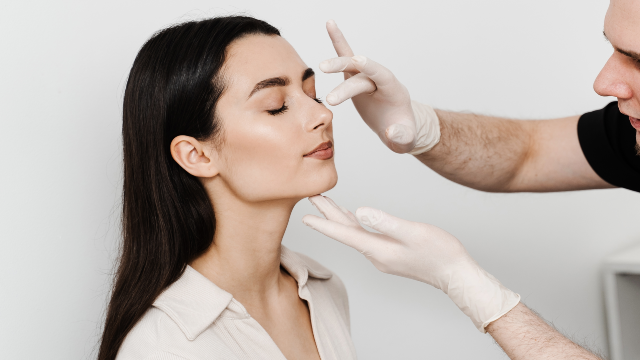
JNB Clinic documents a consultation that assesses the nasal bridge, tip, septum, cartilage quality, skin thickness, and breathing function, with any history of previous rhinoplasty or filler reviewed, and notes that international patients may complete this step by teleconsultation before traveling. Three-dimensional imaging supports an individualized design plan discussed with the patient before surgery rather than presented afterward.
Dr. Kang Ju-Yong, the clinic's chief director, holds Korean board certification in otorhinolaryngology and has spent upward of thirteen years working in functional and aesthetic nasal surgery. His stated philosophy emphasizes individualized planning, preservation of nasal function, and facial harmony over any particular shape. The clinic itself states that individual results vary and are not guaranteed, and that long-term follow-up extends up to a year. Earlier cases are shown in the clinic's before and after photographs, though another person's anatomy predicts nothing about yours.
Because every limit described in this article is specific to one nose, the only way to know yours is an individual assessment. International patients can begin that conversation in English through the clinic's contact page.
The Bottom Line
- Rhinoplasty can genuinely change size, shape, proportion, and in many cases breathing, working on bone, cartilage, and the overlying skin.
- Skin thickness and the strength of tip cartilage are identified by Mayo Clinic as factors that shape what the result can be, and neither is modifiable.
- Symmetry can be improved but not guaranteed; both ASPS and Mayo Clinic list an uneven appearance among recognized risks, and JNB Clinic's own approved claims avoid promising symmetry.
- Changes are measured in millimeters and the margin for error is correspondingly narrow, which is why a planned secondary refinement is a recognized part of the field.
- The final appearance emerges over months to a year, varies between individuals, and is not something a surgeon can promise in advance.
Frequently Asked Questions
Why does skin thickness matter so much in rhinoplasty?
Surgery reshapes the framework beneath the skin, and the skin then drapes over that new framework. Mayo Clinic identifies skin thickness, along with the strength of the cartilage at the nasal tip, as a characteristic that can affect the result. Thicker skin tends to show fine refinement less distinctly, while thinner skin shows both refinement and irregularity more readily.
Can rhinoplasty make my face symmetrical?
No operation can achieve full facial symmetry, and no reputable surgeon will promise it. ASPS and Mayo Clinic both list an uneven nasal appearance among the recognized risks of the procedure. JNB Clinic itself cautions against promising guaranteed symmetry or a specific look without individual consultation.
Will rhinoplasty definitely improve my breathing?
It can, when a structural cause is present. Mayo Clinic notes that rhinoplasty may be performed to improve some breathing problems and that a deviated septum can be straightened during the same operation. JNB Clinic notes that symptoms driven mainly by allergy rather than structure may be better addressed through allergy assessment and medical management first.
How often is a second operation needed?
ASPS acknowledges that although an experienced surgeon can usually achieve a result both parties are satisfied with, in some cases the change proves insufficient and a further procedure is discussed. Where that happens, ASPS advises waiting at least a year, because the nose continues to change during that period. Possible revision surgery is listed among the standard risks.
Does the result last for life?
Most of the improvement is relatively permanent, but the nose does not freeze. ASPS notes that natural aging brings gradual change to the face and nose while most of the improvement remains, and Mayo Clinic observes that the nose changes throughout life whether or not surgery is performed. That is one reason it is hard to name a single moment as the final result.
What makes someone a good candidate?
ASPS describes a good candidate as someone whose facial growth is complete, who is in good physical health, who does not smoke, and who holds a positive outlook together with realistic goals. It also emphasizes that the decision should be made for yourself rather than to meet someone else's expectations. Realistic goals are listed as a criterion, not an afterthought.
What should I ask to test whether expectations are realistic?
Ask which of your own anatomical features will limit the result and why. Ask what the surgeon would advise against, and what the plan is if the first result falls short. A consultation in which limits are named without prompting is generally a better sign than one in which every question receives an encouraging answer.
This article exists for general informational purposes only and describes how anatomical factors commonly influence surgical outcomes, not a prediction for any individual. All surgery carries risk, results vary between people and are not guaranteed, and only a qualified medical professional who has examined you can assess your own case. It is not a self-diagnosis tool.
More Articles
Continue reading our clinical guides.

Benefits of Stem Cell Therapy for Skin Rejuvenation
Discover the benefits of stem cell therapy for skin rejuvenation, including improved texture, reduced wrinkles, and a more youthful appearance.
Learn More

Recovery After Autologous Cartilage Nose Surgery
Learn what to expect during recovery after autologous cartilage nose surgery, including healing timelines, aftercare tips, and results.
Learn More

Revision Rhinoplasty: Everything You Need to Know Before Your Second Nose Surgery
Revision Rhinoplasty: Learn what to expect from a second nose surgery, including risks, recovery, and results. Explore your options and learn more.
Learn More