Personalized Nasal & Facial Care • Dedicated International Patient Concierge

Medical Guide
Petit Treatments or a Facelift: Where the Line Sits
Non surgical vs surgical facelift: what injectable petit treatments can realistically change, where their ceiling sits, and when surgery is the right talk.
Schedule a ConsultationPetit Treatments vs. Surgical Facelift: When Is Non-Surgical Enough?
Medically reviewed by Dr. Kang Ju-Yong, Korean Board-Certified Otorhinolaryngologist (ENT Specialist)
The non surgical vs surgical facelift question is usually posed as though one option were simply a lighter version of the other. It is not. Injectable petit treatments and a surgical lift address overlapping concerns by entirely different means, and each has a range of change within which it works well and beyond which it does not. This article sets out what the injectable route is documented to do, where the authorities place its ceiling, and what signals that a surgical conversation — rather than another appointment — is the honest next step.
What "Petit" Covers
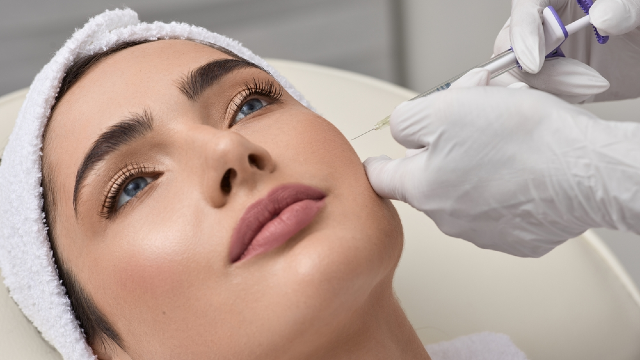
JNB Clinic uses the term for a defined group of in-office injectable treatments: dermal filler, skin booster and botulinum toxin, used singly or together for facial refinement, hydration and muscle-relaxing effects without surgery or significant downtime.
The documented candidates are patients wanting volume or contour correction through filler, improvement in skin hydration and texture through a booster, or a temporary muscle-relaxing effect for lines or jaw slimming — with suitability assessed individually. The documented benefits are softened facial wrinkles, improved volume and contour, better skin quality from boosters, natural-looking enhancement, minimal downtime and a harmonious appearance.
The clinic's documented time frames explain a great deal about where this route is strong. Filler is visible immediately and lasts roughly six to eighteen months by product and area. Botulinum toxin begins working in three to seven days, reaches full effect at about two weeks, and lasts approximately three to six months. A skin booster produces gradual improvement across a course of sessions. Most patients resume normal activity immediately, with mild swelling or bruising generally settling within a few days to a week.
That is a profile built for maintenance and refinement: fast, repeatable, low in disruption, and bounded in duration.
Three Tiers, Not Two Options
The American Academy of Dermatology (AAD) is unusually helpful here because it refuses to collapse the field into a binary. It sorts options into tiers by how much change each can produce.
At the lowest tier sit skin-firming creams and lotions, where AAD's assessment is blunt: a cream cannot lift sagging skin, because it cannot reach deeply enough to do so, and anyone hoping for facelift-like results from a jar is likely to be disappointed.
In the middle sit non-invasive procedures, which AAD groups as producing modest tightening and lifting, with little or no downtime, gradual results and low risk of side effects in trained hands.
Above those sit minimally invasive procedures, which AAD describes as delivering the most tightening and lifting available without surgery — while stating in the same breath that they still cannot give the results of a surgical procedure such as a facelift, eyelid surgery or neck lift. The trade they offer is less downtime and lower risk of side effects.
And AAD opens the entire discussion with the sentence that frames everything beneath it: a surgical lift gives the most dramatic result, and the other options exist because they ask less in time and cost.
Three tiers, each real, each with a ceiling. The error patients make is not choosing the wrong tier; it is assuming the tier they prefer has no ceiling.
Where the Injectable Ceiling Falls
The American Society of Plastic Surgeons (ASPS) draws the boundary from the injectable side. Dermal fillers, it notes, are particularly useful for people showing early signs of aging, or as an addition to facial rejuvenation surgery. But for some patients, it continues, a surgical approach such as a facelift, brow lift or eye lift may be the better answer — and minimally invasive treatments, while unable to produce the same outcome, can push back the point at which considering a lift becomes appropriate.
The same society states the matching point from the surgical side: a facelift can only be achieved surgically, and less invasive rejuvenation can delay the moment at which it becomes appropriate and can complement its results, but cannot stand in for it.
Note what those statements are not. They are not a claim that injectables are inferior work, nor that everyone eventually needs surgery. They describe two tools with different reach. A tool used inside its range does excellent work; used outside it, it produces expense and disappointment.
What a Surgical Lift Addresses — and Does Not
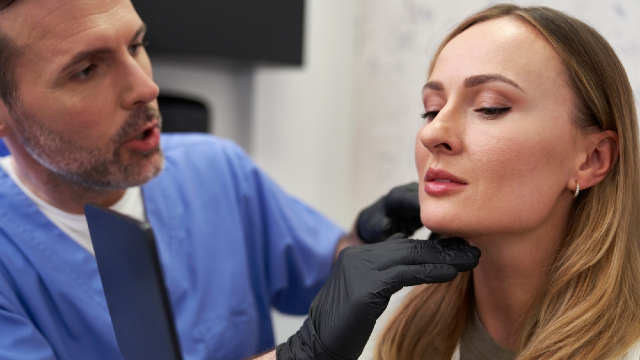
Understanding the surgical side accurately is what makes the comparison honest rather than promotional.
ASPS describes a facelift as a procedure for visible aging in the face and neck: skin relaxation producing sagging, deepening folds running from the nose to the corners of the mouth, fat that has dropped or disappeared, jowls forming along the cheek and jaw, and loose skin and excess fat in the neck. Mayo Clinic adds the mechanical description — the surgeon lifts a flap of skin on each side, tightens the tissue underneath, replaces and tightens the skin and removes the excess — and notes that a neck lift is frequently performed at the same time.
Both bodies are equally explicit about the limits. ASPS states that a facelift is restorative: it does not alter your fundamental appearance and does not stop aging. Mayo Clinic specifies what it will not correct — fine lines, sun damage, creases around the nose and upper lip, and changes in skin color — and notes that the result does not last indefinitely, since the skin continues to loosen with age.
This is why the two routes so often end up combined rather than opposed. ASPS notes that fat transfer or fillers may be suggested alongside a lift to replace lost volume, and that skin treatments may be offered to improve texture and quality, because the surgery repositions tissue and does not resurface it.
The Signals That Point Toward a Surgical Conversation
No article can examine a face, but several documented signals recur.
AAD identifies the decisive one in a single line: where there is a great deal of sagging skin, a tightening procedure may simply not be helpful. Its description of who does best with non-surgical work ends with the same criterion in positive form — a small amount of laxity.
The second signal is pattern rather than quantity. Injectables address volume, texture and muscle activity. Where the complaint is descended tissue along the jaw and neck — the jowling and loose neck skin ASPS lists among facelift indications — the complaint is not one that filler addresses, no matter how much is used.
The third is economic and logistical: a treatment with a six-to-eighteen-month horizon, repeated indefinitely, is a different commitment from a single operation, and patients are entitled to weigh that honestly in both directions.
A clinic willing to say "this is beyond what an injection will do for you" is giving a more useful answer than one willing to proceed. Equally, a clinic recommending surgery to someone whose concern sits comfortably inside the injectable range is also misreading the case.
If Surgery Is the Conversation, What It Involves
Patients weighing the two routes deserve the surgical details rather than a euphemism.
ASPS describes the general candidate as someone in good health without conditions that impair healing, a non-smoker, and a person with realistic expectations and a positive outlook. Mayo Clinic adds the factors that may rule a lift out or raise the risk: blood-thinning medications and supplements, conditions that interfere with clotting, poorly controlled diabetes or high blood pressure, smoking, a history of repeated weight gain and loss, and hormone replacement therapy.
ASPS lists the risks, which are real and rare in roughly that order: anesthesia risks, bleeding, deep vein thrombosis and cardiac or pulmonary complications, facial nerve injury with weakness, fluid accumulation, infection, altered skin sensation, persistent pain, poor wound healing and skin loss, prolonged swelling, skin irregularities and discoloration, sutures surfacing through the skin, temporary or permanent hair loss at the incisions, unfavorable scarring, and unsatisfactory results including asymmetry.
Mayo Clinic notes that hematoma — a collection of blood beneath the skin — is the most common complication and usually forms within the first day, that a procedure typically runs three to six hours, and that follow-up visits continue for about two months, with stitches generally removed about a week after surgery.
None of that argues against surgery. It argues for making the decision with the full picture in view.
How the Assessment Is Made
JNB Clinic's documented process for petit treatments is an evaluation of facial anatomy, aesthetic concerns, skin condition and goals before any plan is recommended, followed by personalized planning, preparation of the area, injection, and immediate post-treatment instructions.
Its documented alternatives to the injectable route, listed within the same service, are surgical facial rejuvenation, lifting procedures and fat grafting — which is to say the clinic records the surgical conversation as part of the same decision rather than a separate one.
Its documented contraindications for the injectable route are pregnancy or breastfeeding, active skin infection at the injection site, and known allergy to the specific product ingredients. Its documented risks are temporary swelling, bruising and tenderness at injection sites, with vascular occlusion named as the rare but serious filler risk, and temporary asymmetry or eyelid or brow drooping as rare botulinum toxin effects.
Patient accounts of the consultation experience are collected in the clinic's customer reviews, and its about page sets out how it approaches individual assessment.
The Bottom Line
- Petit treatments and surgery are not a lighter and heavier version of one thing; AAD sorts the field into tiers, each with a genuine ceiling.
- ASPS describes injectable filler as well matched to early signs of aging and as an adjunct to surgery, and states that minimally invasive work can delay but not replace a lift.
- AAD names the decisive signal plainly: where there is a large amount of sagging skin, a tightening procedure may not help at all.
- Surgery has limits too — ASPS states a facelift does not change fundamental appearance or stop aging, and Mayo Clinic notes it will not correct fine lines, sun damage or skin color.
- JNB Clinic records surgical rejuvenation, lifting procedures and fat grafting as documented alternatives within the same consultation, with suitability for the injectable route assessed individually.
Frequently Asked Questions
Can injectables achieve what a facelift achieves?
No. ASPS states that a facelift can only be performed surgically and that minimally invasive rejuvenation cannot reach the same result, though it may postpone the point at which surgery becomes appropriate and can complement surgical results.
How do I know I have reached the limit of non-surgical treatment?
AAD's guidance is that non-surgical tightening suits a small amount of laxity and may not help where sagging is extensive. Where the concern is descended tissue along the jaw and neck rather than volume or texture, the tool is mismatched.
How long do petit results last?
The clinic documents filler at roughly six to eighteen months by product and area, botulinum toxin at approximately three to six months with onset in three to seven days, and skin boosters as gradual improvement across a course of sessions.
Does a facelift stop aging?
No. ASPS describes it as restorative, not preventive — it does not alter fundamental appearance and does not halt the aging process. Mayo Clinic notes that the skin may begin to loosen again with time.
What does a facelift not correct?
Mayo Clinic lists fine lines, sun damage, creases around the nose and upper lip, and changes in skin color. ASPS notes that fillers, fat transfer or skin treatments may therefore be suggested alongside surgery.
Who is not suitable for petit treatments?
The clinic names pregnancy or breastfeeding, active skin infection at the injection site, and known allergy to the product ingredients, and assesses the full picture at consultation.
What are the main surgical risks I should know about?
ASPS lists anesthesia risks, bleeding, nerve injury with weakness, infection, altered sensation, poor healing, prolonged swelling, scarring and unsatisfactory results. Mayo Clinic identifies hematoma as the most common complication, usually appearing within a day.
Can the two approaches be combined?
Frequently. ASPS notes that fat transfer or fillers may be used alongside a lift to restore lost volume, and that skin treatments may be added for texture, since surgery repositions tissue rather than resurfacing it.
Shared for informational purposes and educational purposes as background reading only, this article is not a self-diagnosis tool and cannot assess an individual face; that assessment, and any recommendation that follows from it, belongs to a qualified medical professional.
More Articles
Continue reading our clinical guides.

Benefits of Stem Cell Therapy for Skin Rejuvenation
Discover the benefits of stem cell therapy for skin rejuvenation, including improved texture, reduced wrinkles, and a more youthful appearance.
Learn More

Recovery After Autologous Cartilage Nose Surgery
Learn what to expect during recovery after autologous cartilage nose surgery, including healing timelines, aftercare tips, and results.
Learn More

Revision Rhinoplasty: Everything You Need to Know Before Your Second Nose Surgery
Revision Rhinoplasty: Learn what to expect from a second nose surgery, including risks, recovery, and results. Explore your options and learn more.
Learn More