Personalized Nasal & Facial Care • Dedicated International Patient Concierge

Medical Guide
Nose Tip Reshaping: Tip Refinement Surgery Explained
Nose tip reshaping refines the shape and projection of the nasal tip. Learn how tip refinement surgery works and why it is designed for the whole face.
Schedule a ConsultationNose Tip Reshaping: How Tip Refinement Surgery Works
Medically reviewed by Dr. Kang Ju-Yong, Board-Certified ENT (Otolaryngology) & Rhinoplasty Surgeon, JNB Clinic
For many people considering a nose procedure, the concern is not the whole nose — it is the tip. A nose tip reshaping procedure, also called tip refinement surgery, focuses on the shape, projection, definition, and symmetry of the nasal tip rather than rebuilding the entire nose. At JNB Clinic in Gangnam, Seoul, this is a distinct part of the rhinoplasty program, designed using your own cartilage and planned in relation to your whole face. This guide explains what tip refinement involves, why it is considered one of the more technically demanding parts of rhinoplasty, and what to keep in mind if you are exploring it.
The nasal tip is a small area, but it carries a lot of visual weight. A tip that is bulbous, drooping, under-projected, or poorly defined can shape how the entire face reads, even when the bridge looks fine. Because the tip is defined by soft, mobile cartilage covered by skin that varies in thickness from person to person, refining it well requires precision and a plan that respects both structure and proportion.

What Is Nose Tip Reshaping?
Nose tip surgery focuses on reshaping, refining, and supporting the nasal tip to create a balanced, natural-looking nose. Rather than augmenting the bridge or reconstructing the full nasal framework, tip refinement targets the lower portion of the nose specifically. At JNB Clinic, the emphasis is on structural correction using the patient's own cartilage while maintaining harmony with the overall facial proportions and preserving nasal function.
People commonly seek tip refinement to address a bulbous, drooping, short, round, or poorly defined nasal tip, and to achieve a more refined appearance without relying solely on bridge augmentation. In other words, it is for patients whose main dissatisfaction is with the tip's shape, projection, definition, or symmetry — not necessarily with the height of the bridge.
It helps to understand what actually defines the tip. The shape you see is created largely by the lower lateral cartilages (sometimes called the tip cartilages) and how they are positioned, along with the thickness and quality of the overlying skin. Tip refinement works with these structures — reshaping, repositioning, reinforcing, or supplementing them — to change how the tip looks and holds its shape.
Why the Tip Is One of the More Demanding Parts of Rhinoplasty
Refining the nasal tip is widely regarded as among the more technically demanding aspects of rhinoplasty. The peer-reviewed reference StatPearls devotes an entire discussion to rhinoplasty tip-shaping surgery precisely because the tip is such a nuanced structure: small changes to cartilage shape, position, and support can produce visible differences in the final result, and the tip must remain stable and functional as it heals.
Several factors make the tip challenging:
- It is defined by soft, mobile cartilage. Unlike the firmer bony upper nose, the tip is made of flexible cartilage that must be shaped and supported carefully so it holds its new contour over time.
- Skin thickness varies. Thicker skin can mask fine refinements, while thinner skin can reveal small irregularities. The plan has to account for your particular skin.
- The tip is the last area to settle. Swelling in the tip can persist for months after surgery, so patience is part of the process and the final contour becomes visible gradually.
- Support and shape are linked. A refined tip also needs adequate structural support, or it can droop or lose definition over time — which is why grafting and reinforcement often play a role.
Because of this complexity, choosing an experienced, appropriately qualified surgeon matters. The American Society of Plastic Surgeons (ASPS) advises prospective patients to look carefully at a surgeon's training and experience with the specific procedure they are considering, and to ask direct questions during consultation. Tip refinement is a good example of a procedure where surgical judgment and technique carry real weight.
Designed in Relation to the Whole Face
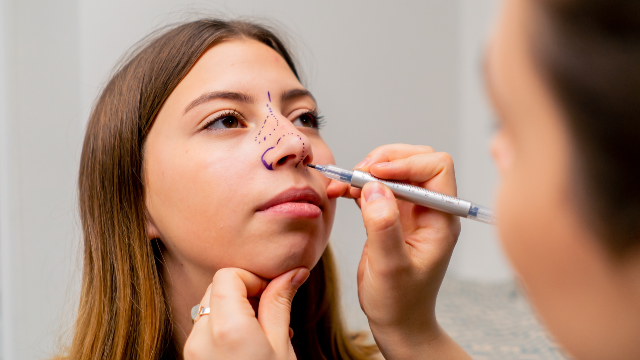
One of the defining principles of tip refinement at JNB Clinic is that the tip is never designed in isolation. It is planned in relation to the whole face — the balance between the tip and the bridge, the proportions of the nose relative to the eyes, lips, and chin, and the angles that look natural from both the front and the side.
This whole-face perspective matters because a tip that looks appealing on its own can look out of place if it does not fit the rest of the nose and face. A tip that is over-refined or over-rotated, for instance, can appear unnatural even if it is technically "smaller." The goal is proportion and harmony, not a single idealized shape applied to everyone.
The Mayo Clinic makes a similar point about rhinoplasty in general: the procedure is highly individualized, and the surgeon plans changes based on your facial features, the structure of your nose, and what you are hoping to achieve. There is no universal "correct" tip — there is the tip that suits your face. JNB Clinic's consultation reflects this, including assessment of facial balance, nasal tip shape, cartilage structure, skin thickness, nasal support, breathing function, and your desired outcome before a customized plan is developed. You can learn more about the clinic's overall philosophy on the JNB Clinic website.
The Role of Autologous Cartilage
A central feature of JNB Clinic's approach is the use of autologous cartilage — your own tissue — to reshape and reinforce the tip when needed. Instead of relying on artificial materials at the tip, the surgeon can use cartilage grafts to add definition, improve projection, and provide the support that keeps the refined shape stable over time.
Using your own cartilage has an intuitive appeal: it is your own tissue, so it is designed to integrate naturally and to avoid the foreign-body concerns associated with implants. In tip surgery specifically, cartilage grafts are a well-established tool for shaping and supporting the tip. Depending on the plan, cartilage may come from sources such as the septum or the ear, and the choice is made based on what your anatomy needs and how much support is required.
It is worth being clear that autologous cartilage is not a guarantee of a particular result. Cartilage can shift, warp, or be partially absorbed as it heals, and outcomes still depend on your individual anatomy, skin, and healing response. What the approach offers is a structurally sound, implant-free way to refine the tip — not a promise of a specific shape.
Closed Technique and JNB Clinic's Approach
JNB Clinic performs tip refinement using structural nasal analysis, functional nasal evaluation, customized surgical planning, closed rhinoplasty techniques when appropriate, and autologous cartilage grafting. The closed (endonasal) approach uses incisions inside the nose, which avoids a visible external scar; whether it is appropriate depends on the complexity of your case and the goals of surgery.
Because JNB Clinic is ENT-led — with rhinoplasty performed by Dr. Kang Ju-Yong, a board-certified ENT (otolaryngology) and rhinoplasty surgeon — the plan also considers how changes to the tip interact with nasal support and breathing. Tip surgery is often addressed as part of the clinic's by-type approach, for example in bulbous or drooping tip correction, and it can be combined with other procedures such as bridge work or functional rhinoplasty when the overall plan calls for it.
What the Process Generally Looks Like
While every plan is individualized, the documented tip refinement process at JNB Clinic generally moves through these stages:
- Consultation and nasal analysis, including facial balance, tip shape, cartilage structure, skin thickness, support, and breathing function.
- Personalized surgical design based on your anatomy and goals.
- Exposure and assessment of the nasal tip structures.
- Reshaping and reinforcement of the tip using autologous cartilage when needed.
- Refinement of projection, angle, and definition to suit your face.
- Closure and postoperative care, with follow-up to monitor healing.
If you want to understand which approach might fit your particular tip concern, the practical next step is a consultation. You can request one — including a teleconsultation for international patients — through the JNB Clinic contact page, where English-language support is available.
Recovery and Realistic Expectations
Recovery from tip refinement varies according to the extent of the surgery and your individual healing. JNB Clinic provides postoperative monitoring, swelling management, healing assessment, and follow-up visits to evaluate recovery and outcomes.
A key expectation to set is patience with the tip. As noted earlier, the tip is typically the last area to settle after rhinoplasty, and subtle swelling can persist for months before the final contour is fully visible. The Mayo Clinic similarly describes rhinoplasty recovery as a gradual process in which the final result develops over time. Seeing an early result does not mean you are seeing the finished result.
Potential benefits of tip refinement, when the procedure suits your anatomy and goals, include improved tip definition, enhanced projection, correction of a drooping or bulbous tip, improved facial harmony, and natural-looking contours with stable structural support. As with any surgery, these are potential outcomes rather than promises. Results are individual and are not guaranteed, and refinement of the tip should be planned with realistic expectations discussed openly during consultation. JNB Clinic's documented guidance specifically avoids promising a particular tip shape without an individualized consultation.
Every surgery also carries risk. General rhinoplasty risks apply, and any procedure involving cartilage grafting carries the possibility of asymmetry, contour irregularity, changes in shape as the tissue heals, and the potential need for revision. These are important to discuss with your surgeon so you understand what is realistic for your specific anatomy before making a decision.
The Bottom Line
- Nose tip reshaping targets the tip specifically — its shape, projection, definition, and symmetry — rather than rebuilding the whole nose.
- It is among the more technically demanding parts of rhinoplasty, because the tip is defined by soft, mobile cartilage and variable skin, and it is the last area to fully settle.
- The tip is designed in relation to the whole face, aiming for proportion and harmony rather than a single one-size-fits-all shape.
- JNB Clinic uses autologous cartilage to reshape and support the tip, an implant-free approach — though no technique guarantees a specific outcome.
- Candidacy and the right technique are confirmed through consultation, including examination and imaging; results are individual and not guaranteed.
Frequently Asked Questions
What is the difference between tip refinement and full rhinoplasty?Tip refinement focuses specifically on the nasal tip — its shape, projection, and definition — rather than reshaping the entire nose. Full rhinoplasty may address the bridge, overall structure, and more. Tip surgery can also be combined with other procedures when the plan calls for it.
Why is the nasal tip considered so difficult to operate on?The tip is made of soft, mobile cartilage covered by skin of varying thickness, and it must remain both natural-looking and well supported as it heals. Small changes to cartilage shape and position can produce visible differences, which is why it demands precision and experience.
Will tip surgery use an implant?At JNB Clinic, tip reshaping is designed around autologous cartilage — your own tissue — rather than artificial implants. Cartilage may come from a source such as the septum or ear, depending on what your anatomy needs for shape and support.
Is there a visible scar?Tip refinement can often be performed using a closed technique with internal incisions, which avoids a visible external scar. Whether the closed approach is appropriate depends on your case. Discuss scar placement and technique during consultation.
How long until I see the final tip shape?The tip is usually the last area to settle after rhinoplasty. You may see early improvement soon after surgery, but subtle swelling can persist for months, and the final contour becomes visible gradually. Individual healing varies.
Can tip surgery affect my breathing?Because JNB Clinic is ENT-led, nasal function and support are assessed as part of the plan. If you have a breathing concern, raise it during consultation so it can be considered alongside the aesthetic goals for the tip.
Are the results guaranteed?No. Tip refinement can improve definition and proportion when it suits your anatomy, but outcomes are individual and not guaranteed. Cartilage can shift or change as it heals, and some patients may need a revision. Realistic expectations are essential.
How do I know if I am a candidate?Candidacy is determined through an individualized consultation that includes examination and imaging. International patients can request a consultation or teleconsultation through JNB Clinic's contact page, with English-language support available.
This article is for general informational purposes and does not constitute individualized medical advice. All procedures carry risks; individual results vary and are not guaranteed. Consult a qualified physician and confirm details with JNB Clinic.
More Articles
Continue reading our clinical guides.

Benefits of Stem Cell Therapy for Skin Rejuvenation
Discover the benefits of stem cell therapy for skin rejuvenation, including improved texture, reduced wrinkles, and a more youthful appearance.
Learn More

Recovery After Autologous Cartilage Nose Surgery
Learn what to expect during recovery after autologous cartilage nose surgery, including healing timelines, aftercare tips, and results.
Learn More

Revision Rhinoplasty: Everything You Need to Know Before Your Second Nose Surgery
Revision Rhinoplasty: Learn what to expect from a second nose surgery, including risks, recovery, and results. Explore your options and learn more.
Learn More