Personalized Nasal & Facial Care • Dedicated International Patient Concierge

Medical Guide
Malpractice & Legal Recourse for Surgery Abroad
How legal recourse and informed consent work differently when you have rhinoplasty abroad, and the questions to ask before you travel to Korea.
Schedule a ConsultationMalpractice and Legal Recourse for Surgery Abroad: What US Patients Should Understand
Medically reviewed by Dr. Kang Ju-Yong, Board-Certified ENT (Otolaryngology) & Rhinoplasty Surgeon, JNB Clinic
If you are a US patient considering rhinoplasty in Seoul, one of the most important questions to work through before you travel is how malpractice and legal recourse for surgery abroad actually function. It is a subject that rarely gets a clear answer, in part because the honest answer is complicated: the legal protections you are accustomed to at home do not travel with you across borders, and the paths available if something goes wrong are narrower and more difficult than most people expect. This article gives you a plain, general overview of how legal recourse and informed consent differ when you have surgery in another country, so you can make a genuinely informed decision. It is not legal advice, and it does not promise any particular outcome. Its purpose is to help you ask better questions and understand the framework you are stepping into.
Rhinoplasty is a real surgical procedure with real risks, whether it is performed in the United States, in Korea, or anywhere else. All surgical and non-surgical procedures carry risks, and individual results vary and are not guaranteed. Understanding the legal landscape is simply one part of preparing responsibly, alongside evaluating the surgeon, the technique, and the aftercare plan.

Why Legal Recourse Is Different When You Travel for Surgery
In the United States, patients have a familiar, if imperfect, set of mechanisms if they believe they were harmed by negligent care: state medical boards, malpractice litigation under state law, and professional liability insurance carried by providers. These systems are built around US courts, US legal standards, and US-based defendants. When you travel abroad for a procedure, that entire structure is left behind.
Major US medical organizations have flagged this directly. The American Society of Plastic Surgeons (ASPS) has warned that patients who travel internationally for cosmetic procedures can find themselves in what it describes as a legal limbo if a complication or dispute arises. The core issue is jurisdiction. A surgeon practicing in Seoul is regulated by Korean authorities and Korean law, not by a US state medical board. If a dispute arises, it would generally be governed by the legal system of the country where care was delivered, not the one where you live.
This creates several practical realities you should understand before you go:
- US courts generally have limited or no jurisdiction over a physician or clinic operating entirely in another country. Filing a claim at home against an overseas provider is frequently not viable.
- Pursuing a claim abroad means engaging a foreign legal system — in a different language, under different rules of evidence and different standards for what counts as negligence, and often on a different timeline than you would expect at home.
- The concept of "malpractice" itself is defined by local law. What qualifies, what damages may be available, and how liability is proven can differ substantially from the US framework.
- Enforcement and collection of any judgment can be an additional hurdle even if a claim succeeds.
None of this means that surgery abroad is inherently unsafe or that reputable clinics do not exist. It means the safety net you may unconsciously assume is present looks very different, and you should plan with that in mind rather than discover it afterward. The CDC's guidance for travelers who seek medical care abroad makes a similar point: the legal and regulatory protections that apply in your home country may not apply where you receive treatment.
Informed Consent Looks Different Abroad — and Matters More
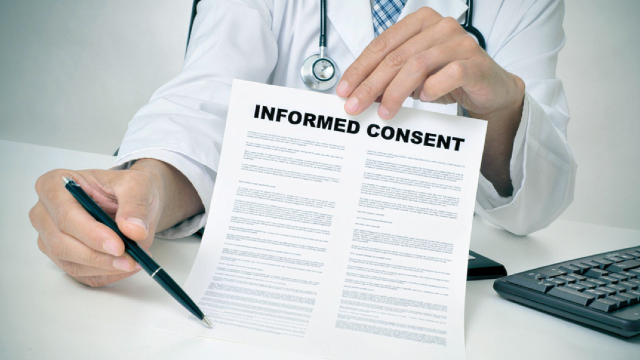
Informed consent is the process by which you are told, in advance, what a procedure involves: its expected benefits, its material risks and possible complications, the alternatives, and what recovery is likely to require. In the US, informed consent is heavily shaped by decades of case law and regulatory expectation. Abroad, the underlying standards may differ, and the documents you sign may be governed by the law of the country where you are treated.
Because your later legal options are limited, the consent process before surgery abroad carries even more weight. It is one of the few points where you have full control: you can read carefully, ask questions, and decline to proceed if anything is unclear. Practically, this means you should treat consent as an active process, not a form to sign on surgery day. Consider the following:
- Read every document before you travel, not at the clinic. Ask whether translated documents are available in English so you fully understand what you are agreeing to. Request them early enough to review calmly.
- Confirm what the documents actually cover — the specific procedure, the risks disclosed, revision policy language, and any clauses about dispute resolution or governing law. If a term is unclear, ask for it to be explained in writing.
- Understand the difference between a complication and a poor outcome. Surgery can be performed competently and still not produce the result you hoped for, because individual anatomy, healing, and technique all influence the result. A signed consent typically reflects that outcomes are not guaranteed.
- Keep your own copies of everything you sign, along with your consultation notes and correspondence.
A teleconsultation before you travel is a valuable part of this. It gives you a documented, English-supported conversation about candidacy, expectations, and risks well before you are on the ground and committed. At JNB Clinic, online and teleconsultation are available before traveling, and translated documents are available — both of which support a more deliberate consent process. You can arrange an initial conversation through the clinic's Contact Us page.
How a Clinic's Foreign-Patient Registration Fits In
When you research clinics in Korea, you will see various credentials and registrations. It helps to understand what they do and do not mean, because they are not a substitute for the legal protections discussed above — but they are meaningful signals about how a clinic is set up to work with international patients.
JNB Clinic is a Registered Medical Institution for Attracting Foreign Patients, certified by Korea's Ministry of Health and Welfare in compliance with the Medical Overseas Expansion and Foreign Patients Attraction Act, and operates under Business Registration No. 824-28-01938. This is a documented registration under a specific Korean legal framework created to govern how medical institutions serve international patients. In practical terms, it indicates that the clinic is recognized within the Korean system that oversees foreign-patient care.
It is important to be precise about what this registration is and is not:
- It is a Korean regulatory registration, operating within Korean law and administered by Korean authorities.
- It does not extend US legal protections to you, and it is not an accreditation by any US body. It does not change the jurisdictional realities described earlier.
- It is not a guarantee of any surgical outcome. No registration can promise a result; individual results vary and are not guaranteed.
Understanding this distinction is exactly the kind of clear thinking that helps you evaluate any clinic abroad. A foreign-patient registration is a reasonable thing to look for, but you should read it as "this clinic operates formally within Korea's system for international patients," not as "this restores the recourse I would have at home." You can review how JNB Clinic presents its services and registration on its official website.
Questions to Ask Before You Commit
Because your leverage is greatest before surgery, the most useful thing you can do is ask thorough questions during the consultation phase. Confirm the specifics directly with the clinic, since policies and documents vary. A practical list includes:
- Who is the operating surgeon, and what are their credentials? Confirm the individual, not just the clinic. At JNB Clinic, the founding physician is Dr. Kang Ju-Yong, a board-certified ENT (otolaryngology) and rhinoplasty surgeon.
- What does the consent documentation disclose, and can I receive an English version to review before I travel?
- What is the written policy on revision surgery if the result requires further work, including any conditions and timeframes? Confirm these details directly with the clinic.
- How are complications handled while I am still in Korea, and what follow-up is available after I return home?
- What are the clinic's hours, contact channels, and expected response times if I have an urgent concern after surgery? Remember that Seoul is 13–14 hours ahead of US Eastern Time, so plan around the time-zone gap.
- What governing law and dispute-resolution terms appear in the documents I will sign?
Writing down the answers, and keeping copies of the documents, protects you far more effectively than assuming a US-style safety net will be available later.
Planning Around the Practical Realities
Beyond the paperwork, the logistics of surgery abroad influence how manageable a complication would be. Rhinoplasty recovery unfolds over weeks and months, and swelling can take time to settle. Because you will generally return to the US before healing is complete, think through how issues would be handled remotely and who your local point of contact would be if you needed an in-person evaluation at home.
US State Department guidance on health abroad recommends that travelers plan for medical needs before departure, understand that care standards and legal frameworks differ by country, and carry appropriate documentation and insurance. For elective surgery specifically, that planning includes confirming what happens if you need to stay longer than expected, and understanding that standard travel insurance often excludes elective procedures and their complications. Confirm coverage details with your insurer directly.
International patients at JNB Clinic are generally advised to plan roughly 7–10 days in Korea after surgery, though the exact window varies and should be confirmed with the clinic. Building in buffer time reduces the pressure to fly home before your surgeon is comfortable clearing you, which is one of the more common avoidable problems in cross-border care.
Follow-up is the other piece worth mapping out in advance. Because rhinoplasty results continue to evolve for months, a genuine question during your first weeks home may not be an emergency and may not require legal remedy at all — it may simply require a responsive clinical channel. Confirm before you travel how the clinic supports patients after they return: which channels are used for follow-up questions, roughly how quickly you can expect a reply given the time difference, and whether a teleconsultation can be arranged if you have concerns about your healing. Knowing this in advance is far more useful in practice than any theoretical legal option, because most post-operative questions are clinical rather than legal. It is also sensible to identify, before you leave, a local physician at home who could examine you in person if an urgent issue arose while your surgeon in Seoul was unreachable, simply so you are not scrambling to find one during a stressful moment.
It is also worth being honest with yourself about expectations. A great deal of dissatisfaction after cosmetic surgery, at home or abroad, stems from a gap between what the patient hoped for and what was realistically achievable for their anatomy. Careful consultation, honest discussion of limits, and a clear understanding that results are not guaranteed do more to prevent regret than any legal document can. This is why the consultation and consent stage deserves your full attention.
Weighing the Decision Honestly
Choosing to have surgery abroad is a legitimate personal decision that many people make thoughtfully. The goal of this article is not to discourage you but to make sure you enter the decision with clear eyes. The reduced legal recourse is a genuine trade-off, and it is one that should be weighed alongside the surgeon's qualifications, the clinic's approach, the aftercare structure, and your own risk tolerance.
The ASPS briefing material on cosmetic surgery tourism emphasizes exactly this kind of due diligence: verify the surgeon, understand the procedure and its risks, plan for complications and follow-up, and recognize that traveling for surgery adds layers of complexity that stateside procedures do not carry. Reading that guidance alongside the clinic's own materials and asking direct questions is the most reliable way to protect yourself. No article, and no clinic, can promise a specific result or a specific legal outcome, and you should be cautious of anyone who does.
The Bottom Line
- Legal recourse for surgery abroad is limited and complex: US courts and state medical boards generally have no jurisdiction over an overseas clinic, and pursuing a claim means engaging a foreign legal system under different rules.
- Informed consent carries extra weight abroad. Read every document in advance, request English translations, and treat consent as an active process rather than a formality on surgery day.
- A clinic's foreign-patient registration — such as JNB Clinic's certification by Korea's Ministry of Health and Welfare — reflects operation within the Korean system, but it does not restore US protections or guarantee any outcome.
- Ask detailed questions before you commit, keep copies of everything, and confirm revision, complication, and dispute-resolution policies directly with the clinic.
- Individual results vary and are not guaranteed; weigh the reduced recourse honestly against the surgeon's qualifications, the aftercare plan, and your own risk tolerance.
Frequently Asked Questions
Can I sue a Korean clinic in a US court if something goes wrong? Generally, no. US courts typically have limited or no jurisdiction over a clinic operating entirely in another country. A dispute would usually be governed by the legal system of the country where care was delivered. This is a key reason to understand the legal framework and consent documents thoroughly before you travel. Consult a qualified attorney for advice on your specific situation.
Does JNB Clinic's foreign-patient registration protect me legally? It is a Korean regulatory registration. JNB Clinic is a Registered Medical Institution for Attracting Foreign Patients, certified by Korea's Ministry of Health and Welfare. This indicates the clinic operates formally within Korea's system for international patients, but it does not extend US legal protections to you and does not guarantee any surgical outcome.
What is the most important thing I can do to protect myself? Focus on the pre-surgery stage, where you have the most control. Read all consent and policy documents carefully — ideally in English, before you travel — ask direct questions about risks, revision policy, and complication handling, and keep your own copies of everything. This preparation matters more than assuming a US-style safety net will be available afterward.
How is informed consent different abroad? The underlying legal standards for informed consent can differ from those in the US, and the documents you sign may be governed by the law of the country where you are treated. Because later legal options are narrower, understanding exactly what you are consenting to — the procedure, the disclosed risks, and the policies — is especially important before surgery abroad.
Can I review documents in English before traveling to JNB Clinic? Translated documents are available at JNB Clinic, and online or teleconsultation is available before you travel. Request English-language documents early enough to review them calmly rather than on surgery day, and confirm the specifics directly with the clinic through its contact channels.
What happens if I need revision surgery after I return home? Revision policies vary by clinic and should be confirmed directly and in writing before you commit. Ask about any conditions, timeframes, and what would be involved in returning to Korea, as well as how the clinic supports follow-up remotely after you return to the US. Confirm these specifics with JNB Clinic.
Does travel insurance cover complications from elective surgery abroad? Often it does not. Standard travel and medical insurance frequently exclude elective cosmetic procedures and their complications. Review your policy carefully and confirm coverage details directly with your insurer before you travel, and plan for the possibility that you may need to stay longer than expected.
Is surgery abroad unsafe because recourse is limited? Limited recourse does not by itself make surgery unsafe, and reputable clinics operate in many countries. It does mean the trade-offs are different. The responsible approach is thorough due diligence — verifying the surgeon and clinic, understanding the risks, and planning for follow-up and complications — combined with realistic expectations, since results are never guaranteed.
This article is for general informational purposes and does not constitute individualized medical, legal, tax, or financial advice. Consult the appropriate qualified professional and confirm specifics with JNB Clinic.
More Articles
Continue reading our clinical guides.

Benefits of Stem Cell Therapy for Skin Rejuvenation
Discover the benefits of stem cell therapy for skin rejuvenation, including improved texture, reduced wrinkles, and a more youthful appearance.
Learn More

Recovery After Autologous Cartilage Nose Surgery
Learn what to expect during recovery after autologous cartilage nose surgery, including healing timelines, aftercare tips, and results.
Learn More

Revision Rhinoplasty: Everything You Need to Know Before Your Second Nose Surgery
Revision Rhinoplasty: Learn what to expect from a second nose surgery, including risks, recovery, and results. Explore your options and learn more.
Learn More