Personalized Nasal & Facial Care • Dedicated International Patient Concierge

Medical Guide
Krib-Co Rib Cartilage Rhinoplasty Reconstruction Guide
How JNB Clinic's Krib-Co rib cartilage rhinoplasty rebuilds nasal structure for complex, revision, and low-septal cases, plus recovery expectations.
Schedule a ConsultationKrib-Co Rib Cartilage Rhinoplasty Reconstruction Guide
Medically reviewed by Dr. Kang Ju-Yong, Board-Certified ENT (Otolaryngology) & Rhinoplasty Surgeon, JNB Clinic
When a nose needs to be rebuilt rather than simply refined, rib cartilage rhinoplasty is often the technique that makes it possible. Krib-Co is JNB Clinic's rib cartilage rhinoplasty for full structural reconstruction, one of three in-house, implant-free, 100% autologous-cartilage techniques developed by Dr. Kang Ju-Yong at this ENT-led practice in Gangnam, Seoul. It uses the patient's own rib cartilage to create strong, lasting nasal support, and it is designed for the more demanding situations: complex cases, revision surgery, and noses where there is not enough septal cartilage to work with. This guide explains how Krib-Co works, who it tends to suit, and what to expect from the process.
What Krib-Co Rib Cartilage Rhinoplasty Is
Krib-Co reconstructs and supports the nose using cartilage harvested from your own rib rather than a synthetic implant such as silicone or Gore-Tex. Because rib cartilage is strong and available in a larger quantity than ear or septal cartilage, it can provide the robust framework that major reconstruction requires. That makes it fundamentally different from a refinement-only procedure: Krib-Co is about building structure.
Rhinoplasty is widely recognized in the surgical literature as one of the most technically demanding facial procedures, and structural reconstruction sits at the more complex end of that spectrum. The nose is a three-dimensional framework where shape and airflow depend on the same underlying support. When that support is weak, absent, or previously damaged, rebuilding it well calls for both a durable graft material and careful engineering. Krib-Co is JNB Clinic's answer to that challenge, performed under general or deep sedation and planned around each patient's individual anatomy.
Why Rib Cartilage for Reconstruction
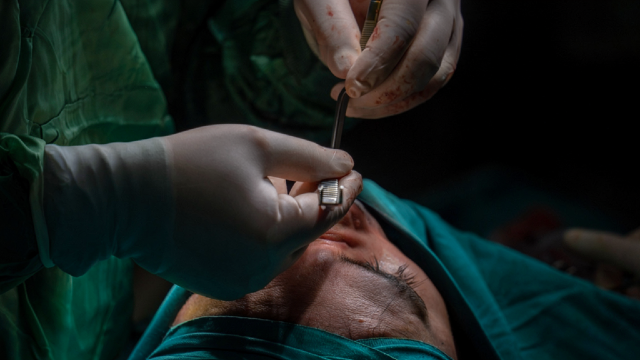
Surgeons choose a graft source based on how much support a nose needs. Ear cartilage is soft and pliable, ideal for gentle tip refinement. Septal cartilage, taken from inside the nose, provides moderate structural support. Rib cartilage sits at the strong end of the range and offers a larger, sturdier supply, which is why it is a standard choice for major structural work and complex reconstruction in the broader rhinoplasty field.
Using your own rib cartilage also keeps the reconstruction implant-free. This is designed to reduce the foreign-body concerns some patients associate with synthetic implants, such as displacement over time, capsule formation, or the prospect of future removal. The trade-offs discussed in the general literature and by JNB Clinic are honest ones: rib cartilage requires an additional harvest site on the chest and generally involves a longer, more involved recovery than a minor tip procedure. Whether that trade-off is worthwhile depends entirely on what your nose needs.
How the Rib Cartilage Is Harvested and Used
A frequent question is how a graft taken from the chest becomes a refined nose. At JNB Clinic, the general sequence is:
- Consultation and planning. The surgeon evaluates your nasal structure, facial balance, and breathing function, then designs a personalized surgical plan and confirms whether rib cartilage is the most appropriate approach.
- Rib cartilage harvesting. A small piece of your own rib cartilage is carefully collected from the lower chest.
- Cartilage preparation. The harvested cartilage is separated into structural cartilage, used for the nasal pillar and columella support, the bridge, and the lateral framework, and finely diced volume cartilage, used to shape the tip and refine the dorsal line.
- Nasal reconstruction. The shaped cartilage is placed to build, support, and refine the nose using an implant-free approach.
- Completion. The nose is checked for shape and stability before the procedure is finished.
This division of the cartilage into structural and volume components is what allows a single graft source to both hold the nose up and shape its surface. Because the reconstruction is built from living tissue that integrates with your body, JNB describes the results as designed for long-term stability and a natural appearance. As with any surgery, individual results vary and are not guaranteed.
The engineering behind this matters more in reconstruction than in refinement. When a nose has lost support, or never had enough of it, the framework has to carry the shape over the long term while looking natural from every angle. Rib cartilage gives the surgeon enough material to build genuine structural pillars, then to soften the visible surface with finely diced volume grafts so the result does not look rigid or carved. JNB Clinic plans this using structural nasal analysis and airway evaluation, so the reconstruction is designed around both how the nose looks and how it breathes. Getting that balance right is why structural reconstruction is considered among the more technically demanding areas of rhinoplasty, and why an experienced surgeon's judgment is central to the outcome.
Who Krib-Co May Suit
Krib-Co is a reconstruction technique, so it is matched to situations that genuinely call for stronger support. Based on JNB Clinic's documented criteria, it may be suitable for people who:
- Require stronger structural support than ear or septal cartilage can provide.
- Have insufficient septal cartilage available, for example after previous surgery.
- Are pursuing revision rhinoplasty to improve or correct an earlier operation.
- Need complex nasal reconstruction combining aesthetic and functional goals.
- Want an implant-free result built entirely from their own cartilage.
Revision cases deserve particular mention. When a previous rhinoplasty has used up or weakened the septal cartilage, there may simply not be enough local material left to rebuild with. Rib cartilage provides a fresh, ample supply, which is why it is so often associated with revision and reconstructive work. Krib-Co can also be combined with functional procedures where breathing needs to be addressed alongside structure, so form and function are planned together. You can read more about JNB Clinic's implant-free philosophy on the JNB Clinic website.
Because this is complex surgery, technique selection is always individualized after an anatomical and airway assessment. Standard guidance on choosing a rhinoplasty surgeon stresses that a qualified surgeon should evaluate your specific situation, review your history, and confirm that the planned approach fits your goals before you proceed.
What Recovery Realistically Looks Like

Rib cartilage reconstruction is more involved than a minor refinement, and recovery reflects that. Rhinoplasty recovery in general follows a predictable arc: initial swelling and bruising in the first weeks, steady improvement over the following months, and final refinement of the tip that can take up to a year or longer to fully settle. Krib-Co follows this pattern, with the added consideration of a chest harvest site that also needs time to heal.
JNB Clinic advises that recovery timelines vary with the individual surgical plan and healing process, so specifics should be confirmed with the clinic directly. What is consistent is the importance of protecting the nose from pressure or impact, keeping the surgical area clean, following activity restrictions, and attending scheduled follow-up visits so healing and stability can be monitored. Good aftercare is central to preserving the position of the rib cartilage graft and supporting a natural result.
JNB Clinic runs a structured JNB Signature Post-Surgery Care program with up-to-one-year follow-up. Its documented phases include splint removal, suture removal, and later skin care, and it uses supportive aftercare components such as hyperbaric oxygen therapy and Smart LED care. These are described as parts of JNB's recovery support rather than treatments with any promised outcome. International patients generally plan to stay in Korea for roughly 7–10 days after surgery for follow-up and dressing care, with final recovery continuing at home and online follow-up available if needed.
Risks and Honest Expectations
All rhinoplasty carries risk, and reconstruction with rib cartilage is no exception. General and JNB-documented considerations include swelling, bruising, bleeding, infection, temporary or persistent nasal blockage, changes in smell, and asymmetry. Grafts can, in some cases, displace, warp, or partially absorb, and a revision procedure may occasionally be needed. Rib harvesting adds a second surgical site to consider, and your surgeon will explain what that involves.
Choosing your own cartilage is intended to reduce certain implant-specific concerns, but it does not eliminate surgical risk. An open, detailed conversation about these possibilities, together with your goals and medical history, is a normal and essential part of planning complex nasal surgery. If you would like a personalized evaluation, you can reach the team through the contact page.
How Krib-Co Fits Among JNB's Techniques
Krib-Co is the most structural of JNB Clinic's three Signature techniques. KE-Co uses ear cartilage through a closed approach for tip refinement, and KB-Co is a closed hybrid combining septal and ear cartilage. Krib-Co steps in when the priority is rebuilding a strong, stable framework, most often in complex, revision, or low-septal-cartilage cases. The right technique for any individual is decided only after assessment by an ENT specialist, weighing how much support the nose needs against the patient's aesthetic and functional goals.
The Bottom Line
- Krib-Co is an implant-free rhinoplasty that rebuilds nasal structure using the patient's own rib cartilage, providing strong, lasting support.
- It is designed for complex, revision, and functional cases, and for noses with insufficient septal cartilage, rather than for minor refinement.
- Rib cartilage is separated into structural and volume components so a single graft source can both support the nose and shape it.
- Recovery is more involved than a minor procedure, includes a chest harvest site, and timelines vary by individual; results are not guaranteed.
- Technique selection is individualized after an assessment by an ENT specialist, and JNB Clinic supports healing with its structured Post-Surgery Care program.
Frequently Asked Questions
Why would I need rib cartilage instead of ear or septal cartilage?Rib cartilage provides a larger, stronger supply than ear or septal cartilage, so it is chosen when a nose needs substantial structural support, as in complex reconstruction or revision cases where little septal cartilage remains.
Is Krib-Co implant-free?Yes. Krib-Co is a 100% autologous technique using only your own rib cartilage. It is implant-free, which is designed to reduce foreign-body concerns associated with synthetic implants.
Is Krib-Co suitable for revision rhinoplasty?It is often used for revision and complex cases. When a previous surgery has weakened or used up the septal cartilage, rib cartilage offers a fresh, ample source for rebuilding. Suitability is confirmed after an individualized assessment.
What anesthesia is used?Krib-Co is performed under general or deep sedation. The specifics for your case are discussed and confirmed during your consultation.
How long is recovery, and how long should I stay in Korea?Recovery is more involved than a minor procedure and varies by individual. International patients generally plan to stay in Korea for about 7–10 days for follow-up and dressing care, with final recovery continuing at home and online follow-up available if needed.
Will there be a scar on my chest from harvesting?Rib cartilage is collected through a small chest incision, which leaves a harvest-site scar. Your surgeon will explain placement and healing. The nasal work itself is planned to support a natural result.
Can Krib-Co improve my breathing as well as appearance?Yes, it can be combined with functional procedures when breathing needs to be addressed alongside structure. Whether this applies to you is determined after an airway and structural assessment.
How much does Krib-Co cost?Pricing is individualized based on your specific plan and is not listed here. Please confirm details directly with JNB Clinic.
This article is for general informational purposes and does not constitute individualized medical advice. All procedures carry risks; individual results vary and are not guaranteed. Consult a qualified physician and confirm details with JNB Clinic.
More Articles
Continue reading our clinical guides.

Benefits of Stem Cell Therapy for Skin Rejuvenation
Discover the benefits of stem cell therapy for skin rejuvenation, including improved texture, reduced wrinkles, and a more youthful appearance.
Learn More

Recovery After Autologous Cartilage Nose Surgery
Learn what to expect during recovery after autologous cartilage nose surgery, including healing timelines, aftercare tips, and results.
Learn More

Revision Rhinoplasty: Everything You Need to Know Before Your Second Nose Surgery
Revision Rhinoplasty: Learn what to expect from a second nose surgery, including risks, recovery, and results. Explore your options and learn more.
Learn More