Personalized Nasal & Facial Care • Dedicated International Patient Concierge

Medical Guide
KB-Co Septal & Ear Cartilage Hybrid Rhinoplasty Guide
KB-Co is JNB Clinic's septal + ear cartilage hybrid rhinoplasty, done through a closed technique with no external incisions. Here is how it works.
Schedule a ConsultationKB-Co Rhinoplasty: The Septal and Ear Cartilage Hybrid Explained
Medically reviewed by Dr. Kang Ju-Yong, Board-Certified ENT (Otolaryngology) & Rhinoplasty Surgeon, JNB Clinic
If you are researching a nose surgery that uses your own tissue rather than an artificial implant, KB-Co septal and ear cartilage hybrid rhinoplasty is one of the techniques you may come across. Developed in-house at JNB Clinic in Gangnam, Seoul, KB-Co combines two of your own cartilage sources — septal cartilage for structural support and ear cartilage for soft, natural tip refinement — through a closed approach that leaves no external incisions. This guide walks through what the technique is, who it may suit, how it is performed, and what recovery realistically looks like, so you can have a more informed conversation before you decide on anything.
KB-Co is one of three implant-free JNB Signature techniques, alongside KE-Co (ear cartilage) and Krib-Co (rib cartilage). What distinguishes KB-Co is the deliberate pairing of two cartilage types, each chosen for a specific role in the nose. Because it relies entirely on your own tissue, it is designed to reduce the concerns that can accompany silicone or other foreign-body implants, while still giving the surgeon enough structural material to reinforce the nasal framework and refine the tip.
What Is KB-Co Rhinoplasty?
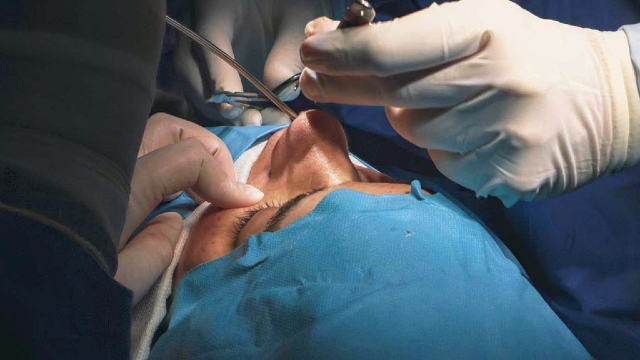
KB-Co — short for "Septal & Ear Cartilage Hybrid Rhinoplasty" — is a customized nose surgery that uses the patient's own septal cartilage and ear cartilage to refine nasal structure, improve tip definition, and support a natural-looking result. Rather than treating the nose as a single cosmetic feature, JNB Clinic designs the procedure to balance facial harmony while also considering nasal function and breathing.
The word "hybrid" is the key idea. Different parts of the nose have different needs. The central framework of the nose benefits from firm, straight cartilage that can hold a shape over time, whereas the tip benefits from softer, more pliable cartilage that will not look or feel harsh under the skin. KB-Co addresses both needs at once by drawing on two donor sources rather than relying on a single one.
Rhinoplasty in general is one of the more nuanced operations in aesthetic and reconstructive surgery. As the peer-reviewed reference StatPearls notes, the procedure demands careful attention to both the external appearance and the internal architecture that supports it, because the nose is simultaneously a facial centerpiece and a functional airway. KB-Co is JNB Clinic's answer to that dual demand, using autologous (your own) cartilage and an ENT-led, function-aware surgical plan.
Two Cartilages, Two Jobs: Support and Refinement
The logic behind KB-Co becomes clearer once you understand what each cartilage source contributes.
- Septal cartilage — for support. The septum is the wall of cartilage and bone that divides the two sides of your nose. Septal cartilage is relatively straight and firm, which makes it well suited to structural work: reinforcing the framework, supporting projection, and helping the nose hold its shape as it heals. When septal cartilage is available and healthy, it is a natural first choice for the load-bearing parts of the reconstruction.
- Ear cartilage — for soft tip refinement. Cartilage taken from the ear (conchal cartilage) has a gentle natural curve and a softer character. This makes it a good match for the nasal tip, where the goal is a refined, natural contour that does not look overly rigid or "operated on." Ear cartilage is harvested in a small amount and shaped to add definition where the skin is thin and forgiving.
By combining the two, KB-Co aims to give the surgeon firm material where the nose needs to stand up straight and soft material where the nose needs to look and feel natural. This is different from techniques that use only one cartilage type. It is also worth knowing that septal cartilage is not always sufficient on its own — some patients have a weak or limited septal framework — which is one reason a hybrid approach that supplements with ear cartilage can be useful.
The Closed "Nasal Impact" Technique: No External Incisions
KB-Co is performed using what JNB Clinic describes as a closed "nasal impact" technique, meaning the surgery is carried out through incisions placed inside the nose. There are no external incisions across the columella (the strip of skin between the nostrils), so there is no visible external scar from the primary approach.
In rhinoplasty terminology, this is a closed (endonasal) approach, as opposed to an open approach where a small incision is made across the columella to lift the skin. Both approaches are legitimate and widely used; the choice depends on the surgeon's technique, the complexity of the case, and the goals of the surgery. JNB Clinic's Signature techniques, including KB-Co, are built around the closed approach and the use of the patient's own cartilage, with the aim of achieving natural-looking results without visible external scarring.
A closed technique does not mean a simpler operation. Working through internal incisions requires precise handling of the cartilage grafts and careful reshaping of the nasal framework so that support, symmetry, and tip contour all come together. The surgeon checks the nose for symmetry and function before closing the internal incisions.
Why an ENT-Led Approach Matters

At JNB Clinic, rhinoplasty is led by Dr. Kang Ju-Yong, a board-certified ENT (otolaryngology) and rhinoplasty surgeon who developed the KB-Co technique in-house. An ear, nose, and throat background places particular emphasis on how the nose works, not only how it looks.
This matters because the nose is an airway as much as a facial feature. The septum, in particular, sits at the intersection of appearance and breathing. As the Mayo Clinic explains, a deviated septum — when the wall between the nasal passages is displaced to one side — can narrow the airway and contribute to nasal congestion or difficulty breathing through the nose. Any surgery that harvests or reshapes septal cartilage has to respect that functional role and leave enough support behind to keep the airway stable.
KB-Co is designed with this balance in mind. The consultation includes structural and airway assessment, including evaluation of the septum and the internal nasal condition, and the surgical plan is built to address both the shape you want and the breathing you rely on. When functional concerns such as breathing issues are present, they can be considered as part of the same plan. You can read more about JNB Clinic's overall approach on the JNB Clinic website.
It Is Not the Same as Septoplasty
Because KB-Co uses septal cartilage, it is worth clarifying how a cosmetic-and-structural rhinoplasty differs from a septoplasty. As the American Society of Plastic Surgeons (ASPS) describes, rhinoplasty and septoplasty are related but distinct procedures. Rhinoplasty reshapes the nose — its size, contour, and proportions — while septoplasty is a functional operation that straightens a deviated septum to improve airflow. The two are sometimes performed together in a single operation (often called a septorhinoplasty) when a patient has both a cosmetic goal and a breathing concern.
KB-Co is fundamentally a rhinoplasty technique: its purpose is to refine and support the shape of the nose using your own cartilage. It draws on septal cartilage as a graft material and, because it is ENT-led, it is planned with breathing function in mind. If you have a functional problem such as a significantly deviated septum, that is something to raise specifically during consultation so the surgeon can advise whether a functional correction should be part of your plan.
Who Might Be a Candidate for KB-Co?
KB-Co may be suitable for patients who want natural nose reshaping with structural support. Based on JNB Clinic's documented guidance, this can include people who have:
- A weak or insufficient septal cartilage framework that benefits from supplemental support
- Nasal tip refinement needs, where softer ear cartilage helps create a natural contour
- A desire for implant-free rhinoplasty using their own tissue
- Functional concerns such as breathing issues that can be considered alongside the aesthetic plan
Good candidates generally have realistic goals, reasonably healthy nasal structures, and a willingness to follow a personalized plan built around their own anatomy. Suitability is not something you can confirm from an article — it is determined during an individualized consultation that includes examination and imaging. If you are unsure whether KB-Co or another technique is the better fit, that is exactly the kind of question a consultation is meant to answer. You can start that conversation through the JNB Clinic contact page.
What the KB-Co Process Looks Like
While every plan is individualized, the documented KB-Co process at JNB Clinic generally follows these stages:
- Consultation and nasal diagnosis. The surgeon evaluates nasal shape, septum condition, airway function, and your desired outcome.
- Surgical planning. A customized plan is created based on your nasal structure, including how septal and ear cartilage will be used.
- Septal cartilage preparation. Available septal cartilage is carefully used for structural support and refinement.
- Ear cartilage harvesting (if needed). A small amount of cartilage is collected from the ear to add support and shape.
- Nasal structure correction. The framework is reshaped and reinforced to improve balance, stability, and function.
- Tip refinement and shaping. Cartilage is placed to create a natural-looking tip and contour.
- Final adjustment and closure. The nose is checked for symmetry and function, then the internal incisions are closed.
Because KB-Co is implant-free, the surgery aims to reduce implant-related concerns. Cartilage healing and individual tissue responses still influence the final result, which is why planning and aftercare are treated as part of the same continuum rather than as separate steps.
Recovery and What to Expect Afterward
Recovery from KB-Co is gradual. Initial swelling and bruising typically improve during the first one to two weeks, and most patients can return to daily activities as swelling decreases. The nasal shape continues to refine over the following months as the tissues heal and the cartilage settles.
A useful point to keep in mind is that the nasal tip is often the last area to fully settle after any rhinoplasty. Subtle swelling around the tip can persist for months before the final contour is visible. This is normal and expected, not a sign that anything has gone wrong. The Mayo Clinic similarly notes that recovery after rhinoplasty is a gradual process and that the final result develops over time.
JNB Clinic provides a structured aftercare program with follow-up visits to monitor healing, cartilage stability, and nasal shape development. International patients typically plan to stay in Korea for roughly 7 to 10 days after surgery to attend early follow-up and splint or dressing care before traveling home, with the remainder of recovery continuing at home and online follow-up available where needed. During recovery, avoiding pressure or impact on the nose helps support healing and long-term results.
Risks and Realistic Expectations
No surgery is without risk, and KB-Co is no exception. The documented possible risks include swelling, bruising, pain, infection, bleeding, temporary or persistent nasal blockage, changes in smell, asymmetry, graft displacement, warping or absorption of cartilage, contour irregularities, and the possibility of revision surgery.
Because KB-Co uses your own septal and ear cartilage without artificial implants, it is designed to reduce implant-related concerns specifically. However, using your own tissue does not eliminate risk — cartilage can warp, shift, or be partially absorbed as it heals, and individual tissue responses vary. Results depend on each patient's nasal anatomy, skin condition, and healing process. Outcomes are individual and are not guaranteed, and some patients may ultimately need a revision procedure. An honest consultation should cover these possibilities openly so your expectations are grounded in what is realistic for your anatomy.
The Bottom Line
- KB-Co is a hybrid, implant-free rhinoplasty that uses your own septal cartilage for structural support and ear cartilage for soft, natural tip refinement.
- It is performed through a closed "nasal impact" technique with no external incisions, so there is no visible external scar from the primary approach.
- It is ENT-led at JNB Clinic, with breathing and internal nasal function considered alongside appearance, and the septum's functional role respected.
- Recovery is gradual, with early swelling easing over a few weeks and the tip continuing to refine over months; results are individual and not guaranteed.
- Candidacy is confirmed only through consultation, including examination and imaging — an article can inform your questions but cannot replace a personalized assessment.
Frequently Asked Questions
What does "KB-Co" stand for?KB-Co is JNB Clinic's in-house name for its Septal & Ear Cartilage Hybrid Rhinoplasty. It is one of three implant-free JNB Signature techniques, alongside KE-Co (ear cartilage) and Krib-Co (rib cartilage), each developed by Dr. Kang Ju-Yong.
Why does KB-Co use two different cartilages?Different parts of the nose have different needs. Septal cartilage is firmer and suited to structural support, while ear cartilage is softer and suited to refining the tip naturally. Combining them lets the surgeon match the right material to each area.
Will I have a visible scar?KB-Co uses a closed technique with internal incisions and no external incisions from the primary approach, so there is no visible external scar. Ear cartilage harvesting is done in a small, discreet area. Discuss scar details for your specific case during consultation.
Is KB-Co the same as a septoplasty?No. KB-Co is a rhinoplasty technique focused on reshaping and supporting the nose using your own cartilage. Septoplasty is a functional operation that straightens a deviated septum. The two can be planned together when both a cosmetic goal and a breathing concern are present.
Can KB-Co help with breathing?KB-Co is ENT-led, so airway function is assessed and considered in the surgical plan. If you have a functional concern such as a deviated septum, raise it specifically so the surgeon can advise whether a functional correction should be included in your plan.
How long is the recovery?Swelling and bruising generally improve over the first one to two weeks, with daily activities resuming as swelling decreases. The nasal shape refines over several months, and subtle tip swelling can take longer to fully settle. Individual healing varies.
Does using my own cartilage guarantee a better result?Using autologous cartilage is designed to reduce implant-related concerns, but no technique guarantees a specific outcome. Cartilage can warp, shift, or be partially absorbed, and results depend on your anatomy and healing. Realistic expectations are essential.
How do I find out if I am a candidate?Candidacy is determined through an individualized consultation that includes examination and imaging. You can request a consultation or teleconsultation through JNB Clinic's contact page, where English-language support is available for international patients.
This article is for general informational purposes and does not constitute individualized medical advice. All procedures carry risks; individual results vary and are not guaranteed. Consult a qualified physician and confirm details with JNB Clinic.
More Articles
Continue reading our clinical guides.

Benefits of Stem Cell Therapy for Skin Rejuvenation
Discover the benefits of stem cell therapy for skin rejuvenation, including improved texture, reduced wrinkles, and a more youthful appearance.
Learn More

Recovery After Autologous Cartilage Nose Surgery
Learn what to expect during recovery after autologous cartilage nose surgery, including healing timelines, aftercare tips, and results.
Learn More

Revision Rhinoplasty: Everything You Need to Know Before Your Second Nose Surgery
Revision Rhinoplasty: Learn what to expect from a second nose surgery, including risks, recovery, and results. Explore your options and learn more.
Learn More