Personalized Nasal & Facial Care • Dedicated International Patient Concierge

Medical Guide
Is Stem Cell Therapy Safe for Skin Rejuvenation? FAQ
Is stem cell therapy safe for skin rejuvenation? What the term actually covers, what determines risk, where the evidence stands, and what to ask first.
Schedule a ConsultationIs Stem Cell Therapy Safe for Skin Rejuvenation?
Medically reviewed by Dr. Kang Ju-Yong, Korean Board-Certified Otorhinolaryngologist (ENT Specialist)
Is stem cell therapy safe for skin rejuvenation? The honest answer is that the question cannot be settled for the whole category at once, because "stem cell" is used on clinic websites to describe several quite different things. The American Society of Plastic Surgeons, reporting on where this field currently stands, frames safety as dependent on sourcing, sterility, processing and physician oversight rather than on the label attached to a treatment. This article sets out what the term covers, what public bodies say about the evidence, and the questions that separate a considered treatment plan from a marketing promise.
One Phrase, Three Different Things
ASPS identifies the confusion at the root of most patient questions, and untangling it is the single most useful step before any consultation.
The first thing is stem cell research: the science of how these cells function and communicate. Stem cells are defined by two abilities, self-renewal and support for tissue repair, and the aesthetic interest in them follows from the observation that skin aging involves inflammation, collagen loss and slower healing, not just lines.
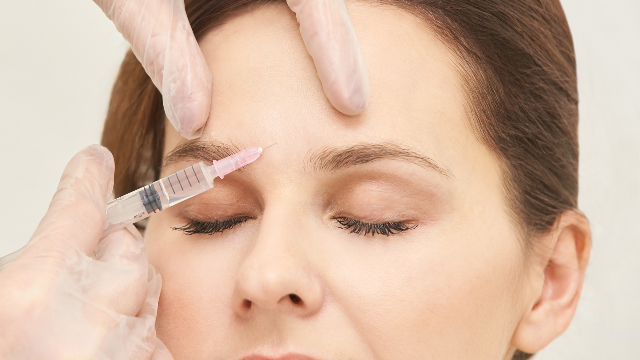
The second thing is stem cell-derived ingredients. ASPS lists conditioned media, growth factors and exosomes in this group — products or signals released by cells rather than the cells themselves. Many skincare products marketed under a stem cell banner contain material of this kind and no living cells at all.
The third thing is treatment using living cells in a patient. ASPS describes this as a substantially more complex medical category than the first two.
A patient comparing offers is often comparing items from different rows of that list without knowing it. Asking which of the three is on the table is not a hostile question; it is the first clinical one.
What ASPS Says Determines the Risk
ASPS does not treat regenerative aesthetics as uniformly safe or uniformly suspect. Its reporting points instead at the variables.
Safety, in that account, depends on where the material came from, whether it was handled sterilely, how it was processed, and whether a qualified physician is directing the care. Patients are advised to be cautious about treatments making dramatic claims without strong supporting evidence, and to seek clinicians who are transparent about which parts of the field are established, which are promising, and which remain investigational.
Two further cautions in the same piece are worth carrying into any consultation. Marketing in this area has moved faster than the evidence, so terms that sound impressive may not correspond to published data. And "stem cell" does not automatically mean a treatment is more effective or more natural than an alternative.
Where the Evidence Currently Sits
ASPS places fat grafting among the most established regenerative applications in plastic surgery: transferred fat contains adipose-derived stromal cells and other supportive cells, and the technique is used both to restore volume and to improve tissue quality, including in thinned tissue and scarring.
Interest in exosomes and conditioned media used after procedures such as lasers or microneedling is described as growing, with two explicit qualifications — the science is still evolving, and product quality can vary significantly between suppliers. ASPS also reports the expectation that the field will move toward more refined, standardized, cell-derived therapies rather than toward injecting living cells indiscriminately.
The limit is stated just as plainly. Stem cell-derived products may support skin quality and healing, but they do not replace resurfacing, retinoids, sun protection, surgery or general skin health. Claims that any such product reverses aging on its own are listed by ASPS among the common misconceptions.
An Additional Caution for Patients Traveling for Treatment
The CDC's Yellow Book addresses procedures of this general type from a different angle, and the statement is blunt: many procedures involving injection of human or nonhuman cells have no scientific evidence to support a therapeutic benefit, and adverse events have been reported.
The chapter also documents a concrete example. An outbreak of Q fever was identified among travelers to Germany who had received live cell injections — a reminder that the question is not only whether a preparation works but whether it was produced and handled safely.
More broadly, the CDC records infection-related problems as the most common complications among patients who travel internationally for medical care, with inadequate infection-control practices raising exposure to bloodborne and wound infections. That is an argument for physician-led care in a properly run medical facility, whatever the treatment.
The Baseline Risks of Any Skin Treatment
Even setting aside the regenerative question, ASPS is clear that skin rejuvenation is a medical procedure and carries risk, and that risk is higher in some patients depending on skin type, medical conditions, allergies and medications.
The risks it lists for skin rejuvenation and resurfacing include infection, delayed wound healing, hypersensitivity or allergic-type reactions, pigmentation irregularities, textural changes, skin surface irregularities, burns and scarring, reactivation of herpes zoster in susceptible people, and increased susceptibility to sunburn. ASPS adds that such treatments should be performed by fully trained professionals in a medical office under the direct supervision of a physician, and that all of these risks should be discussed before consent.
These are the standard considerations that belong in any conversation about an injectable or energy-based facial treatment, regenerative or not.
What JNB Clinic Documents About Its Own Service
JNB Clinic lists stem cell therapy among its specialty categories. The description covers stem-cell-derived treatments intended to support tissue regeneration and skin or recovery quality, offered in an infusion format and a skin injection format, together with an application used alongside revision rhinoplasty where tissue stabilization is part of the plan.
The documented pathway is consultation-led. A patient begins with a one-to-one consultation in which the medical team reviews their concerns, medical history and treatment goals. A detailed examination and diagnosis follow, used to assess the individual's condition and determine whether the treatment is appropriate for them at all. A personalized plan is then drawn up, the treatment is performed by the medical team according to that plan, and aftercare instructions and follow-up are provided to monitor recovery.
The clinic also records circumstances in which treatment should wait: patients who are pregnant, who have an active skin infection in the area concerned, or who have not yet completed a consultation confirming the treatment is a fit for them, should be evaluated before proceeding. Its published material directs patients to discuss their individual risk profile with the treating physician during that consultation, and describes care as physician-directed, with individualized planning, detailed facial and skin analysis and structured post-treatment management. Dr. Kang Ju-Yong is a member of the Korean Society of Stem Cell Therapy.
For the specifics of any individual plan, the clinic's contact page is the appropriate route, and its about page describes the practice and its physician-led model in more detail.
Questions Worth Asking Before You Agree
ASPS's advice translates into a short list that works in any consultation, anywhere.
Ask which of the three categories above the treatment belongs to — research-adjacent skincare, a cell-derived preparation, or living cells. Ask what is actually in the preparation, where the material originates, and how it is processed and stored. Ask what clinical data exists behind the specific claim being made to you, and how long that data has been available. Ask who performs the treatment and who supervises it. Ask what the realistic expectation is, how it will be judged, and what happens if nothing changes.
A clinician willing to say which parts of the answer are established and which are still emerging is giving you more useful information than one who reports certainty across the board.
The Bottom Line
- "Stem cell" covers three distinct things in aesthetics — research, cell-derived ingredients such as conditioned media and exosomes, and treatment with living cells — and they are not interchangeable.
- ASPS ties safety in this field to sourcing, sterility, processing and physician oversight, and advises caution toward dramatic claims unsupported by evidence.
- Fat grafting is described by ASPS as among the most established regenerative applications; interest in exosomes and conditioned media is growing, but the science is evolving and product quality varies.
- The CDC states that many procedures involving injection of human or nonhuman cells have no scientific evidence of therapeutic benefit and that adverse events have been reported.
- JNB Clinic documents a consultation-led pathway — history review, examination and diagnosis, individualized plan, treatment, aftercare — with suitability decided for each patient before anything proceeds.
Frequently Asked Questions
Does "stem cell" on a treatment menu mean living cells are being used?
Not necessarily. ASPS notes that many products marketed this way contain material released by cells, such as growth factors or conditioned media, rather than live cells. The distinction matters clinically and is worth asking about directly.
Is a treatment using my own tissue automatically safer?
Using autologous material removes some concerns and does not remove others. ASPS still points to processing, sterility and physician oversight as determinants of risk, and the CDC's infection-control warnings apply to any procedure in which tissue is handled outside the body.
What results should I expect, and when?
JNB Clinic's published material describes initial changes that may appear soon after treatment, with final results settling over subsequent weeks to months, and timing that varies with the individual's condition and response. ASPS separately cautions that regenerative products are not substitutes for established treatments or for basic skin care.
Who should postpone this kind of treatment?
The clinic names pregnancy, an active skin infection in the treatment area, and the absence of a completed consultation confirming suitability as reasons to wait until evaluated. Individual circumstances are assessed in the consultation.
What side effects are typical of skin treatments generally?
ASPS lists infection, delayed healing, allergic-type reactions, pigmentation irregularities, textural changes, burns and scarring among the possible risks of skin rejuvenation and resurfacing, with susceptibility varying by skin type, medication use and medical history.
Does traveling abroad for this kind of treatment change the risk picture?
It adds a layer. The CDC records infection-related complications as the most common problem among people who travel for medical care, and advises researching the provider and facility thoroughly in advance rather than relying on marketing material.
How do I find out whether I am a candidate?
Through examination and consultation rather than from an article. Eligibility at JNB Clinic is determined after an individual assessment of the patient's condition, history and goals, and enquiries are handled through the clinic's contact channel.
Shared for informational purposes and educational purposes, this article is general information and not a self-diagnosis tool; whether any regenerative or skin treatment is appropriate for an individual is a judgment for a qualified medical professional after examination.
More Articles
Continue reading our clinical guides.

Benefits of Stem Cell Therapy for Skin Rejuvenation
Discover the benefits of stem cell therapy for skin rejuvenation, including improved texture, reduced wrinkles, and a more youthful appearance.
Learn More

Recovery After Autologous Cartilage Nose Surgery
Learn what to expect during recovery after autologous cartilage nose surgery, including healing timelines, aftercare tips, and results.
Learn More

Revision Rhinoplasty: Everything You Need to Know Before Your Second Nose Surgery
Revision Rhinoplasty: Learn what to expect from a second nose surgery, including risks, recovery, and results. Explore your options and learn more.
Learn More