Personalized Nasal & Facial Care • Dedicated International Patient Concierge

Medical Guide
Insurance and Financing for Rhinoplasty Abroad
How US health insurance treats elective rhinoplasty abroad, the role of travel insurance riders, and how general financing works for a Korea trip.
Schedule a ConsultationInsurance and Financing for Rhinoplasty Abroad: What US Patients Should Know
Medically reviewed by Dr. Kang Ju-Yong, Board-Certified ENT (Otolaryngology) & Rhinoplasty Surgeon, JNB Clinic
If you are a US resident weighing rhinoplasty in Seoul, one of the first practical questions is how insurance and financing actually work when the surgery happens overseas. The short, honest answer is that US health insurance generally does not cover elective cosmetic surgery performed abroad, and the US government does not pay medical bills you incur in another country. That does not make travel for rhinoplasty impossible or unwise — it simply means you should plan the money side deliberately, with clear expectations, rather than assuming a domestic-style benefit will follow you across borders. This article walks through how coverage is typically treated, what travel and medical insurance riders can and cannot do, how general third-party financing works, and how elective cosmetic procedures are usually treated for US tax purposes. It contains no prices and endorses no specific lender; instead, it gives you the questions and the framework to make an informed decision and to confirm the specifics with the right professionals.

Does US health insurance cover cosmetic rhinoplasty performed abroad?
In most cases, no. US health plans are designed around a network of contracted domestic providers and a set of "covered services" defined in your plan documents. Elective cosmetic surgery — a procedure chosen primarily to change appearance rather than to treat a diagnosed medical condition — is typically excluded from coverage even when it is performed in the United States. When that same elective procedure is performed at a clinic overseas, two exclusions usually stack on top of each other: the cosmetic exclusion and the out-of-network, out-of-country limitation. The result is that a purely cosmetic rhinoplasty abroad is generally something you should expect to pay for yourself.
It is worth reading your specific plan language rather than relying on general assumptions. Look for the sections on "cosmetic procedures," "services received outside the United States," and "out-of-network care." Some plans provide limited emergency coverage while you are traveling, but emergency travel coverage is a different thing from paying for a scheduled elective operation. If any part of your situation feels ambiguous, call the member services number on your insurance card and ask directly, in writing if possible, whether an elective rhinoplasty performed at a clinic in South Korea would be a covered benefit.
Functional versus cosmetic: why the distinction matters
Rhinoplasty sits at an interesting crossroads because a nose is both a visible feature and a working airway. Some nasal surgery is clearly functional — for example, procedures that address breathing problems associated with a structural issue. Other rhinoplasty is clearly cosmetic. Many patients fall somewhere in between and are interested in both appearance and breathing at the same time.
For insurance purposes, the label matters. Insurers tend to treat medically necessary, functional nasal surgery differently from elective cosmetic reshaping, and documentation of medical necessity is usually central to any functional claim. However, even where a functional component exists, coverage decisions for care delivered outside the United States are governed by your plan's rules, and a foreign clinic will not typically be an in-network provider. At JNB Clinic, the clinical focus reflects this dual nature of the nose: the clinic performs both cosmetic rhinoplasty and functional nasal surgery, and Dr. Kang Ju-Yong is a board-certified ENT (otolaryngology) and rhinoplasty surgeon whose work considers breathing and internal structure alongside appearance. That said, whether any portion of your care could be considered for reimbursement is a question only your insurer can answer, based on your plan and your documentation. Do not assume that a functional element automatically converts an overseas elective trip into a covered claim.
What travel and medical insurance riders can and cannot do
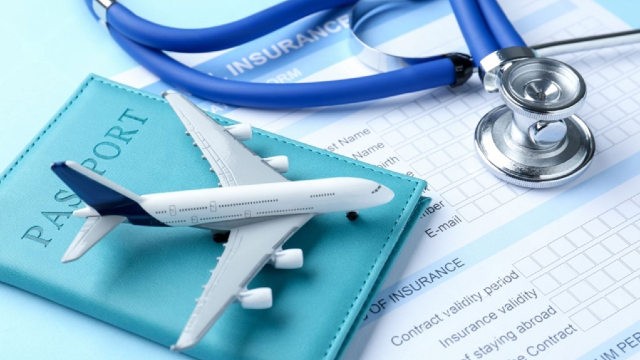
Travel and medical insurance products are frequently confused with health coverage, but they generally serve a narrower purpose. A typical travel medical insurance policy or a rider added to a broader travel policy is designed to help with unexpected events during a trip — for instance, a sudden illness or injury, or in some cases medical evacuation. These products are not designed to pay for a planned elective cosmetic surgery, and most explicitly exclude procedures you traveled specifically to receive, as well as complications arising from them.
The US Department of State encourages travelers to check whether their existing health insurance covers them abroad and, if it does not, to consider supplemental insurance for the trip. This is sound advice, but read the fine print with the right expectation: supplemental travel medical insurance is primarily there for the unplanned emergency, not for the scheduled operation. Some specialized policies address complications from planned procedures, but terms, exclusions, and waiting periods vary widely between products and providers.
If you are considering any travel-related insurance for your trip to Seoul, useful questions to ask the insurer include:
- Does this policy cover any care related to a procedure I traveled specifically to receive?
- Are complications from an elective procedure covered, and if so, under what conditions and for how long after surgery?
- Does the policy include medical evacuation, and how is that coordinated from South Korea?
- What documentation would you require if I needed to make a claim?
- Are there exclusions for cosmetic procedures, and how are they defined?
The US government does not pay your medical bills abroad
A point the US Department of State makes clearly is that the US government does not pay medical bills incurred overseas, and US consular officers cannot cover the cost of your care. If a medical situation arises abroad, a US embassy or consulate can help you locate medical services and can help inform family or friends, but the financial responsibility remains yours. This is a key reason to plan your funding before you travel rather than assuming a safety net exists.
Building a realistic budget is part of responsible medical travel. The US Centers for Disease Control and Prevention, in its guidance for people considering care abroad, emphasizes planning ahead and understanding the full scope of what a trip involves — not only the procedure itself but also travel, accommodation, follow-up, and the possibility of needing additional care. Because JNB Clinic asks international rhinoplasty patients to plan for roughly seven to ten days in Korea after surgery to attend follow-up visits, splint care, and recovery checks, your plan should account for the whole in-country period, not just the day of surgery.
Third-party financing: understanding your general options
Some patients cover elective cosmetic surgery using personal savings, while others explore third-party financing such as personal loans, medical financing companies, or credit cards. General consumer financing for elective procedures does exist in the marketplace, and it is entirely reasonable to consider it. What is important is that you evaluate any financing option carefully and on its own merits. This article does not endorse or recommend any specific lender, financing company, or product.
If you pay by credit card, US federal consumer protections can be relevant. The Federal Trade Commission explains that credit cards carry certain built-in protections, including the ability to dispute charges under specific circumstances — for example, billing errors or, in some situations, charges for goods or services you did not receive as agreed. These protections have conditions and limits, and disputing an international charge for a service already rendered can be complicated, so they are not a substitute for careful up-front decisions. Still, understanding how card disputes work is part of being an informed payer.
When comparing any financing approach, consider:
- The total cost of borrowing, including interest and any fees, not just a monthly figure.
- Whether the rate is fixed or variable and how long any promotional rate lasts.
- Prepayment terms and whether there are penalties for paying early.
- How a card's dispute and chargeback process would apply to an international transaction.
- Whether taking on debt for an elective procedure fits your overall financial situation.
Because JNB Clinic's payment options for international patients are something to confirm directly, do not assume any particular method, deposit structure, or arrangement. Contact the clinic to understand how payment is handled before you finalize any financing plan.
Taxes: how elective cosmetic surgery is generally treated
US patients sometimes ask whether the cost of surgery abroad can be deducted as a medical expense. As a general matter, the IRS treats elective cosmetic surgery as a non-deductible expense. IRS Publication 502, Medical and Dental Expenses, explains that you generally cannot include in deductible medical expenses the amount you pay for unnecessary cosmetic surgery — that is, procedures directed at improving appearance that do not meaningfully treat or prevent illness or disease or address a deformity related to a congenital abnormality, injury, or disfiguring disease.
This means that a rhinoplasty chosen primarily for appearance is generally not a deductible medical expense. There can be nuance where a procedure addresses a genuine medical condition, and the rules on what counts, on itemizing, and on the applicable thresholds are technical. Tax situations are individual, so treat this as general education rather than advice about your return. Confirm how any medical expense should be handled with a qualified tax professional, and keep thorough records of what you paid and why.
Questions to ask before you commit
Bringing the money side together, here is a practical checklist to work through before you book travel:
- Have I confirmed in writing with my health insurer whether any part of an overseas rhinoplasty could be covered?
- Do I understand that the US government will not pay medical bills I incur abroad?
- If I am buying travel medical insurance, do I know exactly what it does and does not cover, including complications?
- If I am financing, have I compared the full cost of borrowing and read all the terms?
- Have I confirmed payment logistics and any deposit or arrangement directly with JNB Clinic?
- Have I asked a tax professional how, if at all, my situation applies to the rules in IRS Publication 502?
- Have I budgeted for the entire in-country stay and possible follow-up, not just the procedure?
Planning your consultation with JNB Clinic
The clearest way to remove guesswork is to talk to the clinic before you commit to travel. JNB Clinic offers online and teleconsultation for international patients before they travel, along with English-language support through its official channels. You can reach the clinic and ask your logistical and payment questions through the JNB Clinic website or the Contact Us page, which lists ways to communicate including the online consultation form, email, phone, and WhatsApp. A pre-travel conversation lets you confirm the practical details on the clinic's side while you handle insurance, financing, and tax questions with your own professionals at home. All surgical and non-surgical procedures carry risks, and individual results vary and are not guaranteed.
The Bottom Line
- US health insurance generally does not cover elective cosmetic surgery performed abroad, and the US government does not pay medical bills you incur in another country.
- Travel and medical insurance riders are built mainly for unexpected emergencies during a trip, not for a scheduled elective procedure or its complications — read the terms closely.
- Third-party financing options exist in the general marketplace; compare the full cost of borrowing carefully, and know that credit cards carry certain dispute protections with conditions and limits. This article endorses no specific lender.
- Elective cosmetic rhinoplasty is generally not a deductible medical expense under IRS Publication 502; confirm your own situation with a tax professional.
- Confirm payment logistics directly with JNB Clinic and budget for the full in-country stay, not just the day of surgery.
Frequently Asked Questions
Will my US health insurance pay for rhinoplasty in Korea?Generally, no. Elective cosmetic surgery is typically excluded from US health plans, and care delivered outside the United States adds a further out-of-country limitation. Read your plan documents and ask your insurer directly, in writing, about your specific situation.
What if my rhinoplasty also improves my breathing?A functional component may be treated differently from purely cosmetic reshaping, and documentation of medical necessity is usually central. However, coverage for care delivered abroad is still governed by your plan's rules, and a foreign clinic will not be an in-network provider. Only your insurer can tell you whether any portion could be considered.
Does travel medical insurance cover my planned surgery?Usually not. These products are generally designed for unexpected illness or injury during a trip, and most exclude procedures you traveled specifically to receive. Some specialized policies address complications, but terms vary widely. Ask the insurer to spell out exactly what is and is not covered.
Will a US embassy help pay if something goes wrong?No. The US Department of State is clear that the US government does not pay medical bills abroad. A US embassy or consulate can help you find medical services and can notify family, but the cost remains your responsibility.
Can I finance rhinoplasty abroad?General third-party financing such as personal loans, medical financing, or credit cards exists in the marketplace. Compare the total cost of borrowing and read all terms carefully. This article does not endorse any specific lender, and you should confirm payment logistics directly with JNB Clinic.
Can I deduct the cost on my US taxes?As a general rule, elective cosmetic surgery is not a deductible medical expense under IRS Publication 502. There can be nuance where a genuine medical condition is treated. Because tax situations are individual, confirm how the rules apply to you with a qualified tax professional.
How long should I plan to stay in Korea after surgery?JNB Clinic asks international rhinoplasty patients to plan for roughly seven to ten days in Korea after surgery for follow-up visits, splint care, and recovery checks. Some patients may travel after about one week, though this varies by individual and technique and should be confirmed with the clinic.
How do I ask JNB Clinic about payment before I travel?Use the clinic's English-language channels. You can reach out through the website or the Contact Us page, which lists the online consultation form, email, phone, and WhatsApp. Online and teleconsultation are available before you travel so you can confirm logistics in advance.
This article is for general informational purposes and does not constitute individualized medical, legal, tax, or financial advice. Consult the appropriate qualified professional and confirm specifics with JNB Clinic.
More Articles
Continue reading our clinical guides.

Benefits of Stem Cell Therapy for Skin Rejuvenation
Discover the benefits of stem cell therapy for skin rejuvenation, including improved texture, reduced wrinkles, and a more youthful appearance.
Learn More

Recovery After Autologous Cartilage Nose Surgery
Learn what to expect during recovery after autologous cartilage nose surgery, including healing timelines, aftercare tips, and results.
Learn More

Revision Rhinoplasty: Everything You Need to Know Before Your Second Nose Surgery
Revision Rhinoplasty: Learn what to expect from a second nose surgery, including risks, recovery, and results. Explore your options and learn more.
Learn More