Personalized Nasal & Facial Care • Dedicated International Patient Concierge

Medical Guide
Implant Rhinoplasty vs. Autologous Cartilage Rhinoplasty: A Decision Guide
Compare silicone implant rhinoplasty with autologous cartilage nose surgery: the benefits, risks, and how JNB Clinic in Seoul weighs each option for you.
Schedule a ConsultationImplant Rhinoplasty vs. Autologous Cartilage Rhinoplasty: A Decision Guide
Medically reviewed by Dr. Kang Ju-Yong, M.D., Board-Certified Otolaryngology (ENT) Specialist & Chief Director, JNB Clinic · Last updated July 2026
When you research nose surgery, the implant vs autologous rhinoplasty question comes up quickly, and it is one of the most consequential decisions you will make. Should the surgeon build up or reshape your nose with a synthetic implant, such as a silicone implant, or with your own cartilage? Concerns about silicone implant nose job risks, from visible edges to future removal, lead many people to look closely at implant-free alternatives. This guide lays out both approaches in balanced, non-alarmist terms, drawing on authoritative surgical sources, and explains how JNB Clinic in Gangnam, Seoul, led by board-certified ENT specialist Dr. Kang Ju-Yong, approaches the choice. The goal is not to declare a single winner but to help you ask better questions.
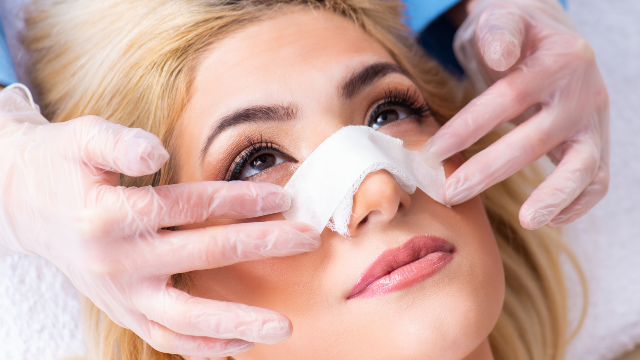
The two building materials: a plain-language overview
Every structural rhinoplasty needs material to reshape or support the nose. Broadly, that material is either alloplastic (a manufactured implant such as silicone or expanded PTFE, often known by the brand name Gore-Tex) or autologous (your own tissue, most commonly cartilage from the septum, ear, or rib).
Mayo Clinic describes the underlying anatomy simply: the upper part of the nose is bone and the lower part is cartilage, and rhinoplasty can change bone, cartilage, skin, or all three. When more material is needed than the nose already contains, Mayo Clinic notes that surgeons may use cartilage taken from deeper inside the nose or from the ear for smaller changes, and cartilage from a rib, implants, or bone from other parts of the body for larger changes. In other words, both implants and autologous cartilage are legitimate, established options that experienced surgeons use. The right choice depends on the individual nose, the amount of change required, and the surgeon's judgment and training.
It also helps to separate two goals that often get blended together. Some rhinoplasty is cosmetic, aimed at changing the size, shape, or proportions of the nose. Some is functional, aimed at improving breathing, for example by correcting a deviated septum. ASPS notes that rhinoplasty enhances facial harmony and proportion and can also correct impaired breathing caused by structural defects. Many patients want both at once, which is exactly why the choice of building material is not purely an aesthetic one.
Implant rhinoplasty: how it works, and its trade-offs
In implant-based augmentation, a preformed or carved synthetic implant is placed to raise the nasal bridge or add projection. Silicone and expanded PTFE are the materials most often discussed. The appeal is understandable. An implant is available in effectively unlimited quantity, it does not require a second surgical site to harvest tissue, and it can provide predictable bridge augmentation. JNB Clinic's own comparison acknowledges this directly, noting that synthetic implants such as silicone can provide predictable bridge augmentation, while adding that they involve foreign material.
That phrase, foreign material, points to the trade-offs. Because an implant is not living tissue, the body forms a capsule around it, and over the long term some patients experience issues that JNB Clinic summarizes as capsule contracture, chronic inflammation, and implant displacement. These are the very concerns the clinic cites when explaining why U.S. patients often ask about implant-free options: worries about long-term implant complications such as visible edges, displacement, and the prospect of future removal.
None of this makes implants inherently unsafe, and it is important not to overstate the risks. Implant rhinoplasty is widely performed. But it is fair to say that an implant introduces a permanent artificial component, and that any implant can, over years, require monitoring or revision. Mayo Clinic's general list of rhinoplasty risks, which applies regardless of material, includes bleeding, infection, an adverse reaction to anesthesia, breathing problems, an uneven appearance, lasting swelling or discoloration, and the possibility of needing additional surgery. When an implant is involved, infection or exposure of the implant is part of what a surgeon watches for. These are considerations to weigh, not reasons to panic.
Autologous cartilage rhinoplasty: how it works, and its trade-offs
Autologous rhinoplasty rebuilds or reshapes the nose using your own cartilage. Because the graft is your own living tissue, it can integrate with the surrounding structures over time, and there is no risk of rejecting a foreign implant. This is the entire foundation of JNB Clinic's practice. The clinic's Autologous Cartilage Nose Surgery is a family of implant-free techniques that reshape or augment the nose entirely with the patient's own tissue, from the ear, septum, or rib, specifically to reduce risks such as capsule contracture, chronic inflammation, and implant displacement.
The clinic organizes this into three named techniques developed in-house by Dr. Kang: KE-Co, which uses ear cartilage through a closed approach for natural tip refinement; Krib-Co, which uses rib cartilage for full structural reconstruction, often in complex or revision cases; and KB-Co, a septal-and-ear cartilage hybrid performed with no external incisions. The common thread is that the structural material comes from you.
The trade-offs of the autologous approach are also real and worth stating plainly. Harvesting cartilage requires a donor site: ear cartilage from behind the ear, septal cartilage from inside the nose, or rib cartilage from the lower chest. JNB Clinic's own comparison notes that while rib cartilage offers strong, natural, long-term structural support with no implant rejection risk, it requires additional cartilage harvesting and a longer recovery period. Cartilage grafts can also behave in ways that living tissue does; the clinic's documented risk list for its hybrid technique includes possibilities such as graft displacement, warping, or partial absorption of cartilage, along with the general surgical risks of swelling, bruising, infection, bleeding, asymmetry, and the possibility of revision. Using your own tissue reduces implant-specific concerns, but it does not remove the ordinary risks of surgery.
Implant vs autologous: a balanced comparison
Placing the two approaches side by side helps clarify the decision:
- Material source: Implants use manufactured silicone or PTFE; autologous techniques use your own septal, ear, or rib cartilage.
- Availability and harvesting: Implants avoid a donor site and offer effectively unlimited material; autologous grafts require harvesting, and larger reconstructions such as rib grafting add a second surgical site and generally a longer recovery.
- Long-term considerations: Implants introduce a permanent foreign component that some patients associate with capsule contracture, chronic inflammation, or displacement over time; autologous cartilage integrates as living tissue and carries no rejection risk, though grafts can warp or be partially absorbed.
- Shared risks: Both approaches carry the general risks of any rhinoplasty, including bleeding, infection, breathing changes, asymmetry, lasting swelling, and the possibility of revision surgery.
- Predictability and skill: Both can produce excellent results in experienced hands. The surgeon's training, judgment, and experience with the specific technique matter more than a blanket rule about material.
The honest summary is that there is no universally correct answer. There is a correct answer for a given nose, given goals, and given surgeon. That is why a careful assessment matters more than a preference formed before the consultation.
Where JNB Clinic stands, and why
JNB Clinic has made a clear, deliberate choice: it performs implant-free rhinoplasty using autologous cartilage. This is not incidental to the practice; it is the practice. The clinic's philosophy, "Beauty that Breathes," reflects the belief that the nose is structural and functional as well as cosmetic, and that every plan should consider breathing, internal anatomy, and long-term stability alongside appearance.
The surgeon behind this approach is Dr. Kang Ju-Yong, Chief Director of JNB Clinic. He is a board-certified otolaryngology (ENT) specialist and rhinoplasty surgeon, not a board-certified plastic surgeon, with over thirteen years focused on functional and aesthetic rhinoplasty. He completed his medical degree at Kyung Hee University College of Medicine and advanced training at Seoul Asan Medical Center and the Korea Institute of Radiological & Medical Sciences, and he developed the clinic's KE-Co, Krib-Co, and KB-Co techniques in-house. This background is relevant to the implant-versus-autologous question because an ENT specialist evaluates the airway and internal nasal structure as a routine part of planning. Mayo Clinic notes that rhinoplasty is commonly performed by plastic surgeons, facial plastic surgeons, or otolaryngologists (ENTs), and that a good starting point is training and board certification in one of those specialties, combined with a surgeon who frequently performs the procedure.
Choosing an implant-free practice does not mean implants are wrong for everyone; it means this clinic has built its expertise, techniques, and aftercare around autologous cartilage. If you are specifically seeking to avoid a synthetic implant, that alignment is worth considering. You can read more about the clinic's background and team on the JNB Clinic About Us page.
What the consultation actually evaluates

Whichever direction you lean, the decision should follow an evaluation, not precede it. JNB Clinic's consultation for autologous cartilage nose surgery includes a comprehensive assessment of the nasal bridge, tip, and septum, as well as cartilage quality, skin thickness, and breathing function, along with a review of any prior rhinoplasty or filler history. The clinic uses 3D-CT analysis to plan precisely, and international patients can complete an initial teleconsultation before traveling.
This mirrors what Mayo Clinic describes as standard preparation for rhinoplasty: a discussion of your medical history and goals, a physical examination of the inside and outside of the nose, photographs from multiple angles, and a frank conversation about what surgery can and cannot achieve. The physical exam helps determine how features like skin thickness and cartilage strength may affect your result and your breathing. Because breathing and appearance are linked, functional procedures such as septoplasty, which ASPS notes is frequently combined with rhinoplasty to correct a deviated septum, may be planned alongside cosmetic reshaping.
Recovery expectations should be part of the same conversation. Mayo Clinic advises planning about a week away from work or school, with most people resuming activities within a week and all activities within two to four weeks, while swelling can take months, sometimes up to a year, to fully resolve. JNB Clinic supports recovery through its phased post-surgery care program and follows patients for up to one year. As with any surgery, cost depends on the complexity of the procedure and should be confirmed directly at consultation rather than assumed from an online figure.
You can review patient experiences on the JNB Clinic customer reviews page and see technique-labeled outcomes in the before-and-after gallery.
The Bottom Line
- Both implant and autologous rhinoplasty are established, legitimate approaches; the best choice depends on your nose, your goals, and your surgeon, not on a universal rule.
- Implants offer predictable augmentation without a donor site but introduce a permanent foreign component that some patients associate with capsule contracture, inflammation, or displacement over time.
- Autologous cartilage integrates as living tissue with no rejection risk, but requires a harvest site and can still warp or be partially absorbed, and all rhinoplasty carries shared surgical risks.
- JNB Clinic performs implant-free rhinoplasty exclusively, using the patient's own ear, septal, or rib cartilage through its KE-Co, Krib-Co, and KB-Co techniques.
- Dr. Kang Ju-Yong is a board-certified ENT specialist and rhinoplasty surgeon; the decision should follow a full assessment, including 3D-CT analysis and a breathing evaluation, and no result is guaranteed.
Frequently Asked Questions
Is autologous cartilage always better than a silicone implant?No. Both approaches can produce excellent results in experienced hands. Autologous cartilage avoids a permanent foreign implant and rejection risk, while implants avoid a donor site and offer predictable augmentation. The right option depends on your anatomy, goals, and surgeon. JNB Clinic specializes in the autologous, implant-free approach.
What are the main risks people worry about with silicone implants?Concerns commonly raised include visible implant edges, displacement over time, and the possibility of future removal, along with the general risk of infection. JNB Clinic cites capsule contracture, chronic inflammation, and implant displacement as long-term concerns that motivate its implant-free approach. These are considerations to weigh, not certainties.
Does using my own cartilage remove all risk?No. Using your own tissue reduces implant-specific concerns, but every rhinoplasty carries risks such as bleeding, infection, swelling, asymmetry, and the possibility of revision. Cartilage grafts can also warp or be partially absorbed as they heal.
Where does the cartilage come from in an autologous procedure?Depending on how much structural material is needed, cartilage may be taken from the septum inside the nose, the ear, or a rib in the lower chest. JNB Clinic's KE-Co uses ear cartilage, KB-Co uses a septal-and-ear hybrid, and Krib-Co uses rib cartilage.
Can a nose job also fix my breathing?Yes, often. Rhinoplasty can be combined with functional surgery. ASPS notes that septoplasty, which straightens a deviated septum, is frequently combined with rhinoplasty. Because Dr. Kang is an ENT specialist, breathing is assessed alongside appearance.
How do I choose a qualified surgeon for either approach?Mayo Clinic advises looking for training and board certification in plastic surgery, facial plastic surgery, or otolaryngology (ENT), choosing a surgeon who frequently performs rhinoplasty, and ensuring the procedure takes place in an accredited facility.
How much does implant-free rhinoplasty cost at JNB Clinic?Cost depends on the complexity of your individual plan and is confirmed at consultation. Mayo Clinic similarly notes that rhinoplasty cost varies with the complexity of surgery and the surgeon's experience, so reliable figures come from a personalized assessment.
This article is for general informational purposes and does not constitute individualized medical advice. It does not endorse one material over another for any specific patient, and no particular result is guaranteed. Please consult a qualified surgeon about your own anatomy, goals, and options. To arrange a consultation, contact JNB Clinic.
More Articles
Continue reading our clinical guides.

Benefits of Stem Cell Therapy for Skin Rejuvenation
Discover the benefits of stem cell therapy for skin rejuvenation, including improved texture, reduced wrinkles, and a more youthful appearance.
Learn More

Recovery After Autologous Cartilage Nose Surgery
Learn what to expect during recovery after autologous cartilage nose surgery, including healing timelines, aftercare tips, and results.
Learn More

Revision Rhinoplasty: Everything You Need to Know Before Your Second Nose Surgery
Revision Rhinoplasty: Learn what to expect from a second nose surgery, including risks, recovery, and results. Explore your options and learn more.
Learn More