Personalized Nasal & Facial Care • Dedicated International Patient Concierge

Medical Guide
How Long to Stay in Seoul After Rhinoplasty Surgery
Wondering how long to stay in Seoul after rhinoplasty? A recovery timeline for US patients, JNB Clinic's aftercare phases, and flying-after-surgery advice.
Schedule a ConsultationHow Long Should You Stay in Seoul After Rhinoplasty? A Recovery Timeline for US Patients
Medically reviewed by Dr. Kang Ju-Yong, M.D., Board-Certified Otolaryngology (ENT) Specialist & Chief Director, JNB Clinic · Last updated July 2026
If you are traveling from the United States, one of the most practical questions is how long to stay in Seoul after rhinoplasty before you book your return flight. It is a fair question, because your rhinoplasty recovery time before flying affects everything from your hotel budget to your time off work. The honest answer is that it depends on your procedure and how you heal, but there are clear milestones you can plan around. This article walks through the aftercare timeline at JNB Clinic in Gangnam, Seoul, explains why the first days matter most, and shows what authoritative medical sources say about flying after surgery, so you can build a realistic itinerary.
The Short Answer, and Why It Is Not a Single Number
There is no universal date stamped on a rhinoplasty recovery. Every nose, every technique, and every person heals a little differently, so a responsible answer starts by acknowledging that range. What JNB Clinic can tell international patients is based on the structure of its aftercare and on the general pattern of nasal surgery recovery.
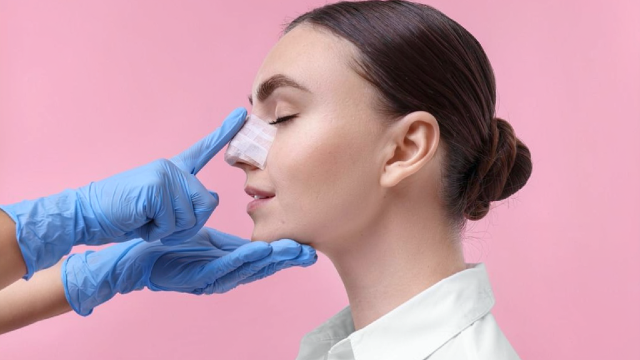
Based on the clinic's general positioning, some patients may be able to travel after roughly one week. That figure is not a promise; recovery time can vary depending on your individual condition and the technique used, and it should be confirmed with the clinic directly for your case. For planning purposes, JNB Clinic advises international patients to arrange to stay in Korea for approximately 7 to 10 days after surgery. That window is built around the follow-up visits, splint care, and recovery checks that happen in person before you fly home.
In practice, most patients who want to attend their key in-clinic milestones and leave with a professional check behind them will find that a stay of about a week to ten days is the sensible target. If you want the most conservative, comfortable plan, budget toward the longer end.
JNB Clinic's Signature Post-Surgery Care Timeline
The reason the first ten days matter is that they contain the appointments that shape a good recovery. JNB Clinic organizes early aftercare into its Signature Post-Surgery Care program, which unfolds in three phases:
- Phase 01 (around Day 2): splint removal, hyperbaric oxygen therapy, and Smart LED care.
- Phase 02 (around Day 7): suture removal and relay care.
- Phase 03 (around two weeks): medical skin scaling and a hyperbaric oxygen refresh.
The clinic also states that it accompanies patients for up to one year after surgery, so aftercare does not simply stop when you leave. Hyperbaric oxygen therapy, Smart LED care, and medical skin scaling are described here as documented components of the program; they are part of the recovery routine, not treatments claimed to cure any condition or guarantee a particular outcome.
Reading that schedule against a travel plan tells you a lot. Phase 01 and Phase 02 both fall within a seven-to-ten-day stay, which means a patient who lands, has surgery, and stays a week to ten days can typically be in Seoul for the splint removal around Day 2 and the suture removal and relay care around Day 7. Phase 03, at roughly two weeks, is the one milestone that often falls after many international patients have flown home. That is expected, and it is one reason the clinic offers remote follow-up.
Why the First Days in Seoul Are the Ones to Protect
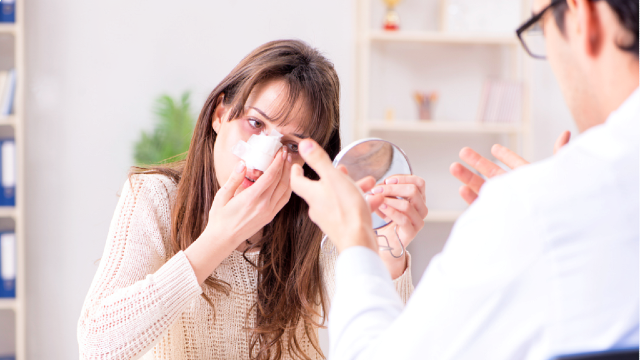
The early phase of any nasal surgery is when your nose is most fragile and most in need of professional monitoring. The American Society of Plastic Surgeons (ASPS) explains that after rhinoplasty a splint and/or packing may be placed inside your nose and a splint or bandages on the outside to support and protect the new structures during initial healing. Mayo Clinic notes that a splint is usually taped to the nose for about one week, and that soft internal splints can be removed at the one-week visit. In other words, the removal of your splint and stitches is not a cosmetic formality; it is a supervised step best done by the surgical team that performed your operation.
Mayo Clinic also advises patients to plan to take about a week off from work, school, or other duties, adding that one week after surgery people usually feel like themselves again and are generally back to most activities after a week and all activities after two to four weeks. That guidance lines up neatly with a Seoul stay of roughly a week to ten days: enough time for the initial recovery to stabilize and for your in-person checks to be completed.
What Authoritative Sources Say About Flying After Surgery
The temptation to fly home early is understandable, but the timing of that flight is a genuine medical consideration, not just a comfort question. Two issues matter: blood clots and cabin pressure.
On blood clots, the U.S. Centers for Disease Control and Prevention (CDC) is direct. Air travel and surgery independently increase the risk for blood clots, including deep vein thrombosis (DVT) and pulmonary embolism, and travel after surgery further increases that risk because travel can require you to remain seated for long periods while your body is in a more clot-prone state. A flight between the United States and Seoul is long by any measure, which makes this relevant to anyone planning surgery abroad.
The CDC's dedicated guidance on DVT reinforces the point. Recent surgery is listed as a risk factor for venous thromboembolism, and long-distance travel of more than four hours can increase risk, particularly when other risk factors are present. Sensible, low-tech measures matter: the CDC notes that maintaining mobility, doing calf-muscle exercises, and choosing an aisle seat so you can move around are reasonable steps for long-distance travelers, and that graduated compression stockings can help reduce asymptomatic clots in travelers. None of this replaces personalized medical advice, but it explains why rushing to a transpacific flight days after surgery is not ideal.
On cabin pressure and timing, the guidance is more specific. The CDC states that commercial aircraft cabin pressures are roughly equivalent to the outside air pressure at 6,000 to 8,000 feet above sea level, and it cites the ASPS recommendation that patients undergoing cosmetic procedures to the face, eyelids, or nose wait 7 to 10 days after the procedure before flying. The ASPS briefing paper on cosmetic surgery tourism gives the same figure from the other direction, suggesting patients wait seven to 10 days after cosmetic procedures of the face, including rhinoplasty, before flying, and warning that travel combined with surgery significantly increases the risk of complications such as swelling, blood clots, and infection.
Put simply, the widely cited 7-to-10-day waiting period before flying after facial cosmetic surgery maps almost exactly onto the 7-to-10-day in-Korea stay that JNB Clinic recommends. The two are not a coincidence; both reflect the same underlying biology of early healing.
A Realistic Look at Your Time in Seoul
Here is how a typical itinerary tends to flow, keeping in mind that your surgeon's specific instructions always take priority over any general schedule.
In the first day or two, you rest and recover, and Mayo Clinic's advice to keep your head raised higher than your chest to reduce bleeding and swelling applies. Around Day 2, Phase 01 of JNB Clinic's program brings splint removal along with hyperbaric oxygen therapy and Smart LED care. Over the following days, swelling and bruising are expected; Mayo Clinic notes that short-term swelling or discoloration around the eyelids can appear for a couple of weeks, and that most people feel more themselves by the one-week mark. Around Day 7, Phase 02 brings suture removal and relay care. If your recovery is progressing well and your surgeon agrees, this is often the point at which travel becomes a realistic conversation.
Because Seoul is a major city, the logistics around your stay are manageable. JNB Clinic is located on the 6th floor of the K-Tower Building at 119 Dosan-daero in Gangnam-gu, about a one-minute walk from Sinsa Station Exit 8 on Seoul Subway Line 3, which keeps your follow-up trips short and low-effort during recovery. The clinic's consultation hours are Monday to Friday from 10:00 to 19:00 and Saturday from 10:00 to 16:00, closed on Sundays and public holidays, which is worth noting when you schedule check-ups and your departure.
What Recovery Looks Like After You Fly Home
Leaving Korea does not mean recovery is finished. The nose continues to settle for months. ASPS explains that while initial swelling subsides within a few weeks, it may take up to a year for the new nasal contour to fully refine, and that swelling can come and go and worsen in the morning during the first year. Mayo Clinic similarly notes that swelling can take many months to resolve, with most people no longer noticing it after a couple of months.
At JNB Clinic, the results of autologous cartilage rhinoplasty are described as developing over a recovery period that typically takes two to six months, as your own cartilage integrates and the nose becomes more stable and refined. Because that long tail of healing happens at home, the clinic's up-to-one-year follow-up commitment and its remote follow-up for international patients are designed to keep you connected after you return. Phase 03 of the Signature Post-Surgery Care program, at around two weeks, is one example of a milestone that many international patients will handle through remote follow-up rather than a return flight.
Factors That Can Change Your Timeline
Several things influence how long you should stay and when you can safely fly:
- The technique used. JNB Clinic performs rhinoplasty using your own cartilage through techniques of differing scope, and a more extensive reconstruction generally involves a more involved recovery than a limited refinement. Which technique applies to you is determined at consultation.
- Your individual healing. Swelling, bruising, and comfort vary from person to person, and your surgeon's assessment at your follow-up visits is the real gauge of readiness.
- Your personal risk factors for blood clots. The CDC lists recent surgery, limited mobility, older age, obesity, and a personal or family history of clots among the factors that raise risk. If any apply to you, discuss flying timing with both your JNB Clinic team and your own physician.
- Your tolerance for follow-up. A longer stay lets more of your in-person milestones happen before you leave; a shorter stay shifts more of them to remote follow-up.
None of these can be settled from a distance with certainty, which is exactly why the clinic frames the one-week figure as a general possibility to be confirmed, not a fixed rule.
Planning Your Trip Around Recovery
A smart approach is to plan for the longer end and be pleasantly surprised if you feel ready sooner, rather than the reverse. Build in a buffer of a day or two before your flight home so that a small delay in healing does not force you onto a plane before you are ready. Where possible, keep your return ticket flexible.
You can also front-load the planning before you ever board a plane. JNB Clinic offers teleconsultation before travel, so international patients can review their history and goals and receive a personalized plan remotely. That conversation is the right place to ask exactly how long you should stay, which follow-up visits must be in person, and what can be handled remotely once you are home. To start that process, use the clinic's consultation and contact page, and if you want to understand the clinic and its approach first, the About Us page is a good starting point.
The Bottom Line
- Plan to stay in Seoul for approximately 7 to 10 days after rhinoplasty; some patients may be able to travel after roughly one week, but recovery varies and should be confirmed with the clinic.
- JNB Clinic's Signature Post-Surgery Care runs in phases: splint removal around Day 2, suture removal and relay care around Day 7, and medical skin scaling at about two weeks, with follow-up for up to one year.
- Authoritative sources support waiting before flying: the CDC cites the ASPS recommendation to wait 7 to 10 days after facial cosmetic procedures, including rhinoplasty, and warns that surgery plus long flights raises blood-clot risk.
- Full refinement of the nose takes months; ASPS notes swelling can take up to a year to fully resolve, and JNB Clinic describes a two-to-six-month recovery for autologous cartilage results.
- Use teleconsultation before travel and remote follow-up afterward to build a realistic, personalized itinerary rather than relying on a generic date.
Frequently Asked Questions
How long should I stay in Seoul after rhinoplasty?JNB Clinic advises international patients to plan to stay in Korea for approximately 7 to 10 days after surgery to attend follow-up visits, splint care, and recovery checks before flying home. Some patients may be able to travel after roughly one week, but recovery varies by individual and technique, so confirm the plan for your case with the clinic.
When can I fly home after nose surgery?There is no single guaranteed date. The CDC cites the ASPS recommendation that patients wait 7 to 10 days after cosmetic procedures of the face, eyelids, or nose before flying, and both organizations warn that combining surgery with long flights increases the risk of blood clots. Your surgeon's assessment at your follow-up visits, plus your own physician's input on personal risk factors, should guide the final decision.
Why does flying after surgery carry extra risk?The CDC explains that air travel and surgery each independently raise the risk of blood clots such as deep vein thrombosis, and traveling after surgery adds risk because you remain seated for long periods while your body is more prone to clotting. Cabin pressure is another factor, as cabins are pressurized to the equivalent of roughly 6,000 to 8,000 feet of altitude.
What happens at my in-clinic visits before I leave Korea?Within a typical stay, you would generally attend Phase 01 around Day 2 (splint removal, hyperbaric oxygen therapy, and Smart LED care) and Phase 02 around Day 7 (suture removal and relay care). These supervised steps are a key reason to remain in Seoul for the first week to ten days rather than flying immediately.
Will my recovery be finished when I fly home?No. The nose keeps refining for months. ASPS notes that final nasal contour can take up to a year to fully settle, and JNB Clinic describes a recovery of about two to six months for autologous cartilage rhinoplasty. The clinic accompanies patients for up to one year and offers remote follow-up after you return home.
Can I reduce blood-clot risk on the flight back?General measures cited by the CDC include staying mobile, doing calf-muscle exercises, choosing an aisle seat so you can move around, and, for some travelers, using properly fitted graduated compression stockings. If you have risk factors such as a history of clots or limited mobility, discuss a plan with both the clinic and your own doctor before you travel.
Can I plan my stay before I arrive in Korea?Yes. JNB Clinic offers teleconsultation before travel, during which you can discuss how long to stay, which follow-ups must be in person, and what can be handled remotely. You can begin through the clinic's contact page.
This article is for general informational purposes and does not constitute individualized medical advice. Recovery timelines, aftercare details, and the right time to fly should be confirmed directly with JNB Clinic and with your own physician. Individual results and recovery vary from person to person, and no specific outcome is guaranteed.
More Articles
Continue reading our clinical guides.

Benefits of Stem Cell Therapy for Skin Rejuvenation
Discover the benefits of stem cell therapy for skin rejuvenation, including improved texture, reduced wrinkles, and a more youthful appearance.
Learn More

Recovery After Autologous Cartilage Nose Surgery
Learn what to expect during recovery after autologous cartilage nose surgery, including healing timelines, aftercare tips, and results.
Learn More
Revision Rhinoplasty: Everything You Need to Know Before Your Second Nose Surgery
Revision Rhinoplasty: Learn what to expect from a second nose surgery, including risks, recovery, and results. Explore your options and learn more.
Learn More