Personalized Nasal & Facial Care • Dedicated International Patient Concierge

Medical Guide
Evaluate Before-and-After Photos at Korean Clinics
How to evaluate before-and-after rhinoplasty photos at Korean clinics: check angles, lighting, technique labels, recovery timepoints, and patient consent.
Schedule a ConsultationEvaluate Before-and-After Photos at Korean Clinics
Medically reviewed by Dr. Kang Ju-Yong, Board-Certified ENT (Otolaryngology) & Rhinoplasty Surgeon, JNB Clinic
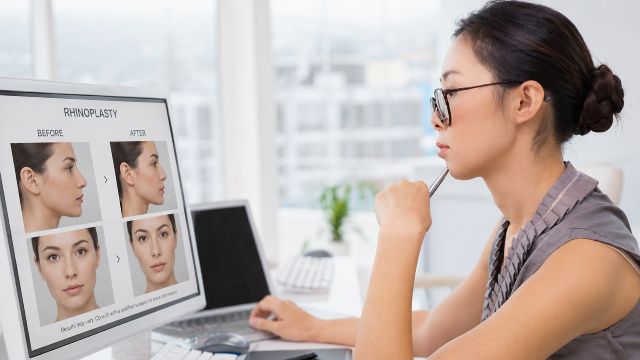
Learning how to evaluate before-and-after photos at Korean clinics is one of the most useful skills you can bring to your research when you are considering rhinoplasty abroad. A results gallery can tell you a great deal about a clinic's aesthetic and its transparency — but only if you know what to look for. Photos can also be flattering in ways that have nothing to do with the surgery itself: a change of lighting, angle, or camera can make a nose look dramatically different without any procedure at all. This guide gives you a practical framework for reading rhinoplasty galleries critically, using JNB Clinic in Gangnam, Seoul as a documented example of how a gallery can be labeled, and points you to trustworthy resources for verifying a surgeon.
Why Before-and-After Photos Deserve Scrutiny
Galleries are marketing, and that is not inherently a bad thing — showing real results is a legitimate and helpful thing for a clinic to do. But the American Society of Plastic Surgeons and the Federal Trade Commission both remind consumers to look past presentation and ask what is actually being demonstrated. The FTC's guidance on avoiding scams while traveling is a reminder that when money and travel are involved, you should verify claims rather than take polished images at face value.
The goal is not cynicism. It is to make sure that when you compare clinics, you are comparing genuine surgical change under fair, consistent conditions — not a difference in photography. A well-run gallery makes this easy by standardizing how images are taken and clearly documenting what each pair shows. That is the standard you are looking for.
The Five-Part Framework
Use these five checks on any rhinoplasty gallery, whether it is in Seoul, New York, or anywhere else.
1. Angle Consistency
The single most important technical check is whether the "before" and "after" photos are taken from the same angles. Rhinoplasty results should be shown across a standard set of views — typically front, both three-quarter (oblique) views, both profiles, and a base (worm's-eye) view looking up at the nostrils and tip.
Ask yourself:
- Is every "after" shot matched to a "before" shot from the identical angle?
- Is the head tilted the same way in both? Even a small change in head tilt can hide a hump or exaggerate tip rotation.
- Are all the key views shown, or only the most flattering one?
If a gallery shows a front-view "before" beside a three-quarter "after," you cannot draw a fair conclusion. Matched angles are the foundation of an honest comparison.
2. Lighting and Background
Lighting shapes how a nose reads in a photo. Harsh side lighting casts shadows that can make a bridge look straighter or a tip look more refined; flat, even lighting shows contours honestly. Look for:
- Consistent lighting direction and intensity between before and after.
- A neutral, unchanging background.
- No obvious retouching, heavy filters, or skin-smoothing that also softens nasal contours.
- The same makeup status where possible — heavy contouring can mimic surgical change.
Consistency here signals a clinic that wants you to see the real result, not a photographic upgrade.
3. Technique Labeling
A serious rhinoplasty gallery tells you what was done. Different techniques address different anatomy, so a result is only meaningful if you know the procedure behind it. A tip-refinement case and a full structural reconstruction are not interchangeable examples.
This is one area where JNB Clinic's documented gallery is a useful model. JNB's published before-and-after cases are labeled by technique — for example by the clinic's proprietary implant-free, autologous-cartilage methods such as KE-Co, KB-Co, and Krib-Co — so you can see which approach produced which result. When a gallery labels technique, you can match cases to your own situation instead of guessing. You can view JNB's labeled gallery on its before-and-after page.
When you review any gallery, ask: does this pair tell me which procedure was performed, and is that procedure relevant to what I am considering?
4. Recovery Timepoint Disclosure
This is the check most patients miss. The nose changes dramatically over the course of healing — swelling is heavy early on, and the final shape emerges gradually over many months. An "after" photo taken at two weeks tells a very different story than one taken at six months or a year. Without a timepoint, an "after" image is essentially undated.
A transparent gallery discloses when each "after" photo was taken. JNB Clinic's documented gallery labels cases by recovery week or month — for instance, "KB-Co 2 months" — so you can see the stage of healing represented rather than assuming a photo shows the final result. When you compare clinics, always ask at what point after surgery each result was captured, and try to compare like with like (for example, comparing several three-to-six-month results across clinics rather than an early result against a fully settled one).
5. Patient Consent and Case Volume
Ethically published photos require the patient's consent for their images to be shared. A clinic that confirms consent is signaling respect for patient privacy — and it is a small but real marker of professionalism. JNB's documented gallery includes a shown case count and confirmation that published cases have patient consent. A visible total case count also helps you gauge whether you are seeing a representative sample or a hand-picked few.
Ask:
- Does the clinic confirm patient consent for its published images?
- Roughly how many cases are shown, and do they include a range of starting points — not only the easiest cases?
What Galleries Cannot Tell You
Even a perfectly presented gallery has limits, and it is important to be honest about them. Photos show selected results; they cannot show you complication rates, revision rates, or how a clinic handles a case that does not go as planned. They also cannot substitute for verifying who is operating and where. As the ASPS stresses in its patient-safety and surgeon-selection resources, the most important safeguards are confirming the surgeon's qualifications and understanding that individual results vary and are never guaranteed.
So treat the gallery as one input among several. Pair it with:
- Verification of the surgeon's credentials. The ASPS explains why board certification matters and how to think about choosing a surgeon for rhinoplasty. For an international clinic, confirm the operating physician's actual specialty and licensing. Dr. Kang Ju-Yong, for example, is a board-certified ENT (otolaryngology) and rhinoplasty surgeon — a specialty you can ask the clinic to document.
- A direct consultation. A teleconsultation lets you discuss your specific anatomy and see whether the results you admired are realistic for you.
- Written information on risks and aftercare. Every surgical and non-surgical procedure carries risk, and a trustworthy clinic states this plainly.
You can start a conversation or ask for documentation through the clinic's contact page, and learn more about the practice on the JNB Clinic website.
A Simple Checklist to Use While Browsing

Keep this list open as you scroll any clinic's gallery:
- Are before and after shot from matched angles, with all standard views available?
- Is lighting, background, and makeup consistent, with no heavy retouching?
- Is the surgical technique labeled for each case?
- Is the recovery timepoint (week or month) disclosed for each "after"?
- Is patient consent confirmed, and is a case count shown?
- Have I separately verified the surgeon's credentials rather than relying on photos alone?
If a gallery checks these boxes, you are looking at a clinic that is comfortable being examined closely — a good sign. If several boxes are missing, that does not automatically mean the work is poor, but it does mean you should ask more questions before drawing conclusions.
How to Compare Galleries Across Several Clinics
When you are researching more than one Korean clinic, the challenge is not just reading a single gallery well — it is comparing galleries fairly against one another. Different clinics photograph and label their work differently, and if you are not careful you can end up comparing a clinic's most flattering, fully healed cases against another clinic's honest two-week results. A few habits make cross-clinic comparison more reliable:
- Compare like with like. Line up cases at similar recovery timepoints and, where possible, similar starting anatomy and technique. A one-year result naturally looks more settled than a two-month result, so matching the stage keeps the comparison honest.
- Match the technique to your own goals. If you are considering an implant-free, autologous-cartilage approach, focus on cases performed with that method rather than being swayed by results from a different type of procedure. JNB Clinic's labeling by technique makes this kind of targeted comparison possible.
- Note what each clinic discloses. A clinic that consistently labels technique, timepoint, and consent is giving you more information to work with than one that shows undated, unlabeled pairs. Transparency itself is a data point worth weighing.
- Watch for cherry-picking. A handful of picture-perfect cases tells you less than a larger, varied set that includes different starting points. A visible case count helps you judge how representative the sample is.
- Keep your expectations grounded. Even a strong gallery shows other people's noses, not yours. Use it to understand a clinic's aesthetic and honesty, then rely on a personal consultation to learn what is realistic for your anatomy.
Approaching multiple galleries with the same disciplined framework turns a pile of pretty pictures into genuinely useful comparison data. It also tends to reward the clinics that are most transparent — which is exactly the outcome you want as a patient making a significant decision from a distance.
The Bottom Line
- Before-and-after photos are useful only when taken under consistent conditions; matched angles, lighting, and backgrounds are what make a comparison fair.
- Look for clear technique labeling and disclosed recovery timepoints — a "two-month" result and a "one-year" result are very different, and the nose settles gradually over many months.
- Confirmed patient consent and a visible case count are markers of a transparent, professionally run gallery, as seen in JNB Clinic's documented before-and-after page.
- Galleries cannot show complication or revision rates, so pair them with independent verification of the surgeon's credentials and a direct consultation.
- Individual results vary and are never guaranteed; use photos as one input among several and confirm specifics directly with the clinic.
Frequently Asked Questions
Why do angles matter so much in rhinoplasty photos?Because a small change in head tilt or camera angle can hide a hump or exaggerate tip rotation. Unless the "before" and "after" are shot from identical angles, you cannot tell how much of the difference is surgery versus photography.
What recovery timepoint should an "after" photo show?Ideally the gallery discloses it. The nose refines over many months, so an early photo looks different from a fully settled one. JNB Clinic's documented gallery labels cases by recovery week or month, such as "KB-Co 2 months," so you can see the healing stage represented.
What does technique labeling tell me?It tells you which procedure produced the result, so you can judge whether that case is relevant to your own situation. JNB's documented gallery labels cases by technique, including its implant-free autologous-cartilage methods.
Why does patient consent matter in a results gallery?Publishing patient photos ethically requires consent. A clinic that confirms consent — as JNB's documented gallery does — signals respect for privacy and professional standards.
Can before-and-after photos guarantee my result?No. Photos show selected past cases and cannot predict your outcome. Individual results vary and are never guaranteed, and galleries cannot show complication or revision rates. Verify the surgeon's credentials and have a direct consultation.
Should I worry about editing or filters in photos?Be alert to it. Heavy retouching, filters, or skin-smoothing can soften nasal contours and mask the true result. Consistent, neutral lighting and backgrounds with no obvious editing are what you want to see.
How do I verify the surgeon behind the results?Confirm the operating physician's actual specialty and licensing directly with the clinic, and use resources like the ASPS guidance on board certification and choosing a rhinoplasty surgeon. At JNB Clinic, the surgeon is Dr. Kang Ju-Yong, a board-certified ENT (otolaryngology) and rhinoplasty surgeon.
This article is for general informational purposes and does not constitute individualized medical, legal, tax, or financial advice. Consult the appropriate qualified professional and confirm specifics with JNB Clinic.
More Articles
Continue reading our clinical guides.

Benefits of Stem Cell Therapy for Skin Rejuvenation
Discover the benefits of stem cell therapy for skin rejuvenation, including improved texture, reduced wrinkles, and a more youthful appearance.
Learn More

Recovery After Autologous Cartilage Nose Surgery
Learn what to expect during recovery after autologous cartilage nose surgery, including healing timelines, aftercare tips, and results.
Learn More
Revision Rhinoplasty: Everything You Need to Know Before Your Second Nose Surgery
Revision Rhinoplasty: Learn what to expect from a second nose surgery, including risks, recovery, and results. Explore your options and learn more.
Learn More