Personalized Nasal & Facial Care • Dedicated International Patient Concierge

Medical Guide
Dermal Filler Brands Compared: Chaeum, Belotero, Juvéderm, and Restylane
Chaeum vs Belotero vs Juvederm vs Restylane: a patient's guide comparing hyaluronic-acid dermal filler brands, their safety, longevity, and how to choose.
Schedule a ConsultationDermal Filler Brands Compared: Chaeum, Belotero, Juvéderm, and Restylane
Medically reviewed by Dr. Kang Ju-Yong, M.D., Board-Certified Otolaryngology (ENT) Specialist & Chief Director, JNB Clinic · Last updated July 2026
If you have been researching Chaeum vs Belotero vs Juvederm vs Restylane, you are already asking the right question: the brand of hyaluronic-acid (HA) filler injected into your face matters, but not in the way marketing often suggests. When patients ask about the best filler brand in Korea or the United States, the honest answer is that no single product is "best" for everyone. Each of these well-known HA filler families is engineered with a slightly different gel structure, and those differences make one product better suited to lips, another to cheeks, and another to fine lines. This guide compares the four brands as general patient education, explains how regulators classify them, and outlines what actually determines a good result.
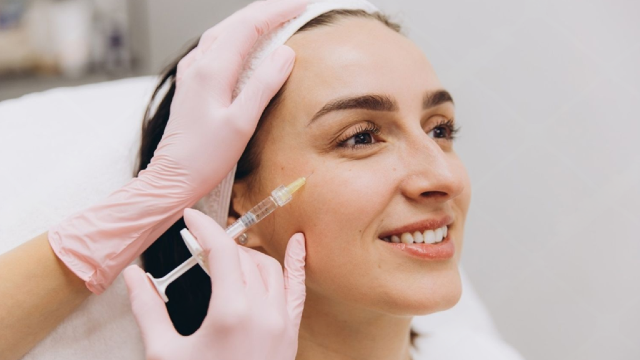
What dermal fillers are and how they work
Dermal fillers—also called soft-tissue fillers, injectable implants, or wrinkle fillers—are gel-based products injected beneath the skin to restore lost volume, smooth folds, and refine facial contours. According to the U.S. Food and Drug Administration (FDA), fillers are used in areas such as the nasolabial folds, cheeks, chin, lips, and the back of the hands. The FDA classifies them as medical device implants, which means they must clear a formal review before they can be marketed in the United States.
The four brands in this comparison—Chaeum, Belotero, Juvéderm, and Restylane—are all built around hyaluronic acid, a sugar molecule that occurs naturally in skin and can bind large amounts of water. That water-binding property is what creates the smoothing, plumping effect once the gel is placed. Because HA is gradually broken down and absorbed by the body, most HA fillers are temporary, and results fade over months rather than lasting permanently. The FDA notes that most dermal fillers have a temporary effect precisely because the body absorbs their materials over time.
The practical takeaway is that all four brands share the same core ingredient. What separates them is how that hyaluronic acid is manufactured, cross-linked, and formulated into a gel with a particular firmness and flow.
Why gel technology matters more than the label
Manufacturers modify HA in different ways to control two things patients feel directly: how firm the gel is (which affects lift and shaping power) and how smoothly it spreads (which affects softness and how naturally it integrates into tissue). A stiffer, more cohesive gel resists compression and is generally chosen for deep structural support, such as building cheek projection or adding chin definition. A softer, more spreadable gel is generally chosen for delicate areas, superficial lines, and thin skin where a firmer product could look or feel lumpy.
This is why an experienced injector may reach for different products—sometimes different products from the same brand family—during a single appointment. The "right" filler is a match between the gel's physical properties and the anatomical job it needs to do. Brand loyalty, on its own, is not a reliable guide to a good outcome.
Juvéderm: a broad HA family with US FDA approval
Juvéderm is a family of hyaluronic-acid fillers that is FDA-approved in the United States. Rather than being a single product, it is a range of formulations, each tuned for a different purpose—some for adding volume to the cheeks or lips, others for softening moderate to severe facial folds. Because the line is broad, a clinician can often stay within the Juvéderm family and still choose a gel firmness matched to the treatment area.
For patients, the key point is regulatory: Juvéderm products in the US have gone through the FDA's review of controlled clinical data evaluating safe and effective use in specific facial areas. That does not make Juvéderm superior to other approved brands; it means it has cleared the same regulatory bar as the other FDA-approved HA families discussed here.
Restylane: another FDA-approved HA family
Restylane is also a family of FDA-approved hyaluronic-acid fillers available in the United States. Like Juvéderm, it spans several formulations designed for different depths and areas—from products aimed at lip enhancement and fine lines to firmer gels intended for volume and contour. The two families are often discussed side by side because they are direct competitors with overlapping indications.
Comparisons between Restylane and Juvéderm frequently focus on subtle differences in gel texture and how each behaves once injected. In practice, many experienced injectors are comfortable achieving similar goals with either family, selecting the specific product based on the patient's anatomy, skin thickness, and desired result rather than the brand name on the box.
Belotero: designed for soft integration
Belotero is a hyaluronic-acid filler family that is likewise FDA-approved in the United States. Belotero products are often described as having gels that integrate smoothly into the skin, which is why certain formulations in the line are commonly discussed for finer, more superficial concerns where a very soft, evenly distributing gel is desirable.
As with the other two US-approved brands, the important regulatory fact is that Belotero HA fillers have been reviewed and approved by the FDA for specified uses. When comparing Belotero to Juvéderm or Restylane, the meaningful differences are again about gel behavior and intended treatment zones, not about one product being categorically safer or more effective than another.
Chaeum: a Korean-market HA filler
Chaeum is a hyaluronic-acid dermal filler developed for and marketed within the Korean aesthetic market. It appears frequently in discussions of fillers in Korea, which is why patients researching treatment abroad often encounter the name.
Here, regulatory status is the critical distinction. Juvéderm, Restylane, and Belotero are FDA-approved HA filler families in the United States. Chaeum is a Korean-market product, and its regulatory approval and commercial availability vary by country. A filler that is approved and widely used in one country is not automatically approved for sale or use in another. If regulatory approval in a specific country matters to you—and for many patients it does—confirm the exact product name and its status wherever you plan to be treated, rather than assuming a globally recognized brand is available everywhere. The FDA maintains a public list of FDA-approved dermal fillers that you can use to check whether a specific product is cleared in the United States.
How long results last

One of the most common questions in any filler comparison is longevity. Broadly, results from HA dermal fillers are visible almost immediately after treatment and then last from several months to a couple of years, depending on the specific product, the area treated, and individual factors such as metabolism and the amount injected. Firmer gels placed in deeper, less mobile areas often last longer than softer gels placed in highly mobile areas such as the lips.
Because every HA filler is gradually absorbed, longevity is a range rather than a guarantee. No brand can promise a fixed duration for a given individual, and any claim of a precise, guaranteed lifespan for your specific case should be treated with caution.
Safety: the risks that apply to every HA filler
Filler safety depends far more on injection technique, product handling, and clinician training than on which reputable brand is chosen. That said, all injectable fillers carry shared risks that patients should understand.
The most common side effects are temporary and localized: swelling, bruising, redness, and tenderness at the injection site. These typically resolve on their own within days.
The most serious risk, though rare, is unintentional injection of filler into a blood vessel. The FDA specifically warns that accidental intravascular injection can cause serious and sometimes permanent complications, including tissue death (necrosis), vision problems up to and including blindness, and stroke. This risk is one of the strongest arguments for choosing a qualified, appropriately trained injector who understands facial vascular anatomy and knows how to respond if a complication occurs.
It is also worth noting what the FDA has not approved: liquid silicone and silicone gel are not FDA-approved for injection to fill wrinkles or augment facial tissues. If you are offered a permanent "filler," ask exactly what the material is, because permanent injectable materials carry a different and often higher risk profile than temporary HA gels.
How a good injector actually chooses
Rather than starting from a brand, a careful clinician starts from your face. That assessment typically considers your goals (volume versus contour versus line-softening), your skin thickness, the mobility of the treatment area, any prior filler or facial procedures, and your overall facial balance. The product—brand and specific formulation—is selected to fit that plan.
At JNB Clinic, dermal filler is offered as one of the clinic's petit (non-surgical) treatments, alongside other injectable options. In keeping with responsible practice, the specific product used is determined during consultation based on your individual assessment; JNB does not position any single brand as inherently best. If you are considering treatment, you can discuss your goals and ask which product would suit your anatomy through the clinic's Contact Us page, and you can learn more about the clinic's approach and clinicians on the About Us page.
Questions to ask before any filler treatment
- What specific product—brand and formulation—do you recommend for my treatment area, and why?
- Is this product approved by the relevant regulator in the country where I am being treated?
- What are the realistic longevity expectations for my case?
- What is your plan if a vascular complication occurs?
- Who will perform the injection, and what is their training?
Asking these questions puts the focus where it belongs: on matching the right product to your anatomy in the hands of a qualified injector.
The Bottom Line
- Chaeum, Belotero, Juvéderm, and Restylane are all hyaluronic-acid filler families; their real differences lie in gel firmness and flow, not in one being universally "best."
- Juvéderm, Restylane, and Belotero are FDA-approved HA filler families in the United States; Chaeum is a Korean-market HA filler whose approval and availability vary by country.
- All HA fillers give immediate, temporary results that fade over months to a couple of years as the body absorbs the gel—longevity is a range, never a guarantee.
- The most serious filler risk is rare accidental injection into a blood vessel, which is why injector training matters more than brand.
- JNB Clinic offers dermal filler as a petit (non-surgical) treatment; the specific product is chosen at consultation based on your individual assessment.
Frequently Asked Questions
Which filler brand is best?There is no single best brand for everyone. Juvéderm, Restylane, Belotero, and Chaeum are all HA fillers, and the right choice depends on the treatment area, your skin, and your goals. A well-matched product placed by a skilled injector matters more than the label.
Are all four brands available and approved in every country?No. Juvéderm, Restylane, and Belotero are FDA-approved HA filler families in the United States, while Chaeum is a Korean-market product whose approval and availability vary by country. Always confirm the exact product and its regulatory status wherever you are treated.
How long do hyaluronic-acid fillers last?Results appear almost immediately and generally last from several months up to a couple of years, depending on the product, the area treated, and individual factors. Because HA is gradually absorbed by the body, no brand can guarantee a fixed duration.
What are the main risks of dermal fillers?Common side effects are temporary swelling, bruising, redness, and tenderness. The most serious, though rare, is accidental injection into a blood vessel, which the FDA warns can cause tissue death, vision problems, or stroke.
Can filler be dissolved if I do not like the result?Hyaluronic-acid fillers can often be adjusted or dissolved with an enzyme called hyaluronidase, which is one reason HA fillers are popular. Whether this is appropriate in your case should be discussed with your treating clinician.
Does JNB Clinic use a specific filler brand?JNB Clinic offers dermal filler as a petit (non-surgical) treatment. The specific product used is determined at consultation based on your individual assessment rather than a fixed brand policy.
This article is for general informational purposes and does not constitute individualized medical advice. Dermal filler treatment carries risks, and results vary from person to person. Consult a qualified, appropriately licensed clinician to determine what is suitable for you.
More Articles
Continue reading our clinical guides.

Benefits of Stem Cell Therapy for Skin Rejuvenation
Discover the benefits of stem cell therapy for skin rejuvenation, including improved texture, reduced wrinkles, and a more youthful appearance.
Learn More

Recovery After Autologous Cartilage Nose Surgery
Learn what to expect during recovery after autologous cartilage nose surgery, including healing timelines, aftercare tips, and results.
Learn More

Revision Rhinoplasty: Everything You Need to Know Before Your Second Nose Surgery
Revision Rhinoplasty: Learn what to expect from a second nose surgery, including risks, recovery, and results. Explore your options and learn more.
Learn More