Personalized Nasal & Facial Care • Dedicated International Patient Concierge

Medical Guide
Can Botox and Filler Be Combined in a Single Visit?
Botox and filler can be combined in one visit, often with a skin booster. How they differ, typical session length, sequence, aftercare and safety caveats.
Schedule a ConsultationCan Botox and Filler Be Combined in One Visit?
Medically reviewed by Dr. Kang Ju-Yong, Korean Board-Certified Otorhinolaryngologist (ENT Specialist)
Yes. Botox and filler can be combined in a single visit, and JNB Clinic groups them under one service category — Petit treatments — where dermal filler, Botox and skin booster are used individually or together within the same appointment. They address different problems, which is precisely why combining them is common: one relaxes the muscles that crease the skin, the other restores volume beneath it. The clinic puts filler and Botox sessions at roughly fifteen to thirty minutes each, and most people resume normal activity straight away.
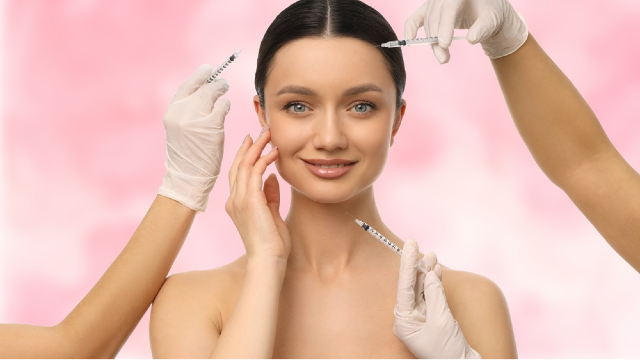
Why They Are Combined: Two Different Jobs
Lines on a face do not all have the same cause, and that is the whole argument for combination treatment.
Botulinum toxin works on movement. ASPS describes it as a purified substance derived from bacteria; injected into a muscle, it blocks the nerve signals that tell the muscle to contract, so the muscle cannot pull the skin into a crease. MedlinePlus puts the same mechanism more plainly — the injections weaken or paralyze particular muscles, or block particular nerves. The effect is temporary by design.
Filler works on volume. ASPS describes dermal fillers as diminishing facial lines and restoring fullness, and explains the underlying problem they address: the face naturally loses subcutaneous fat with age, bringing the muscles closer to the skin surface and making smile lines and crow's feet more obvious, while the skin itself stretches somewhat.
A line caused by repeated muscle movement does not respond to volume. A hollow caused by lost fat does not respond to muscle relaxation. Treating a face with only one of the two tools means treating only half of what is in front of you.
JNB Clinic adds a third element to the same category. Its skin booster treatment uses fine, superficial microinjections of hydrating solutions to improve skin hydration, elasticity, texture and glow rather than to add visible volume — and the clinic explicitly positions it as something patients often take alongside filler, Botox or a surgical procedure.
What JNB Clinic's Combined Session Involves
The clinic's described sequence for a petit appointment is short: consultation and facial assessment; a personalized treatment plan; preparation of the treatment area; injection of Botox, filler or skin booster into the targeted areas; then immediate post-treatment instructions and discharge.
The assessment step is where combination decisions get made. The physician reviews facial anatomy, the specific aesthetic concerns, skin condition and the patient's goals before recommending which of the three — or which combination — fits. The clinic's stated emphasis is on customized design, precision, natural facial balance and subtle enhancement rather than an exaggerated result.
On timing, the clinic states that filler and Botox treatments typically take fifteen to thirty minutes. Skin booster sessions are similar per visit, but are usually recommended as a short course rather than a single appointment — a point worth knowing before planning around one visit.
Comfort measures differ by treatment. For filler, a topical anesthetic cream may be applied beforehand, and many filler products contain lidocaine to reduce discomfort during injection. Botox injections generally do not need anesthesia, though a topical anesthetic or cooling may be used. Skin booster sessions may use a topical cream as well.
Sequence and Interaction: What the Evidence Does and Does Not Say
This is the part most articles skip, and it matters.
The FDA states directly that the safe use of dermal fillers in combination with neuromodulators — the category Botox belongs to — or with other treatments has not been evaluated in a controlled clinical study. That is not a warning against combining them; it is a statement about the limits of the formal evidence base. The approvals that exist for fillers were based on controlled study of those products used in the face or hand on their own.
What that means practically is that combination planning rests on clinical judgment and anatomical knowledge rather than on a trial result, which raises rather than lowers the importance of who is holding the syringe. The FDA's own patient guidance is to seek a licensed health care provider with experience in dermatology or plastic surgery, to choose someone trained in the specific injection procedure, and to treat having filler injected as a medical procedure rather than a cosmetic treatment.
It is also worth knowing what fillers are approved for. The FDA has approved dermal fillers for adults aged 22 and over for defined uses — moderate to severe facial wrinkles and folds such as nasolabial lines, augmentation of the lips, cheeks, chin and back of the hand, correction of contour deficiencies including acne scars, and correction of facial fat loss in people with HIV. Some sites are specifically not approved: the FDA recommends against injecting filler into the glabella between the eyebrows, the nose, the area around the eyes, the forehead or the neck. Approved indications vary by individual product.
Risks, Combined and Separate
Combining treatments does not create a new category of risk, but it does mean both sets apply in one sitting.
JNB Clinic's stated risk profile for its petit treatments is temporary swelling, bruising and tenderness at the injection sites, with two specific concerns called out: filler carries a rare but serious risk of vascular occlusion if injected incorrectly, and Botox can occasionally cause temporary asymmetry or drooping of an eyelid or brow.
The FDA describes the vascular risk in more detail. Unintentional injection into a blood vessel is the most concerning filler complication; the chance is low, but reported consequences include tissue necrosis, vision abnormalities including blindness, and stroke, and they may be permanent. The FDA's instruction to patients is to seek immediate medical attention for unusual pain, vision changes, or a white, gray or blue appearance of the skin near the injection site.
For botulinum toxin, ASPS lists bruising and pain at the injection site, flu-like symptoms, headache, nausea, redness, and temporary facial weakness or drooping, and notes it is very unlikely for the toxin to spread beyond the treatment area. MedlinePlus adds that Botox should not be used during pregnancy or while breastfeeding.
JNB Clinic's own exclusions align with that: pregnancy or breastfeeding, an active skin infection at the injection site, or a known allergy to the specific product ingredients. For Botox specifically it also notes certain neuromuscular disorders. Final suitability is settled at consultation.
Aftercare and Timing of Results

Recovery from a combined visit is minimal. Most patients resume normal activities immediately, with mild swelling or bruising typically clearing within a few days to a week.
One specific caution applies after botulinum toxin: ASPS advises against rubbing or massaging the treated areas, because this can cause the toxin to migrate elsewhere in the face and produce temporary weakness or drooping.
Results do not arrive on the same schedule, which is useful to know when the two are given together. Filler is visible immediately, with initial swelling settling over one to two weeks, and most hyaluronic acid fillers last roughly six to eighteen months depending on the product and the area. Botox begins working over about three to seven days, reaches full effect at around two weeks, and lasts approximately three to six months for lines — masseter reduction for jaw slimming takes a few weeks longer to show, as the muscle gradually reduces with less use. Skin booster effects build gradually across a course of sessions.
Both are maintenance treatments. ASPS is explicit that fillers are temporary and that ongoing treatment is needed for long-term results, and the FDA notes that because many fillers are absorbed over time, repeat treatment may be needed to maintain the effect.
The Bottom Line
- Botox and filler can be combined in one visit; JNB Clinic treats filler, Botox and skin booster as a single category used individually or together.
- They do different jobs — Botox blocks the nerve signals that make muscles crease the skin, while filler restores lost volume.
- The clinic puts filler and Botox sessions at roughly fifteen to thirty minutes, with most patients resuming normal activity immediately.
- The FDA notes that the safe use of fillers in combination with neuromodulators has not been evaluated in a controlled clinical study, which makes injector training and anatomical knowledge central.
- Effects run on different clocks: filler is visible immediately and lasts around six to eighteen months, while Botox takes days to appear and lasts about three to six months.
Frequently Asked Questions
Which should be done first in a combined session?
That is a clinical decision made during the assessment rather than a fixed rule, and it depends on the areas being treated and the plan for each. JNB Clinic's described process places the facial assessment and treatment planning before any injection for exactly this reason.
How long does a combined appointment take?
JNB Clinic states that filler and Botox treatments typically take fifteen to thirty minutes. A session covering more than one treatment type will sit toward the longer end, and a skin booster is usually recommended as a short course rather than a single visit.
Can I fly home the same day?
For these treatments alone, no extended stay is typically needed, and the clinic notes that most patients can travel the same day or the next. It also suggests avoiding pressure changes affecting a fresh injection site for a day or so, and confirming your own timing with the clinic.
Does having both at once increase the risk?
Both risk profiles apply in the same sitting rather than compounding into something new. The significant ones remain treatment-specific: vascular occlusion for filler, and temporary weakness or drooping for botulinum toxin.
Who should not have these treatments?
Patients who are pregnant or breastfeeding, who have an active skin infection at the injection site, or who have a known allergy to the specific product should avoid them. Certain neuromuscular disorders are a further consideration for Botox. Suitability is confirmed during consultation.
Can a skin booster be added to the same visit?
Yes. The clinic groups skin boosters with filler and Botox and describes them as a complement to either, with the combination planned around the individual skin condition and goals.
How do I plan a combined session before traveling?
The clinic supports English for international patients and can arrange consultation, including online consultation where appropriate, before travel. Start through the contact page; patient feedback is published in the customer reviews section.
Shared for informational purposes and educational purposes only, this text is not a self-diagnosis tool and prescribes no treatment; suitability for any injectable is decided at consultation by a qualified medical professional.
More Articles
Continue reading our clinical guides.

Benefits of Stem Cell Therapy for Skin Rejuvenation
Discover the benefits of stem cell therapy for skin rejuvenation, including improved texture, reduced wrinkles, and a more youthful appearance.
Learn More

Recovery After Autologous Cartilage Nose Surgery
Learn what to expect during recovery after autologous cartilage nose surgery, including healing timelines, aftercare tips, and results.
Learn More
Revision Rhinoplasty: Everything You Need to Know Before Your Second Nose Surgery
Revision Rhinoplasty: Learn what to expect from a second nose surgery, including risks, recovery, and results. Explore your options and learn more.
Learn More