Personalized Nasal & Facial Care • Dedicated International Patient Concierge
Medical Guide
Botox for Jawline Slimming: How Masseter Reduction Works
Masseter Botox can slim a square jawline by relaxing the jaw muscle. Learn how it works, candidacy, risks, and why jaw slimming is off-label in the U.S.
Schedule a ConsultationBotox for Jawline Slimming: How Masseter Reduction Works
Medically reviewed by Dr. Kang Ju-Yong, Korean Board-Certified Otorhinolaryngologist (ENT Specialist)
Botulinum toxin injections into the masseter, the large muscle at the angle of the jaw, are a popular non-surgical way to soften a square or wide lower face. Many US patients researching jawline contouring in Korea want to understand how the treatment works, whether they are suitable, and what the regulatory picture looks like. This article explains the mechanism, candidacy, risks, and the important fact that jaw slimming with botulinum toxin is an off-label use in the United States, so you can have a well-informed conversation with a clinician.

What Is Masseter Botox?
The masseter is one of the muscles you use to chew. In some people it is naturally large, or it enlarges over time from habits such as heavy chewing, clenching, or teeth grinding. A prominent masseter can make the lower face look square or wide. Masseter botulinum toxin treatment involves injecting a small amount of botulinum toxin into this muscle to reduce its activity, with the aim of allowing the muscle bulk to decrease gradually so the jawline appears slimmer and softer.
Botulinum toxin is best known cosmetically for smoothing facial lines, but the masseter application targets muscle bulk rather than wrinkles. At JNB Clinic, botulinum toxin is offered within a broader category of quick, in-office injectable treatments, and suitability for jaw slimming is assessed individually rather than assumed. You can read more about the clinic's non-surgical treatments on the JNB Clinic website.
How It Works: Relaxing the Muscle Over Weeks
Botulinum toxin works by temporarily blocking the nerve signals that tell a muscle to contract. According to StatPearls, the toxin interferes with neural transmission by blocking the release of acetylcholine, which causes a selective, temporary reduction in muscle function. When it is injected into the masseter, the muscle is used less, and over the following weeks the reduced use leads to a gradual decrease in the muscle's mass.
This is why masseter treatment does not produce an instant change the way a filler adds immediate volume. The slimming effect develops slowly as the muscle shrinks with reduced activity, often becoming noticeable over several weeks and continuing to refine over a couple of months. The effect is temporary because nerve function recovers over time, and the muscle can rebuild if the treatment is not maintained.
The Off-Label Point US Patients Should Understand
This is a crucial detail. Botulinum toxin products such as Botox are approved by the US FDA, but their approved cosmetic indications are specific. FDA-approved cosmetic uses for onabotulinumtoxinA cover the temporary improvement of moderate to severe frown lines (glabellar lines), crow's feet (lateral canthal lines), and forehead lines. Masseter reduction for jaw slimming is not among the FDA-approved indications, which means using botulinum toxin for this purpose in the United States is considered off-label.
Off-label does not mean illegal or inherently unsafe; clinicians can legally use approved medications off-label based on their judgment, and masseter injection is a widely practiced technique internationally. However, it does mean the manufacturer has not obtained FDA approval for that specific use, and the standardized safety and efficacy data behind an approved indication may not exist to the same degree. As the American Society of Plastic Surgeons explains, an FDA approval applies to specific uses, and patients should understand what is and is not covered. You should discuss the off-label nature of masseter treatment with your clinician as part of informed consent.
Regulatory status also differs by country and by product. Some botulinum toxin brands used in Korea, such as Meditoxin and Nabota, are approved by Korea's Ministry of Food and Drug Safety (MFDS) but are not FDA-approved for the US market. If you are treated in Korea, ask JNB Clinic which specific product would be used and what its regulatory status is, so you can make an informed decision. You can raise these questions through the JNB Clinic contact page.
Candidacy: Muscle, Bone, or Fat?
Not every wide or square jaw responds to masseter botulinum toxin, and this is the most important part of a good consultation. A prominent lower face can be driven mainly by the masseter muscle, by the underlying jawbone, by facial fat, or by a combination. Masseter treatment can only affect the muscle component. If the width of your jaw comes largely from bone structure, injections will not reshape it, and bone-related concerns fall into the realm of surgical evaluation. If fullness is driven mainly by fat, botulinum toxin is not the appropriate tool either.
For this reason, a physician evaluates your facial anatomy, the size and activity of the masseter, your proportions, and your goals before recommending treatment. During a consultation the clinician can often assess masseter size by having you clench, and can help you understand what portion of your jaw shape the treatment can realistically influence. Candidacy is individualized, and an honest evaluation may conclude that a different approach, or no treatment, is more appropriate for you.
What the Treatment Involves
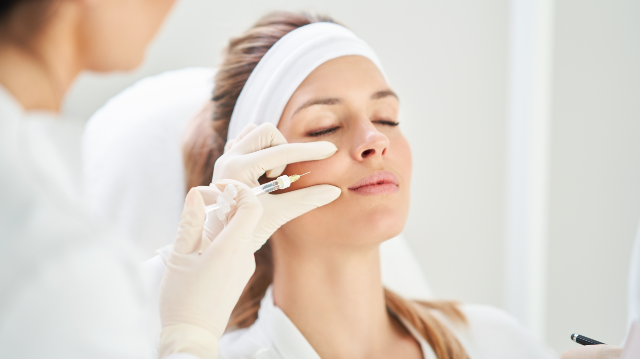
A masseter treatment starts with consultation and facial assessment, followed by identifying the injection points and preparing the area. Botulinum toxin is then injected into the muscle using precise technique. The appointment is typically short, and injections are generally well tolerated; a topical anesthetic or cooling may be used for comfort if needed, though many patients do not require it. Your clinician will provide aftercare instructions before you leave.
Because the aesthetic result develops gradually, you will not see the final effect on the day of treatment. Your provider may schedule a follow-up to review how the muscle has responded and to discuss whether any adjustment is appropriate.
Results, Duration, and the Need for Repeat Treatment
Masseter slimming is temporary. Botulinum toxin effects on facial muscles generally last on the order of a few months before muscle activity returns, and for masseter treatment the visible slimming may take a few weeks to appear and then persist for a period before gradually reversing. To maintain the effect, repeat treatments are needed over time, and the interval varies from person to person. Some patients find that with repeated treatment the muscle stays smaller for longer between sessions, but this varies and cannot be guaranteed. Results differ from patient to patient, and no clinic can promise a specific degree of slimming or a fixed timeline.
Risks and Side Effects
Botulinum toxin injections are generally considered to have a favorable safety profile when performed by qualified clinicians, but risks exist and should be understood. Common, temporary effects include bruising, tenderness, or swelling at the injection sites. Specific to the masseter, because the muscle is involved in chewing, some patients notice temporary changes in chewing sensation, a feeling of fatigue when chewing, or, if dosing or placement is uneven, asymmetry between the two sides. An asymmetric smile or bulging of the muscle during clenching can occur in some cases as the muscle adapts.
More broadly, a recognized but rare risk of any botulinum toxin injection is unwanted spread of the toxin beyond the target area, which can cause temporary weakness in nearby muscles. Serious spread-of-toxin effects are uncommon with cosmetic dosing but are the reason botulinum toxin products carry safety warnings and should only be administered by trained professionals. Tell your clinician about your full medical history, and report any difficulty swallowing, speaking, or breathing after any botulinum toxin treatment. As with all aesthetic procedures, results vary and there is no guarantee.
Questions to Ask Before Treatment
Informed patients get better care. Consider asking: which product would be used and what is its regulatory status; whether my jaw shape is driven by muscle, bone, or fat; whether I am a suitable candidate; how long results are likely to last and how often I would need repeat treatment; what the most likely side effects are for me; and what the plan is if the result is uneven. A clinic that answers these openly and acknowledges the off-label nature of masseter treatment is respecting your right to informed consent.
The Bottom Line
- Masseter botulinum toxin relaxes the jaw-chewing muscle so it is used less, and the muscle bulk gradually decreases over weeks, softening a square or wide lower face.
- In the United States, botulinum toxin is FDA-approved for certain facial lines, but masseter/jaw-slimming is an off-label use; discuss this with your clinician as part of informed consent.
- Some Korean toxin brands (for example Meditoxin and Nabota) are MFDS-approved but are not FDA-approved; ask which product would be used.
- Candidacy depends on whether your jaw shape comes from muscle (treatable) versus bone or fat (not treatable this way); evaluation is individualized.
- Results are temporary and require repeat treatment; risks include asymmetry, chewing changes, and rarely unwanted spread of toxin. Results vary and are not guaranteed.
Frequently Asked Questions
Is masseter Botox approved by the FDA?
Botulinum toxin products are FDA-approved for specific cosmetic uses such as frown lines, crow's feet, and forehead lines, but jaw slimming by masseter injection is not an FDA-approved indication, so it is considered off-label in the United States. Off-label use is legal and common, but you should discuss it with your clinician.
How long does masseter Botox last?
The effect is temporary. Muscle-relaxing effects generally last on the order of a few months, and the visible slimming may take several weeks to develop before gradually reversing. Repeat treatments are usually needed to maintain the result, and the interval varies by person.
Will masseter Botox work if my jaw is wide because of bone?
No. Masseter treatment only affects the muscle component of your jaw shape. If the width comes largely from bone, injections will not change it, and a surgical evaluation would be needed to discuss bone-related concerns. A consultation helps determine what is driving your jaw shape.
What are the side effects of masseter Botox?
Common temporary effects include bruising, tenderness, and swelling. Specific to the masseter, some people notice chewing changes, fatigue with chewing, or asymmetry. Rarely, botulinum toxin can spread beyond the target and cause temporary weakness in nearby muscles, which is why trained administration matters.
Are Korean botulinum toxin brands the same as Botox?
Not exactly. Brands such as Meditoxin and Nabota are approved by Korea's MFDS but are not FDA-approved for the US market. They are botulinum toxin products used in Korea; ask JNB Clinic which specific product would be used in your treatment and about its regulatory status.
Does masseter Botox affect how I chew?
It can. Because the masseter is a chewing muscle, some patients notice a temporary change in chewing strength or a sense of fatigue while chewing, especially early on. This typically eases as you adjust and as the effect wears off. Discuss any concerns with your clinician.
When will I see results from masseter Botox?
The slimming effect is gradual rather than immediate, because it depends on the muscle shrinking with reduced use. Many patients begin to notice a change over several weeks, with further refinement over the following month or two. Individual timing and degree of change vary.
This article is for general educational purposes only and reflects general information about botulinum toxin used for jawline contouring. It does not describe a guaranteed outcome, and individual results vary. It is not a substitute for a personalized, in-person consultation with a qualified clinician who can evaluate your anatomy and goals and discuss the risks, off-label considerations, and alternatives with you. It is not a self-diagnosis tool.
More Articles
Continue reading our clinical guides.

Benefits of Stem Cell Therapy for Skin Rejuvenation
Discover the benefits of stem cell therapy for skin rejuvenation, including improved texture, reduced wrinkles, and a more youthful appearance.
Learn More

Recovery After Autologous Cartilage Nose Surgery
Learn what to expect during recovery after autologous cartilage nose surgery, including healing timelines, aftercare tips, and results.
Learn More

Revision Rhinoplasty: Everything You Need to Know Before Your Second Nose Surgery
Revision Rhinoplasty: Learn what to expect from a second nose surgery, including risks, recovery, and results. Explore your options and learn more.
Learn More