Personalized Nasal & Facial Care • Dedicated International Patient Concierge


Medical Guide
Benefits of Stem Cell Therapy for Skin Rejuvenation
Discover the benefits of stem cell therapy for skin rejuvenation, including improved texture, reduced wrinkles, and a more youthful appearance.
Schedule a ConsultationGuide to Ultherapy Prime: Non-Surgical Skin Lifting Explained | JNB Clinic Gangnam
What Is Skin Laxity, and Why Does It Happen?
The skin's ability to stay firm and lifted depends largely on two structural proteins: collagen and elastin. During the first few decades of life, the body produces these proteins in abundance, keeping facial tissues plump, tight, and well-supported. From approximately the mid-twenties onward, production begins to slow. By the mid-thirties and forties, the cumulative effects become visually apparent—the jawline softens, the brow descends slightly, and the skin along the cheeks and neck begins to lose its former tension.
Sun exposure, lifestyle factors, and genetics accelerate this process. The result is not simply a cosmetic concern; for many patients, the visual signs of skin laxity affect confidence and how they feel in professional or social settings.
Historically, addressing significant skin laxity required surgical intervention—a facelift or browlift performed under general anesthesia, followed by weeks of recovery. Today, advances in energy-based aesthetics have created a credible non-surgical alternative. Among these technologies, Ultherapy Prime has emerged as one of the most clinically studied and widely recognized options for non-invasive skin lifting.
What Is Ultherapy Prime?
Ultherapy Prime is an upgraded iteration of the original Ultherapy platform, which has received regulatory clearance from the U.S. Food and Drug Administration (FDA) for non-invasive lifting of the brow, neck, and submental (under-chin) area, as well as for improving lines and wrinkles on the décolletage.
The technology operates on the principle of micro-focused ultrasound with visualization (MFU-V). Unlike superficial skin treatments that target only the epidermis, Ultherapy Prime delivers focused ultrasound energy to precise depths within the skin—including the superficial muscular aponeurotic system (SMAS), the same anatomical layer that surgeons address during a traditional facelift.
How the Technology Works
During a session, the device's transducer emits controlled points of ultrasound energy at targeted tissue depths, typically between 1.5 mm and 4.5 mm beneath the surface. These focused energy points generate small zones of thermal coagulation. The surrounding tissue is left entirely undamaged.
The controlled thermal injury triggers the body's natural wound-healing cascade, stimulating the production of new collagen and elastin over a period of two to three months. The skin gradually tightens and lifts from within—not through swelling or temporary filler volume, but through genuine structural regeneration.
The "Prime" designation reflects platform improvements in delivery speed, comfort optimization, and transducer precision compared to earlier-generation devices, allowing clinicians to treat more tissue planes in a single session.
Who Is a Suitable Candidate for Ultherapy Prime?
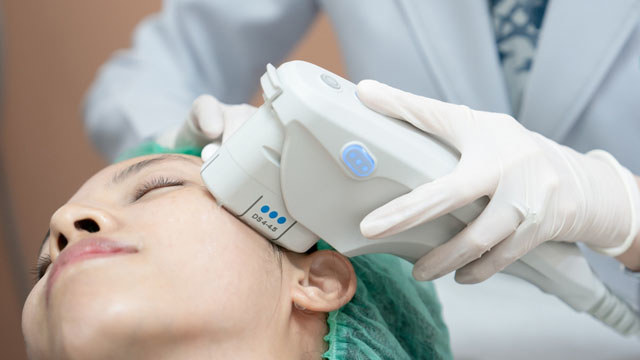
Ultherapy Prime is best suited for patients who are beginning to notice the early-to-moderate signs of facial laxity but are not yet ready for, or are not interested in, surgical procedures. Ideal candidates typically include:
Adults in their mid-thirties to mid-fifties who notice mild-to-moderate skin looseness along the jawline, brow, or neck
Patients with realistic expectations—Ultherapy Prime lifts and tightens, but it does not replicate the degree of correction achievable through surgery
Individuals seeking a maintenance treatment to slow progressive laxity after previous procedures
Those looking to complement other non-surgical treatments, such as injectable neuromodulators or dermal fillers, with structural tissue improvement
Patients with very advanced skin laxity, those with active skin infections in the treatment area, or those with certain implanted devices may not be appropriate candidates. A thorough pre-treatment consultation is essential to determine individual suitability.
What to Expect During the Procedure at JNB Clinic
Pre-Treatment Consultation
Before any Ultherapy Prime session at JNB Clinic in Gangnam, Dr. Ju-yong Kang conducts a detailed clinical evaluation. This includes a review of the patient's facial anatomy, skin condition, medical history, and aesthetic objectives. The consultation sets realistic expectations and allows the physician to customize the treatment plan—selecting appropriate transducer depths and energy levels for each anatomical zone.
The Treatment Session
The procedure itself is performed in-clinic with no general anesthesia. Topical numbing cream is applied prior to treatment to minimize discomfort, and oral analgesia may be offered depending on individual sensitivity.
During the session, a handheld transducer is moved systematically across the treatment areas—commonly the brow, cheeks, jawline, submental area, and neck. The real-time ultrasound imaging incorporated into the device allows the treating physician to visualize the tissue being targeted before each energy delivery, ensuring accuracy and safety.
A full-face treatment session typically takes between 60 and 90 minutes. Patients remain awake and comfortable throughout.
Immediately After Treatment
There is no surgical downtime associated with Ultherapy Prime. Most patients return to normal daily activities—including work—immediately following the session. Some experience mild transient redness or slight swelling in the treated areas, which typically resolves within a few hours.
The Role of Dr. Ju-yong Kang's Expertise
Ultherapy Prime outcomes depend heavily on the operator's anatomical knowledge and clinical judgment. Because the device targets tissue at specific depths—including the SMAS—understanding the precise location of underlying nerves, vessels, and structural layers is essential for both safety and efficacy.
Dr. Ju-yong Kang, the Representative Director and Chief Physician at JNB Clinic, holds dual specialization as a board-affiliated Otolaryngologist (ENT Specialist) and aesthetic facial reconstructive surgeon, with training from Kyung Hee University School of Medicine. His surgical background in nasal and facial anatomy means he approaches energy-based devices with the same three-dimensional structural understanding he applies in the operating room.
Dr. Kang is an active member of multiple national medical societies, including the Korean Society of Otorhinolaryngology–Head and Neck Surgery and the Korean Society of Facial Plastic and Reconstructive Surgery. This clinical foundation allows him to deliver Ultherapy Prime treatments with a level of anatomical precision that goes beyond cosmetic-only training.
Why JNB Clinic for Non-Surgical Skin Lifting?
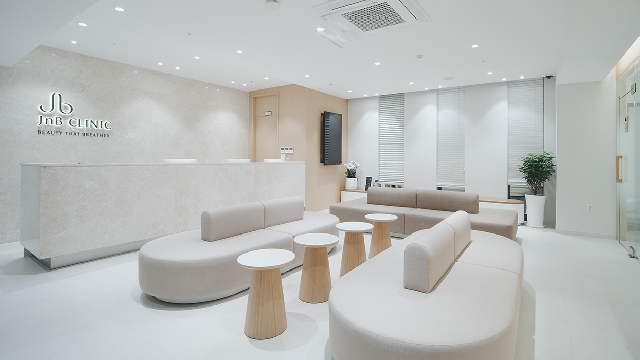
Located on the 6th floor of K-Tower Building at 119 Dosan-daero, Gangnam-gu, Seoul—conveniently near Sinsa Station—JNB Clinic was established with a specific medical philosophy: Beauty in Every Breath. While the clinic's primary specialty centers on closed rhinoplasty and functional nasal surgery, its approach to all aesthetic treatments is grounded in the same principle of functional harmony.
Several factors distinguish the clinic's approach to non-surgical lifting:
Medical-Grade Infrastructure: The clinic maintains hospital-standard facilities with sterile environments and continuous monitoring systems—standards that support safe delivery of energy-based treatments as well as surgical procedures.
Integrated Treatment Philosophy: Dr. Kang views non-surgical treatments such as Ultherapy Prime not in isolation but as part of a comprehensive facial care plan. Where appropriate, energy-based lifting may be combined with complementary treatments such as precision facial fat grafting, thread lifting, or customized laser therapy to achieve balanced, natural-looking facial rejuvenation.
Transparent, Patient-Centered Consultations: JNB Clinic does not operate on a volume-based model. Consultations are detailed, honest, and individualized. Patients are advised clearly when Ultherapy Prime is unlikely to achieve their desired outcome, and realistic alternatives are discussed.
Recovery, Safety Considerations, and Realistic Outcomes
Safety Profile
Ultherapy Prime has a well-documented safety record when performed by trained practitioners with sound anatomical knowledge. The most commonly reported side effects—temporary redness, mild swelling, or transient tenderness—are short-lived. Rare adverse effects, such as temporary nerve sensitivity, are associated with incorrect energy delivery; these risks are significantly minimized when treatment is performed by a physician with strong structural knowledge of facial anatomy.
What Results to Expect
Results from Ultherapy Prime are gradual and progressive. Initial improvements may be perceptible within four to six weeks as early collagen remodeling begins, with optimal results typically visible at the three-month mark. Some patients choose to undergo a repeat session after 12 to 18 months to maintain and build upon their results.
Patients should understand that Ultherapy Prime produces subtle, natural-looking improvement rather than dramatic transformation. It is most effective for those seeking to address early laxity or to slow the progression of aging changes—not as a substitute for surgical correction in advanced cases.
Conclusion
Non-surgical skin lifting has advanced significantly in the past decade, and Ultherapy Prime represents one of the most evidence-supported options currently available. For patients in Seoul seeking a medically rigorous, physician-led approach to facial rejuvenation without surgery, JNB Clinic in Gangnam offers a thoughtful, anatomy-first environment in which to explore this treatment.
Dr. Ju-yong Kang's dual expertise in ENT medicine and aesthetic facial surgery provides an unusually strong clinical foundation for safe, precise delivery of Ultherapy Prime. A personalized consultation at the clinic's Sinsa Station location is the appropriate first step for any patient considering this approach.
More Articles
Continue reading our clinical guides.
Benefits of Stem Cell Therapy for Skin Rejuvenation
Discover the benefits of stem cell therapy for skin rejuvenation, including improved texture, reduced wrinkles, and a more youthful appearance.
Learn More

Recovery After Autologous Cartilage Nose Surgery
Learn what to expect during recovery after autologous cartilage nose surgery, including healing timelines, aftercare tips, and results.
Learn More
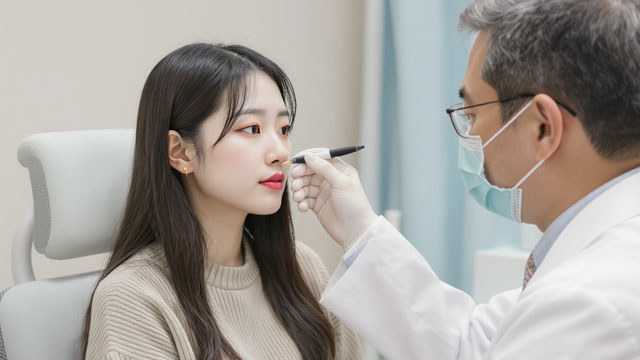
Revision Rhinoplasty: Everything You Need to Know Before Your Second Nose Surgery
Revision Rhinoplasty: Learn what to expect from a second nose surgery, including risks, recovery, and results. Explore your options and learn more.
Learn More