Personalized Nasal & Facial Care • Dedicated International Patient Concierge

Medical Guide
Autologous Cartilage in Rhinoplasty: Why It Matters
Learn what autologous cartilage is, how ear, rib, and septal grafts compare against silicone nasal implants, and why JNB Clinic uses implant-free methods.
Schedule a ConsultationAutologous Cartilage in Rhinoplasty: Why It Matters
Medically reviewed by Dr. Kang Ju-Yong, Korean Board-Certified Otorhinolaryngologist (ENT Specialist)
If you have started researching nose surgery, you have probably run into the phrase "autologous cartilage." It sounds technical, but the idea behind it is straightforward: the surgeon uses your own tissue to reshape and support your nose instead of a manufactured implant. Understanding what autologous cartilage is, where it comes from, and how it compares with synthetic implants can help you ask better questions during a consultation. This article is educational and is not a substitute for an in-person surgical evaluation.
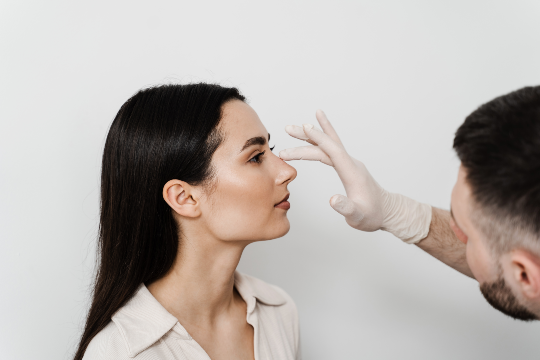
What Does "Autologous Cartilage" Actually Mean?
"Autologous" simply means "from your own body." In rhinoplasty, autologous cartilage is cartilage harvested from one site on your body and then shaped and positioned to build, refine, or reinforce the structure of your nose. Because the tissue is your own, it is biologically compatible with the rest of your body in a way that a foreign material cannot be.
The nose is not a solid block of tissue. It is a framework of bone in the upper third and flexible cartilage in the lower two-thirds. Cartilage gives the nasal tip its shape and springiness, supports the bridge, and helps keep the internal breathing passages open. When a surgeon needs to raise a low bridge, refine a droopy or under-projected tip, correct asymmetry, or rebuild support that a previous surgery weakened, grafts of cartilage are often the building blocks used to do it.
Surgeons draw autologous cartilage from three main donor sites, and each has its own strengths and trade-offs.
The Three Main Sources of Autologous Cartilage
Septal cartilage. The septum is the wall of cartilage and bone that divides the two sides of your nose. Because it sits inside the nose, surgeons can often borrow a portion of it without any additional incision beyond the ones already used for the rhinoplasty. Septal cartilage is straight, firm, and easy to shape, which makes it a common first choice for tip refinement and structural support. The main limitation is quantity: there is only so much septal cartilage available, and some of it must stay in place to keep the nose stable. Patients who have had previous surgery or a significantly deviated septum may have less usable material.
Ear (conchal) cartilage. The conchal cartilage of the ear has a natural curve, which makes it well suited to reconstructing curved parts of the nose such as the rim of the nostril or the tip. Harvesting it leaves a small incision, usually hidden behind or inside the ear, and it does not change the ear's normal shape when done carefully. Ear cartilage is softer and more curved than septal cartilage, so it is often used when a gentle, natural contour is the goal rather than heavy structural support.
Rib (costal) cartilage. When a nose needs a large amount of structural support, such as in complex reconstruction or revision cases where earlier surgery removed cartilage, rib (costal) cartilage offers the largest supply of strong material. It can rebuild a bridge, lengthen a short nose, or provide a sturdy framework when the septum and ears cannot supply enough tissue. The trade-off is that harvesting rib cartilage requires an additional incision on the chest, adds operating time, and generally means a longer recovery. Rib cartilage can also be prone to warping (bending over time) and, less commonly, partial resorption, which is why careful carving and surgical technique matter.
Autologous Cartilage vs. Synthetic Implants
The main alternative to using your own cartilage is a synthetic implant, most commonly silicone or expanded polytetrafluoroethylene (often known by the brand name Gore-Tex). These are manufactured materials placed into the nose to build up the bridge or tip. They are widely used and can produce predictable augmentation, particularly of the nasal bridge.
The central difference is that a synthetic implant is a foreign body, while autologous cartilage is your own living tissue. Because of this, implants carry a category of risks that autologous grafts largely avoid:
- Extrusion, where the implant works its way toward or through the skin or lining over time.
- Capsular contracture and chronic inflammation, where the body forms scar tissue around the foreign material, sometimes distorting the shape.
- Displacement, where the implant shifts from its intended position.
- Long-term removal, where an implant may eventually need to be taken out.
Autologous cartilage sidesteps these implant-specific risks because there is no foreign material for the body to react to or reject. Published reviews of costal (rib) cartilage grafting, for example, report relatively low rates of infection, resorption, and warping at the nose itself.
That does not make autologous cartilage risk-free or automatically the right choice for everyone. It comes with its own considerations:
- Donor-site effects. Every harvest site involves an additional area of healing, whether that is a small incision at the ear or a chest incision for rib cartilage.
- Warping and resorption. Cartilage, especially rib cartilage, can bend or partially reabsorb over time, which is one reason surgical technique and carving skill matter.
- Added surgery for rib harvest. Using rib cartilage lengthens the operation and the recovery period.
- Limited supply from the septum and ears. Sometimes the amount of cartilage needed dictates which source is realistic.
The best material for any individual depends on your anatomy, your goals, whether it is a first surgery or a revision, and the surgeon's assessment. There is no single option that is superior for every patient, and results vary from person to person.
How JNB Clinic Approaches Autologous Cartilage
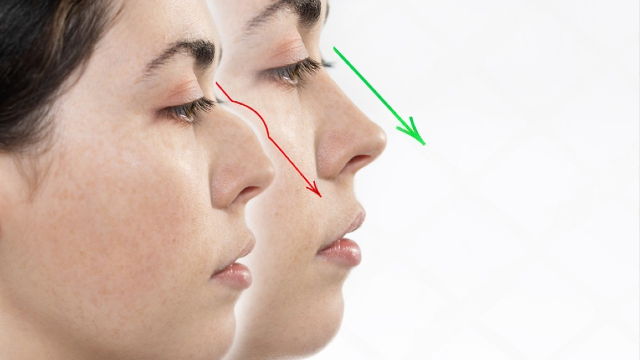
JNB Clinic is an ENT-led practice in Seoul that focuses on implant-free rhinoplasty using the patient's own cartilage. Rather than relying on silicone or other synthetic implants, the clinic reshapes and supports the nose entirely with septal, ear, or rib cartilage, an approach designed to reduce the implant-related concerns described above while preserving or improving nasal function. Technique selection is individualized after an anatomical assessment that at the clinic includes 3D-CT analysis and customized surgical planning. You can read more about the clinic's philosophy on the JNB Clinic website.
The clinic describes three in-house techniques, each matched to a different level of structural need:
- KE-Co (Keep Enchanting Nose) — Ear Cartilage Rhinoplasty. A closed (endonasal) approach that uses the patient's own ear cartilage to refine contour with no external incisions. It is generally suited to more moderate refinement, such as a low bridge, an under-projected tip, or mild asymmetry.
- Krib-Co — Rib Cartilage Rhinoplasty. A full structural reconstruction using the patient's own rib cartilage, performed under general or deep sedation. It is intended for cases that need substantial support, including revision or complex reconstruction, and it involves rib harvesting and a longer recovery.
- KB-Co — Septal + Ear Cartilage Hybrid. A closed "nasal impact" technique that combines the patient's septal and ear cartilage with no external incisions.
All three are described as developed in-house by Dr. Kang Ju-Yong, an ENT specialist, and each is chosen based on the individual's nasal structure and goals rather than applied as a one-size-fits-all method. As with any surgery, results are individualized and not guaranteed, and the appropriate technique can only be determined in a consultation. If you want to discuss which approach might fit your situation, you can reach the team through the JNB Clinic contact page.
Realistic Risks to Keep in Mind
Choosing autologous cartilage reduces implant-specific complications, but rhinoplasty is still surgery and carries real risks. Depending on the technique, these can include swelling, bruising, pain, infection, bleeding, temporary or persistent nasal blockage, changes in the sense of smell, asymmetry, graft displacement, cartilage warping or partial absorption, contour irregularities, and the possibility that a revision procedure is needed. Rib harvesting adds a donor-site incision on the chest with its own healing.
Swelling resolves gradually. The nose typically looks more natural after the first month, but subtle swelling, especially around the tip, can take roughly 6 to 12 months to fully settle before the final shape is visible. A candid conversation with your surgeon about your specific risks, expectations, and recovery is an essential part of the process.
The Bottom Line
- Autologous cartilage means cartilage taken from your own body, most often from the septum, ear (conchal), or rib (costal), and used to reshape and support the nose.
- Compared with silicone or Gore-Tex implants, autologous grafts avoid implant-specific risks such as extrusion, capsular contracture, and displacement, but they carry their own considerations, including donor-site healing and possible warping or resorption.
- Rib cartilage supplies the most material for major reconstruction but requires an extra incision and a longer recovery, while septal and ear cartilage suit more moderate refinement.
- JNB Clinic performs implant-free rhinoplasty with documented in-house techniques (KE-Co ear cartilage, Krib-Co rib cartilage, and KB-Co septal-and-ear hybrid), selected individually after assessment.
- Results vary, no outcome is guaranteed, and the right approach can only be determined through an in-person surgical evaluation.
Frequently Asked Questions
Is autologous cartilage better than a silicone implant?
Neither option is universally better. Autologous cartilage avoids the risks tied to foreign materials, such as extrusion and capsular contracture, while implants can offer predictable bridge augmentation without a donor site. The right choice depends on your anatomy, your goals, and your surgeon's assessment, and results vary from person to person.
Where does the cartilage come from?
Surgeons most commonly use septal cartilage from inside the nose, conchal cartilage from the ear, or costal cartilage from the rib. The choice depends on how much material is needed and how much structural support the nose requires. Your surgeon will explain which source is appropriate for your case.
Does harvesting cartilage leave scars or cause damage?
Septal cartilage is usually taken through incisions already used for the surgery, ear cartilage leaves a small, discreetly placed incision, and rib cartilage requires a chest incision. When performed carefully, ear harvesting does not change the ear's shape. Every donor site involves an additional area of healing, which your surgeon will discuss with you.
Can cartilage warp or be reabsorbed over time?
Yes. Cartilage, particularly rib cartilage, can bend (warp) or partially reabsorb over time, which is one reason surgical carving and technique matter. Published reviews report relatively low rates of these events at the nose, but they remain possible, so realistic expectations are important.
Why does JNB Clinic use implant-free techniques?
JNB Clinic focuses on rhinoplasty using the patient's own cartilage to reduce implant-related concerns while aiming to preserve or improve breathing. The clinic's documented techniques (KE-Co, Krib-Co, and KB-Co) are selected individually after an anatomical assessment. Outcomes are not guaranteed and depend on each patient's structure and healing.
Is autologous cartilage rhinoplasty a good option for revision surgery?
It is often considered in revision and complex cases, especially when earlier surgery removed cartilage or an implant needs replacing, because your own tissue can rebuild support. Rib cartilage in particular can supply the material needed for reconstruction. Only a surgeon who examines your nose can determine whether it is appropriate for you.
This article is for general educational purposes only and describes surgical procedures whose risks and outcomes vary from person to person. It does not constitute medical advice, does not guarantee any particular result, and cannot replace an in-person evaluation and consultation with a qualified surgeon. Rhinoplasty carries real surgical risks that should be discussed directly with your surgeon. It is not a self-diagnosis tool.
More Articles
Continue reading our clinical guides.

Benefits of Stem Cell Therapy for Skin Rejuvenation
Discover the benefits of stem cell therapy for skin rejuvenation, including improved texture, reduced wrinkles, and a more youthful appearance.
Learn More

Recovery After Autologous Cartilage Nose Surgery
Learn what to expect during recovery after autologous cartilage nose surgery, including healing timelines, aftercare tips, and results.
Learn More

Revision Rhinoplasty: Everything You Need to Know Before Your Second Nose Surgery
Revision Rhinoplasty: Learn what to expect from a second nose surgery, including risks, recovery, and results. Explore your options and learn more.
Learn More