Personalized Nasal & Facial Care • Dedicated International Patient Concierge

Medical Guide
Alar Base Reduction: Narrowing Wide, Flared Nostrils
Alar base reduction narrows wide or flared nostrils in proportion to your nose and face. Learn how it works, recovery, and scar placement at JNB Clinic.
Schedule a ConsultationAlar Base Reduction: Narrowing Wide, Flared Nostrils
Medically reviewed by Dr. Kang Ju-Yong, Board-Certified ENT (Otolaryngology) & Rhinoplasty Surgeon, JNB Clinic
Alar base reduction is a focused rhinoplasty procedure that narrows wide or flared nostrils so the width of your nose sits in better proportion with the rest of your face. If the base of your nose looks broad, if your nostrils flare outward when you smile, or if the nostrils simply draw more attention than you would like, this is the part of nasal surgery designed to address exactly that. At JNB Clinic, an ENT-led rhinoplasty practice in Gangnam, Seoul, alar base reduction is planned around your individual anatomy and facial balance rather than a single fixed technique, and it is often combined with other refinements when the goal is overall nasal harmony.
This guide explains what alar base reduction actually changes, how a surgeon plans the width in relation to your nose and face, and what recovery and scar placement typically involve. Throughout, the emphasis is on realistic, individualized expectations. Results vary from person to person and are never guaranteed, so every point below is meant to inform your questions rather than promise a specific outcome.
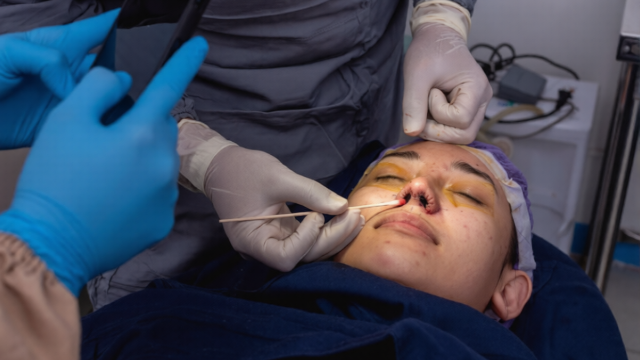
What Alar Base Reduction Addresses
The "alar base" is the lower, outer portion of the nose where each nostril meets the cheek and upper lip. When this area is wide, or when the nostril rims flare outward, the nose can appear broader at the bottom than the rest of the face supports. Alar base reduction is the targeted procedure that reduces this width and flare.
Patients most commonly ask about it for concerns such as:
- Wide nostrils that make the base of the nose look broad
- Flared alar rims that spread outward, often more noticeable when smiling
- Excessive nostril visibility from the front or in profile
- A general sense that nasal width is out of proportion with the eyes, cheeks, and lips
It is important to understand what this procedure does and does not do. Alar base reduction specifically targets nostril width and flare. It does not, on its own, change the height of the bridge, refine the nasal tip, or rebuild internal support. Those are separate goals handled by other rhinoplasty techniques. Because of that, a surgeon evaluating your nose will look at whether nostril width is truly the dominant issue, or whether the appearance of width is being driven by the tip, the bridge, or the overall projection of the nose. That distinction matters, because reducing the base when the real issue lies elsewhere can leave the nose looking unbalanced.
At JNB Clinic, the consultation includes an assessment of nostril width, alar flare, nasal symmetry, skin characteristics, and overall facial proportions, along with a discussion of what you hope to change. From that, a customized surgical plan is developed for your specific anatomy.
Proportion Planning: The Nose Within the Face
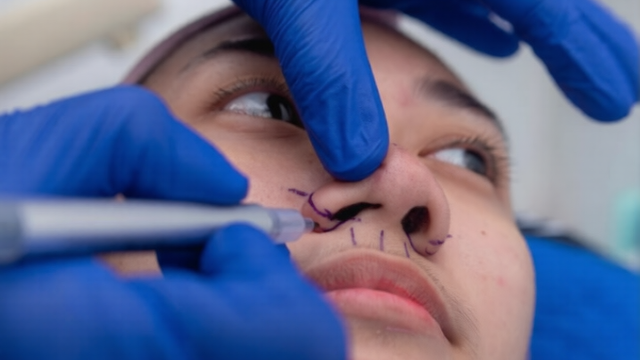
Good alar base surgery is a planning exercise as much as a surgical one. A nose is not evaluated in isolation; it is evaluated as one feature within a face. The width of the alar base is judged against landmarks such as the distance between the inner corners of the eyes, the width of the bridge and tip, and the balance of the lower face. The aim is a nose that looks proportionate and natural, not simply narrower.
Several elements guide this planning:
- Facial analysis. The surgeon studies how nasal width relates to the eyes, cheeks, and mouth, so any reduction complements the whole face rather than isolating the nose.
- Measurement of nostril and alar width. Careful measurement helps define how much flare and width are contributing to the concern, and how much change is appropriate.
- Skin characteristics. Skin thickness and quality influence how tissue redrapes and heals, which affects the surgical design.
- Symmetry. Small natural asymmetries between the two nostrils are common, and the plan accounts for them rather than assuming perfect mirror-image sides.
An honest point about expectations: a responsible surgeon will not promise a specific numeric reduction in width before evaluating you in person. The goal is described as narrowing the alar base to balance nose width with facial proportion, not hitting an exact millimeter figure. This restraint is deliberate. Over-narrowing can look as unnatural as excessive width, and once tissue is reduced it cannot easily be added back. Conservative, proportion-driven planning protects a natural appearance.
Because JNB Clinic is led by a board-certified ENT and rhinoplasty surgeon, planning also considers how the nose functions, not only how it looks. The nostrils and nasal base play a role in airflow, so the surgical design keeps breathing in mind alongside the aesthetic goal. You can read more about the clinic's approach to nasal surgery on the JNB Clinic website.
How the Procedure Is Planned and Performed
While the exact surgical design is individualized, alar base reduction at JNB Clinic follows a clear, patient-friendly sequence:
- Consultation and facial analysis. Your face and nose are assessed as a whole, and your goals are discussed in detail.
- Measurement of nostril and alar width. The surgeon quantifies the width and flare contributing to your concern.
- Customized surgical design. A plan is drawn specifically for your anatomy, including where and how much tissue to adjust.
- Precise reduction of the alar base and/or nostril width. The surgeon carefully reduces width and flare according to the design.
- Closure with attention to scar placement. Incisions are closed thoughtfully, with scar location a central consideration (more on this below).
- Postoperative monitoring and follow-up care. Healing is monitored, and follow-up supports the recovery process.
Alar base reduction is frequently combined with other nasal procedures. Depending on your goals and anatomy, it may be performed alongside nose tip surgery, non-implant (autologous cartilage) rhinoplasty, functional rhinoplasty, or revision rhinoplasty to improve overall nasal balance and facial harmony. Combining procedures can allow the whole nose to be addressed in one recovery period, but whether that is appropriate for you is decided during consultation.
Scar-Placement Considerations
One of the most common and reasonable questions about alar base reduction is: will it leave a visible scar? Because narrowing the base involves removing a small amount of tissue and closing the area, some incision is unavoidable. The key is where that incision sits and how carefully it is closed.
Scar-conscious surgical design is a documented part of JNB Clinic's approach. In alar base surgery, incisions are typically planned to sit in or near the natural crease where the nostril meets the cheek and upper lip, where they can be less conspicuous once healed. Meticulous closure with attention to scar placement is a distinct, deliberate step in the procedure sequence, not an afterthought.
A few realistic points about scars:
- Every surgical incision heals into some form of scar; the goal is to make it as inconspicuous as possible, not to eliminate it entirely.
- Healing is individual. Skin type, genetics, aftercare, and how your body forms scar tissue all influence the final appearance.
- Early scars often look pinker or firmer and typically continue to soften and fade over the following months.
- Protecting the area from sun and following your aftercare instructions can support better scar healing.
JNB Clinic provides postoperative follow-up that includes healing assessment and scar monitoring, so the area can be tracked as it matures. If you have a personal or family history of raised or keloid scarring, raise it during consultation, because it is an important factor in planning.
Recovery: What to Expect
Recovery from alar base reduction is generally more localized than recovery from a full structural rhinoplasty, but it still requires patience and care. As with any surgery, swelling and some bruising around the nose are expected in the early phase, and the true, settled result takes time to emerge as swelling resolves.
General expectations include:
- Early days. Expect swelling and tenderness around the base of the nose. Keeping your head elevated and following activity restrictions helps.
- First couple of weeks. Visible swelling and bruising typically ease over this period, though this varies by individual.
- Longer term. As with rhinoplasty generally, subtle residual swelling can take longer to fully settle, and the final refined appearance emerges gradually rather than all at once.
For international patients, JNB Clinic notes that a stay of roughly seven to ten days after surgery is typical, with final recovery continuing at home and online follow-up available afterward. During this window, initial healing can be monitored and any sutures managed as needed before you travel. Because JNB Clinic is a Registered Medical Institution for Attracting Foreign Patients (certified by Korea's Ministry of Health and Welfare) with English support and teleconsultation, planning care from abroad is part of the standard process.
Give yourself realistic timelines and avoid judging the outcome too early. If you are combining alar base reduction with tip or structural rhinoplasty, recovery will follow the timeline of the larger procedure. You can plan your consultation and ask about your specific recovery through the JNB Clinic contact page.
Risks and Realistic Expectations
Alar base reduction is surgery, and all surgery carries risk. For rhinoplasty procedures generally, documented risks include swelling, bruising, infection, bleeding, temporary or persistent nasal blockage, changes in the sense of smell, asymmetry, and — in structural cases involving grafts — issues such as graft displacement, warping, or absorption. Some patients may ultimately consider a revision. A risk breakdown specific to alar base reduction alone is best discussed directly with the surgeon in the context of your anatomy and any combined procedures.
Just as important is expectation-setting. Alar base reduction is designed to narrow the nostrils and reduce flare in proportion to your face, producing a result intended to look natural. It is not designed to deliver a predetermined, guaranteed appearance, and results genuinely differ from person to person. A thorough consultation, honest planning, and conservative surgical design provide a sound foundation for a satisfying outcome.
The Bottom Line
- Alar base reduction narrows wide or flared nostrils and reduces excessive nostril visibility, bringing nasal width into better proportion with the rest of the face.
- It targets nostril width and flare specifically — not the bridge, tip, or internal structure — so careful facial analysis determines whether it is the right procedure for your concern.
- Planning is proportion-driven and individualized; a responsible surgeon avoids promising an exact width reduction before evaluating you in person.
- Incisions are placed with scar-conscious design, typically near the natural nostril crease, and closure with attention to scar placement is a deliberate step; healing and scars are individual.
- Recovery involves swelling that settles over time; international patients typically stay about 7–10 days, with online follow-up afterward. Results vary and are not guaranteed.
Frequently Asked Questions
Who is a good candidate for alar base reduction?Candidates are generally people with wide or flared nostrils who want to bring the width of the base of the nose into better proportion with the rest of the face. Suitability is determined through a comprehensive consultation that evaluates nostril width, alar flare, symmetry, skin characteristics, and your goals, rather than a fixed checklist.
Will alar base reduction leave a visible scar?Some incision is necessary to narrow the base, so a scar is unavoidable, but scar-conscious design aims to place it discreetly — typically near the natural crease where the nostril meets the cheek and lip. Closure with attention to scar placement is a specific surgical step, and JNB Clinic monitors scar healing during follow-up. Final scar appearance is individual.
Can it be combined with other nose procedures?Yes. Alar base reduction is commonly combined with nose tip surgery, non-implant (autologous cartilage) rhinoplasty, functional rhinoplasty, or revision rhinoplasty to improve overall nasal balance. Whether combining is right for you is decided during consultation.
Does alar base reduction change my whole nose?No. It specifically targets nostril width and flare. It does not by itself alter the bridge height, refine the tip, or rebuild internal support — those goals are handled by other rhinoplasty techniques, which can be performed alongside it if appropriate.
How long is recovery?Swelling and some bruising are expected early on and typically ease over the first couple of weeks, while subtle residual swelling settles over a longer period. International patients usually stay around 7–10 days after surgery, with final recovery continuing at home and online follow-up available.
Will my breathing be affected?Because JNB Clinic is ENT-led, surgical planning keeps nasal function and airflow in mind alongside appearance. Discuss any existing breathing concerns during consultation so they can be factored into the plan.
How much does it cost?Pricing is individualized and depends on your specific plan, including whether other procedures are combined. Please confirm current pricing directly with JNB Clinic.
When will I see the final result?Initial changes appear as early swelling resolves, but the final, settled appearance emerges gradually over time. Exact timeframes vary by individual and by whether the procedure is combined with other rhinoplasty steps.
This article is for general informational purposes and does not constitute individualized medical advice. All procedures carry risks; individual results vary and are not guaranteed. Consult a qualified physician and confirm details with JNB Clinic.
More Articles
Continue reading our clinical guides.

Benefits of Stem Cell Therapy for Skin Rejuvenation
Discover the benefits of stem cell therapy for skin rejuvenation, including improved texture, reduced wrinkles, and a more youthful appearance.
Learn More

Recovery After Autologous Cartilage Nose Surgery
Learn what to expect during recovery after autologous cartilage nose surgery, including healing timelines, aftercare tips, and results.
Learn More

Revision Rhinoplasty: Everything You Need to Know Before Your Second Nose Surgery
Revision Rhinoplasty: Learn what to expect from a second nose surgery, including risks, recovery, and results. Explore your options and learn more.
Learn More